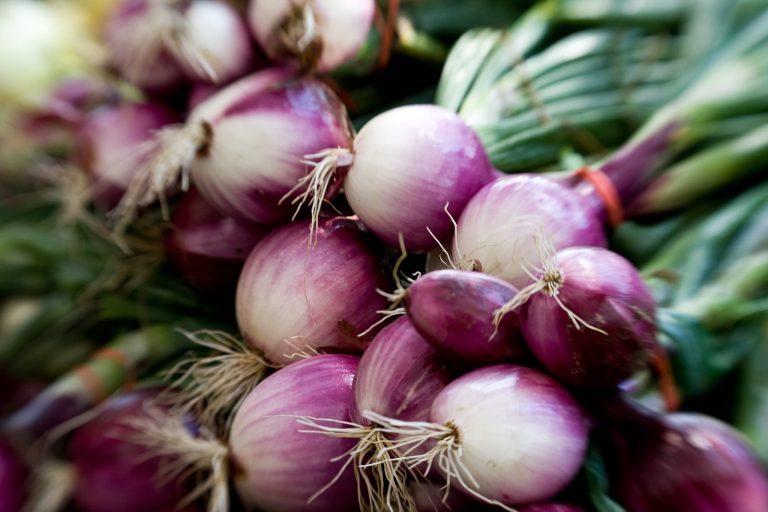
When it comes to common household items that can cure what ails you, you can’t get more ordinary than onions. With over 700 cultivated varieties across the world, they probably make a regular appearance in many of your meals. Yet this plain-looking produce is not only full of flavor; onions offer a multitude of vitamins and minerals to help maintain health, as well as organic compounds with surprising healing effects.
While eating onions can boost immunity and promote health, most onion remedies are applied externally. So, even if you detest the taste or texture of onions, you might find one of these topical treatments worth trying!
The humble onion
Onions belong to the Allium family, which also includes garlic, leeks, chives, scallions and shallots. As biennial plants, they flower and produce seeds in their second year; but we normally harvest the bulbs at the end of their first year.

It is hard to say exactly where onions originated. They seem to have been around forever in many parts of the world. Ancient texts record onions being cultivated in China as early as 5,000 years ago, but they are also known to have been grown by the Sumerians in ancient Mesopotamia.
Although European settlers brought onions with them to the Americas, existing wild onions were already being used by indigenous tribes. For the ancient Egyptians, onions had spiritual connections to immortality and rebirth; and many cultures found medicinal uses for onions.
Traditional uses
Success
You are now signed up for our newsletter
Success
Check your email to complete sign up
Long before microbiology entered pathology, onions were believed to be good at absorbing the bad things that cause illness. People would use them to purify the air in order to prevent the spread of sickness. Sliced or chopped onions were placed in bowls around the house during times of plague, and the practice extended to reducing flu and common cold symptoms. The used onions were burned daily and never consumed. While there is ample anecdotal evidence even today, scientific research does not support this use of onions.
Combined with the ancient Chinese practice of reflexology, the same idea was used to draw sickness out of the body through the feet. Sliced, raw onion placed in the socks overnight was thought to promote wellness in other parts of the body, particularly the respiratory system. Why?
The specialized skin on the feet not only has a high concentration of pores, they are extra large (good for absorbing the presumably powerful essence of onion). On top of that, the nerve endings found in the feet are connected with the various internal organs.
Onions are said to be an extraordinary burn treatment. French surgeon Ambroise Pare adopted an old home remedy for his practice in the 1500s. Sliced, raw onion mashed with a little salt to make a paste, when applied to fresh burns, offered better results than the cooling methods commonly used during that time.
Ancient Greeks and Romans believed onions could be used to improve eyesight.
As documented in Pliny the Elder’s Natural History (Book XX), onion juice was a useful ointment for sores, bites, stings and ulcers.
Many moms swear by the juice of steamed or roasted onion for quick and effective relief from earaches.
Native Americans used onion poultices for aches and pain, and made a syrup for coughs and sore throats.
Medicinal properties
Modern studies confirm that onions are a nutritious food and a valuable component of a healthy diet. They are a good source of antioxidants, fiber, and flavonoids; minerals like copper, manganese and potassium; sulfur and selenium compounds; and vitamins B6, C and E.
Quercetin and other antioxidants found in onions are believed to help fight cancer. Quercetin also promotes respiratory health and reduces inflammation.
Onions have powerful antimicrobial activity due to sulfur compounds like allicin, alliin and diallyl sulfide. These compounds disrupt the cell membrane of many harmful bacteria upon contact, rendering the pathogens dysfunctional.
Sulfur compounds also help lower cholesterol, reducing the risk for heart disease and stroke.
Onions promote good gut health. Many chronic conditions are linked with poor digestion due to a lack of good gut bacteria, and onions act as a natural prebiotic by providing fructooligosaccharides, which feed the beneficial bacteria in the large intestine.
How to grow onions
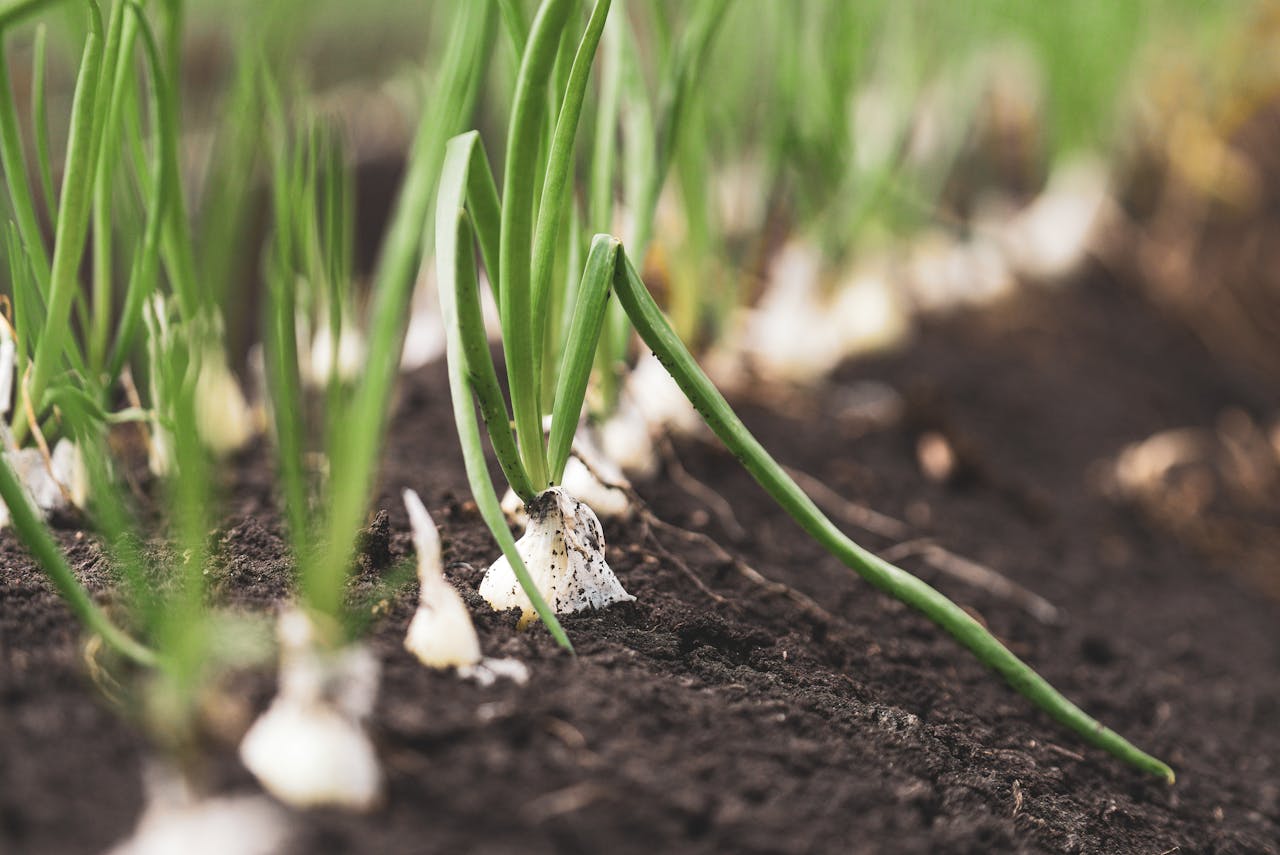
If you are using onions for wellness, it is best to choose organic, non-GMO and non-irradiated onions. Fortunately, these are not hard to find; but if you have the space and the inclination, onions are fun to grow. They like plenty of sun, rich, well-drained soil and regular water. Most critters will not bother your onions, but they can be harmful to pets – so think ahead.
Onions can be started indoors from seed in late winter or early spring (about six weeks before the soil temperature is expected to reach 50 degrees Fahrenheit). Sow seeds ¼ inch deep, in a 64-cell tray of starting mix. Two seeds per cell will ensure a full tray, and you can move extras to an additional tray after germination.
Many people grow onions from purchased “sets,” which are small onions ready to plant out. These have a high success rate and save you the time and trouble of starting your seeds indoors.
Either way, onions can be planted outdoors after the nighttime soil temperature remains above 28 degrees Fahrenheit. Loose, loamy, “living” soil is best. Amend dead, compacted soil with plenty of compost.
Bury the roots but leave the tops visible. Spacing will vary depending on your variety, but in general, onions should be spaced about 6-8 inches apart, with 12-18 inch space between rows.
Considering the global onion consumption of about 13 pounds (around 25 medium-sized onions) per person annually; an average, onion-eating family of four would want four 15-foot rows of onions.
Some more cold-tolerant varieties can be planted in autumn for an early summer harvest, but most onions are harvested later in the season. Onions are ready to harvest when the leaves become floppy. If you pinch the base and the leaves are still full and firm, the onion is still growing.
Loosen the soil around the onion to prevent damage during harvest, and gently remove the whole plant. Shake off excess soil and place onions (single layer) to cure in a warm, dry well-ventilated area.
Once the leaves have dried up, the onions should be sufficiently cured. Clean them up by removing the dirty layer of skin and all but an inch or so of the dried leaves. Sort out any damaged onions and use them first, or discard them if they are too far gone. They will not store well.
Onions should be stored in a dry, well-ventillated area that is cool but does not dip much below freezing — an unheated attic, perhaps.
Home remedies with onions
Fresh Onion
- Fresh slices of onion can be rubbed on bug bites to reduce itching and swelling.
- Chopped onion placed in a sock and held on the ear can relieve the pain of earaches.
- Onion slices rubbed on sunburn can help speed healing of the skin.
- Consuming raw onion can improve respiratory congestion and asthmatic symptoms.
Onion Juice
Don’t worry, if you don’t have a juicer — a fresh, peeled onion can be grated or placed in a food processor and then strained through cheese cloth to remove the liquid. You’ll be surprised how much juice is actually in an onion!
- Onion juice can be taken orally by the teaspoon to treat the common cold, hypertension, poor circulation and urinary tract infections.
- Taking alternating doses of onion juice and peppermint tea can reduce nausea and help stop vomiting.
- A cotton ball with onion juice can help relieve earaches and ringing in the ear.
- Mix with honey or yogurt and apply as a face mask to promote a healthy, blemish-free complexion.
Onion tea
Onion tea is made by boiling chopped onion in water. Allow it to cool a little and then strain out the solids.
- A teaspoon of onion tea taken every hour can help pacify a colicky baby.
- Rubbing the scalp with onion tea can prevent hair loss, treat dandruff and promote healthy growth.
- Gargling with onion tea can soothe a sore throat.
Onion cough syrup
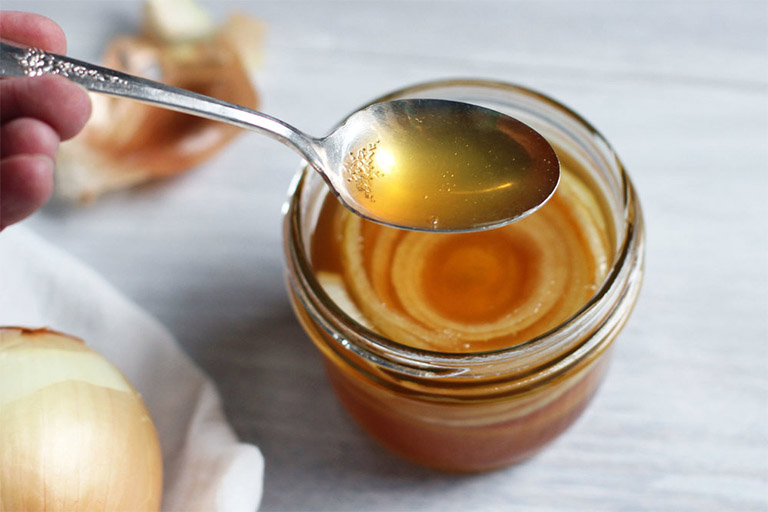
Onion cough syrup is a powerful remedy that can be made in the matter of an hour or so. Place a layer of chopped onion in a small jar, then drizzle honey over it. Repeat until the jar is nearly full, then wait. After the honey draws out the juice of the onion you can strain your syrup off for use.
- Take a teaspoon twice a day to soothe sore throats and coughs.
Onion paste
Combine minced onion with coconut oil to form a paste.
- Rub on the chest to loosen mucus and clear up congestion.
- Apply on minor cuts and scrapes to prevent infection and speed up healing.
In conclusion
I would tell an onion joke, but it might make you cry. Instead, a fun fact: The current world record for growing the largest onion is held by Garreth Griffin of the UK. This Bunyun onion, grown last year, weighed a whopping 19 lb 12.4 oz!