Of the many medicinal herbs that begin with L, none has greater utility and lower maintenance than lovely lavender. Treasured for millennia, this hardy aromatic herb is not only remarkably therapeutic, it is absolutely beautiful and easy to grow.
The lavender plant
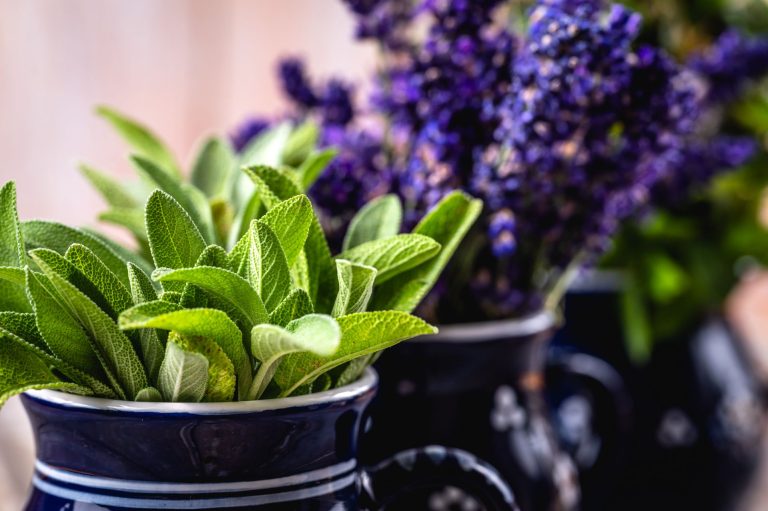
The genus Lavendula includes about 40 different species of lavender, which vary in size, habit, and flower color. The most commonly grown species, English lavender (Lavendula angustifolia), is generally considered perennial — in that it survives the winters to live many years — but it is more accurately described as a small, semi-evergreen shrub.
Reaching up to three feet tall and four feet wide, English lavender boasts beautiful spikes of fragrant, purple flowers in early summer, and equally-fragrant, finely-pubescent foliage — which remains largely intact through the plant’s dormant season.
This old-world plant was brought to the Americas with the early European settlers. It is hardy in USDA zones 5-9, and thrives in well-drained soil with lots of sun. The latin root lavare, meaning “to bathe” hints at its valuable soothing and cleansing properties.
Traditional uses

Endemic to the Mediterranean area, India and the Middle East, lavender has been in cultivation for over 2,500 years, and used medicinally in many cultures. From headaches to toothaches, and sore joints to sore throats, lavender seemed to soothe and improve almost any condition.
Success
You are now signed up for our newsletter
Success
Check your email to complete sign up
Ancient Egyptians captured its fragrance in perfumes and incense, and made use of its soothing properties in treating anxiety, digestive ailments, headaches, and skin irritations. Since the fresh, pleasing scent was considered heavenly, lavender played multiple roles in Egyptian burial rituals.
As incense, it promoted a peaceful transition for the departed. Lavender oil was employed as a preservative in the embalming process. Fresh or dried lavender was strewn around graves to honor the deceased while offering solace to their survivors.
In India, lavender has long been employed in Ayurvedic medicine. It is believed to promote harmony of the mind and body with its powerful ability to soothe and balance.
Ancient Greeks and Romans had a variety of applications for lavender. The fragrant oil was used in ointments. An herbal bath with lavender helped to calm the nerves and soothe sore muscles. It was even added to culinary creations and applied to repel insects.
As a symbol of purity and tranquility, it was often used in ritual ceremonies. Burned as incense, it enhanced a connection with the Divine.
Although lavender only found its way to China in the last century, it quickly became a favorite in traditional Chinese medicine, where it is recognized for its balancing effect in promoting overall wellness.
Lavender is thought to aid digestion, improve sleep and relieve tension; and it is one of six essential oils in a popular formula called “white flower oil,” 白花油 (bai hua you,) which is used as a decongestant, anti-inflammatory and analgesic remedy.
Medicinal properties

The medicinal properties of lavender have been documented since the Middle Ages. This versatile healing herb has consistently demonstrated antibacterial, anti-inflammatory, antispasmodic, antiseptic, carminative, and expectorant properties.
Lavender promotes the healing of wounds, while soothing discomfort and preventing infection. The notable soothing effect of lavender helps reduce stress — a major trigger for all sorts of dis-ease.
Although lavender flowers get most of the medicinal credit, the fragrant foliage shares many of the same healing properties and can also be considered highly therapeutic.
Growing lavender

This time of year you may already be seeing small, living, lavender Christmas trees for sale. These are simply lavender plants which have been pruned for ornamentation. Without continuous maintenance, they will take a normal lavender shape after a season of growth.
Should you end up with one of these “trees” in your possession, you’ll want to keep it happy and healthy. Check the species and its hardiness range, as it might need extra protection during the winter.
While lavender prefers to grow outdoors, it should only be transplanted in the spring — after all danger of frost. A little compost dug into the hole will be enough fertilizer for its lifetime, since they are not heavy feeders. It needs regular water to establish a good root system in the first season, but mature plants are fairly drought-tolerant. Poor, dry soil that is slightly alkaline can improve their fragrance.
While we wait for warmer weather to return, an indoor plant will do best in a permeable terracotta pot placed in a sunny window. If you don’t end up with a holiday lavender, you can start from the beginning, instead.
Propagation:
Lavender can be started from seed, but is more reliably propagated from cuttings — which can be taken in the spring or fall.
- Using clean snippers, cut three-inch segments of lavender from a healthy plant.
- Remove the lower leaves.
- Dip the bottom half in a natural rooting hormone (optional).
- Place each cutting in a small pot of moist potting mix.
- Keep the pots in a warm area with filtered light.
- Cover with plastic or glass to maintain moisture.
- Once roots are apparent, remove the covering and give them more sun.
- Bump them up into bigger pots if necessary.
- Transplant when soil temperatures are above freezing.
Maintenance:
With very few pest and disease problems, lavender is fairly self-sufficient. You can encourage more vigorous growth by pruning after the flowers are finished. Snip about one-third of the length off each stem.
Because lavender doesn’t die back to the ground like herbaceous perennials, the exposed upper plant appreciates a bit of winter protection.
If possible, plant lavender near a structure or wall (that doesn’t block the sun) to stabilize temperatures and protect from wind. Mulching will protect the roots from damaging freeze-thaw activity in the soil. You can also opt to leave your leaves mounded around your plant through the winter.
If you plan to use your lavender medicinally, you will need to harvest the flowers, and preserve them by drying. Snip flower stems as the buds are just beginning to open. Make small bundles and hang them upside-down in a clean, dry area out of direct sunlight. Once they are completely dry you can store lavender in any airtight container.
Home remedies with lavender

Much of lavender’s medicinal potency is imparted through its amazing fragrance. Sachets made from dried flowers are an easy way to enjoy many of lavenders’ benefits. These simple, lavender-stuffed pouches can be placed with your pillow to improve sleep, kept in the closet to deter moths, left in the car for a relaxing ride, or dropped into the tub for a soothing bath.
Lavender tea is also safe to consume for most people. An infusion of lavender flowers steeped in hot water for 10 minutes can alleviate anxiety and depression, headaches, menstrual cramps, nausea, and respiratory allergies. Consuming lavender is not recommended for women who are pregnant or breastfeeding, young boys, or pets.
One of the most common ways to use lavender today is in the form of an essential oil. This potent product is a favorite among aromatherapists and other integrative health practitioners.
- The scent can be diffused in a fine mist or via reed diffuser sticks to relax the nerves and relieve respiratory complaints.
- Lavender oil added to skin care products promotes healthy skin and can reduce acne, age spots, scarring and wrinkles.
- Add a few drops of lavender to a carrier oil for a soothing massage to relieve sore muscles and joint pain.
- Mix equal amounts of lavender and coconut oils and apply to scrapes and other wounds to facilitate healing.
- The above mixture can also be rubbed on the back, chest and neck to combat cold and flu symptoms.
If you have an abundance of lavender, try making essential oil at home. With just a crockpot and a refrigerator, you can collect the essence of your own plants. If nothing else, you will gain an appreciation for all the work that goes into the process and understand why quality essential oils are pricey!