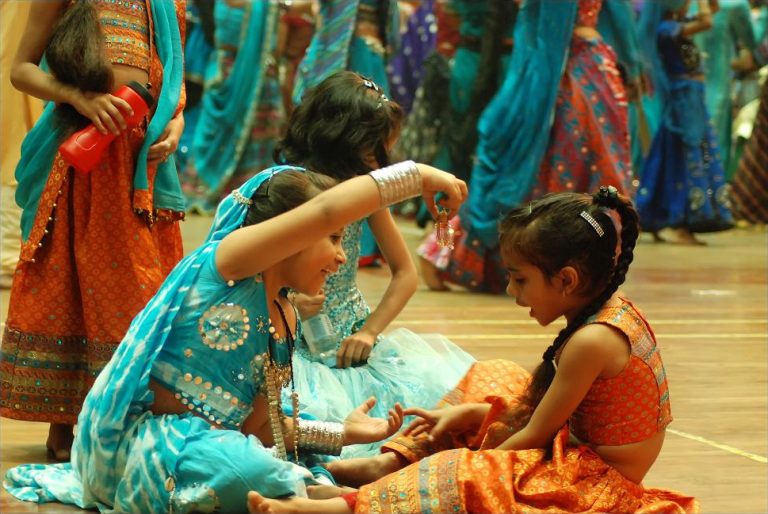
I was recently blessed with an unexpected opportunity to attend Garba, a traditional Indian dance, central to the nine-night festival of Navratri. Live music, spiritual devotion and engaging folk dance brought together hundreds among the thriving Indian Community in Parsippany and the surrounding New Jersey areas.
Yes, Parsippany is not only a hot spot for authentic Indian cuisine, it is an active center for Indian culture, keeping traditions alive for today’s youth, and enriching the community.
Garba is one of many events hosted by the Parsippany Indian Association, which organizes holiday celebrations throughout the year to promote and preserve Indian culture. This event took place over the course of six nights at the Parsippany Hills High School.
Navratri is an important Hindu festival in honor of the goddess Durga. It celebrates her victory of good over evil, and honors the Divine feminine energy. The celebration lasts nine(nava) nights(ratri), in recognition of Durga’s nine forms. Her forms symbolize various virtues — like courage, devotion, purity, strength and wisdom.
Navratri is celebrated four times a year, once during each season. The fall Navratri, which was observed September 22 through October 2 this year, is one of the most celebrated festivals throughout India.
Success
You are now signed up for our newsletter
Success
Check your email to complete sign up
Aside from the fact that it took place in a high school gym, the experience was something straight out of a fairy tale.
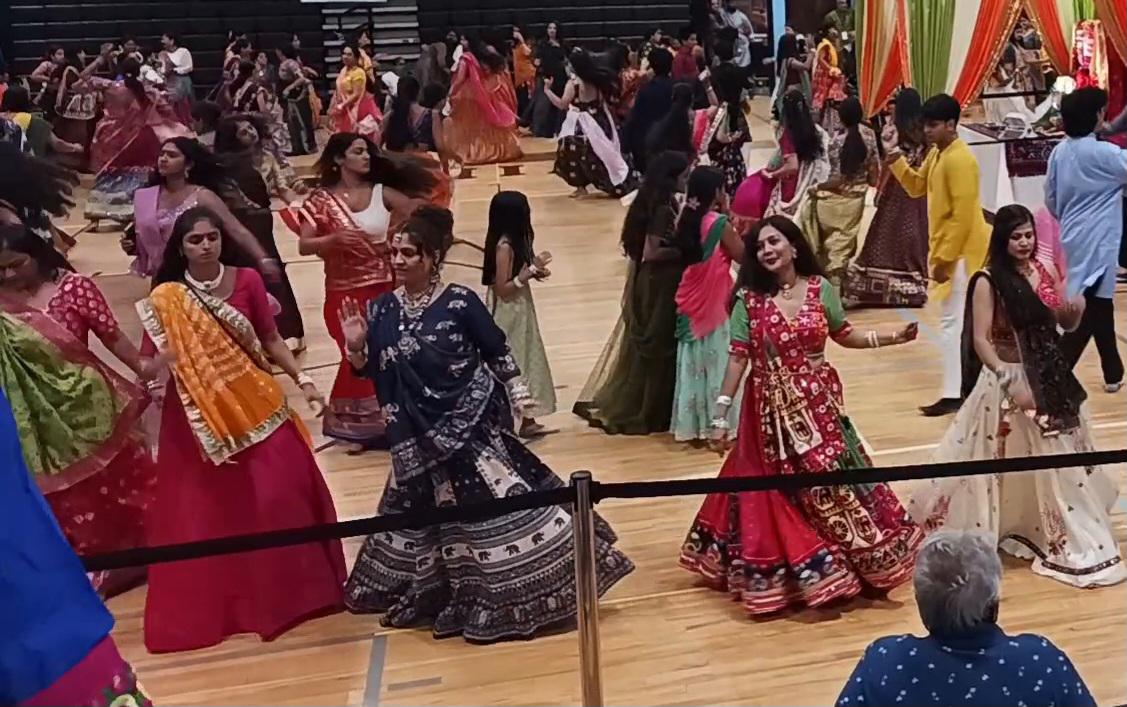
Richly embroidered garments, bejeweled bodies, and swirling skirts of every color populated the dance floor. The women wore long, flared skirts called “lehenga,” with matching, fitted, crop tops called “choli;” each carefully draped with a long, decorative scarf called “dupatta.” The men donned elegant, embroidered tops called “kurta.”
With nothing on their feet but the soles they were born with, participants circled the floor in trailing, communal line dances. The effect was a mesmerizing display of graceful hand gestures and fancy footwork.
It was a late-night affair, starting at 9:30 pm with live music lasting until the wee hours of the morning. The fem-focused event attracted many mother-daughter pairs, and a handful of obviously-not-Indian friends — like me! Luckily for the uninitiated, the dances began slowly so one could sort out the steps. As the tempo gradually increased, so did the energy level and excitement.
A diverse group of girls from Morristown High School enjoyed the dance. One said, “I was worried I wouldn’t be able to learn any of the dances at first, but after some assistance, I sort of caught on. The people were so nice, and it was a really fun experience. I’m so glad I went!”
Her classmate agreed, “It was fun learning new dances with friends and experiencing a different culture. I enjoyed the Indian music and dancing in a circle.”
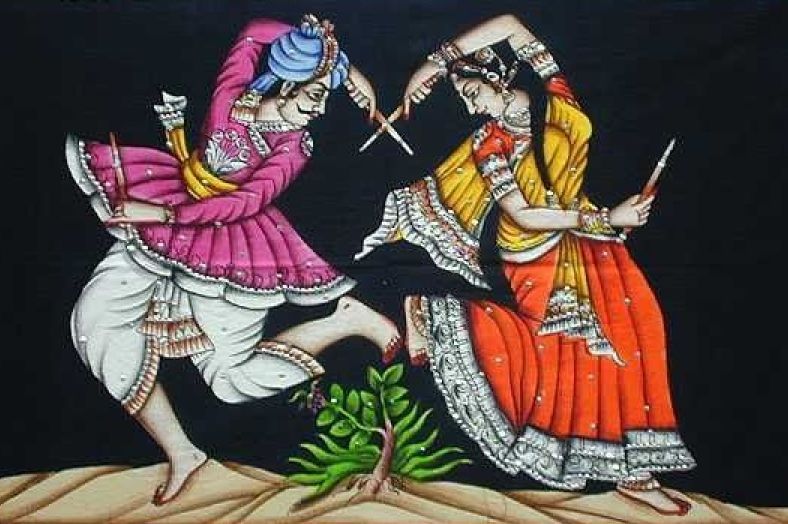
The event culminated with a special dance called Dandiya Rass, which involved the clashing of decorative sticks — symbolic of swords. While the first Garba dances embrace fertility, life and devotion, this portion of the festivities recalls the goddess Durga’s fierce battle with the demon king Mahishasura. Together, they represent the dual nature of life, a balancing act between creation and destruction; power and the surrender of devotion.
In addition to festivities, Navratri is time for spiritual cleansing and reflection, and the dance included a pause for prayer. In observance of the holiday, many consume a purifying sattvic diet during the nine-day period, avoiding flesh foods, grains, processed foods and pungent spices. Some will even abstain from all food during the day, and only eat after sunset. The festival in Parsippany, long after sunset, offered traditional dishes in the school cafeteria.
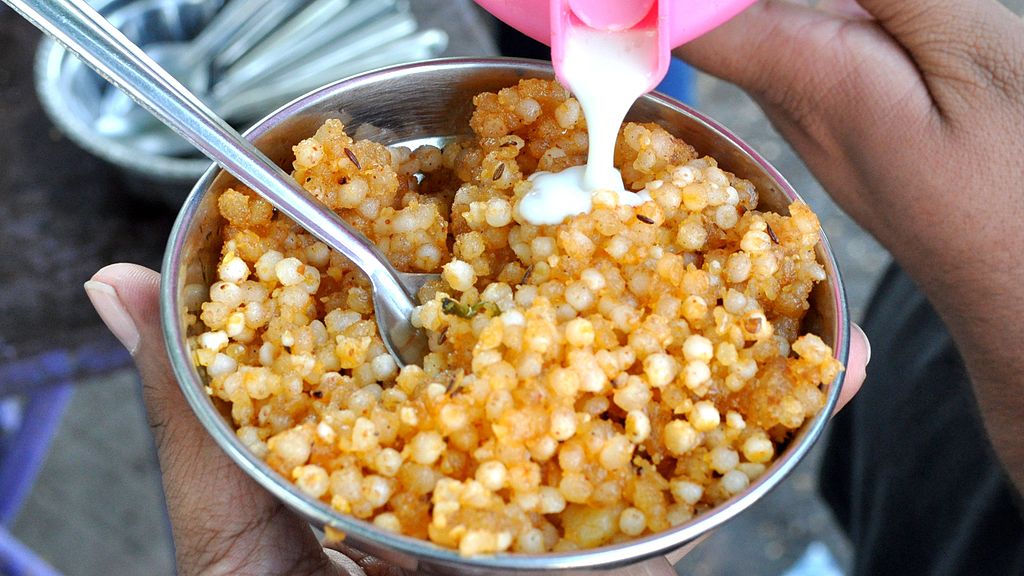
Brianna, who came with her Indian mother, said, “I really enjoy the sense of community that comes along with it. I love how everyone is so nice — they won’t hesitate to teach you a step, and you are never judged if you’re not getting the dance correct. I also love the food!”