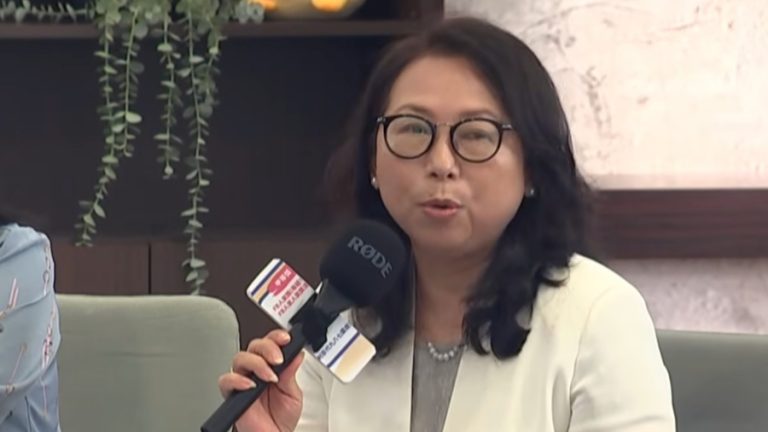
The Kuomintang (KMT) has elected former legislator Cheng Li-wen as its new chair, marking the start of a new phase for Taiwan’s largest opposition party. The victory came just as Chinese leader Xi Jinping sent a congratulatory telegram, a rare cross-strait gesture that immediately reignited debate over the KMT’s ties with Beijing.
The KMT confirmed on Oct. 19 that it had received Xi’s message from the Chinese Communist Party (CCP) Central Committee. Cheng replied shortly after, urging renewed exchanges and cooperation “on the common foundation of the 1992 Consensus and opposition to Taiwan independence” — rhetoric long favored by both the CCP and the KMT’s traditional wing.
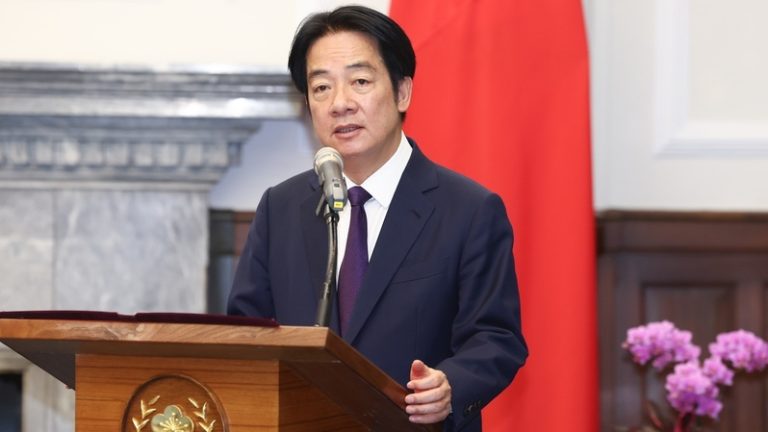
President Lai Ching-te, speaking the next day, offered a pointed response. “Peace requires ideals, but it cannot be based on illusions,” he said. “Believing that accepting the 1992 Consensus or the One China principle will bring peace — that is simply impossible.”
In his message, Xi praised decades of KMT–CCP interaction under the “1992 Consensus” framework and called for advancing “the process of national reunification.” He expressed hope that both parties would “jointly promote the peaceful development of cross-strait relations.”
In her reply, Cheng affirmed that people on both sides of the Taiwan Strait “belong to the same Chinese nation” and should “deepen exchanges and understanding” to maintain stability and benefit people across the Strait. She pledged that the KMT would continue to uphold the 1992 Consensus and oppose Taiwan independence “to safeguard the security and dignity of the Republic of China.”
Success
You are now signed up for our newsletter
Success
Check your email to complete sign up
Cheng’s overture to Beijing quickly stirred debate inside the party. Former Central Broadcasting Corporation chairman Chao Shao-kang urged Cheng to “tone down the pro-China stance” and better align with mainstream Taiwanese opinion to expand the KMT’s voter base.
Cheng responded that election season often brings strong emotions but said she hopes “passions will subside soon.” She called for unity, urging members to focus on making the KMT the largest party in the legislature and to prepare for a return to power in future elections.
Cheng also brushed off questions about President Lai’s decision not to send her a congratulatory letter. “Why bother?” she said, calling it a reflection of Taiwan’s partisan competition.
She added that cooperation between the KMT and the centrist Taiwan People’s Party — known as the “blue-white” alliance — appears to be “proceeding smoothly,” particularly with an eye on the 2026 New Taipei City mayoral race.
Analysts say Cheng faces the dual challenge of balancing the party’s traditional cross-strait platform with growing localist sentiment among younger voters. Her early statements suggest a strategy that seeks to preserve the KMT’s legacy of engagement with Beijing while also appealing to Taiwan’s evolving political center.
READ MORE:
- Are Hu Chunhua and Wang Yang Poised for a Comeback as the CCP’s Fourth Plenum Nears?
- ‘State Organs’ Exposing China’s Forced Organ Harvesting Industry to Premiere in PA
- Viral Outbreaks Sweep Across China Amid Surge in Hand, Foot, and Mouth Disease
Lai: Peace requires strength, not illusions
At the annual Overseas Compatriot Affairs Council meeting, President Lai reiterated that Taiwan cannot rely on China’s goodwill for peace.
“It’s impossible to achieve peace through a single agreement,” Lai said. “Peace cannot come from accepting the terms of an aggressor. The belief that recognizing the 1992 Consensus or the One China principle will bring peace — that is impossible.”
Lai also contrasted his administration’s defense buildup with that of former President Ma Ying-jeou, who had gradually reduced defense spending even as China’s military budget soared.
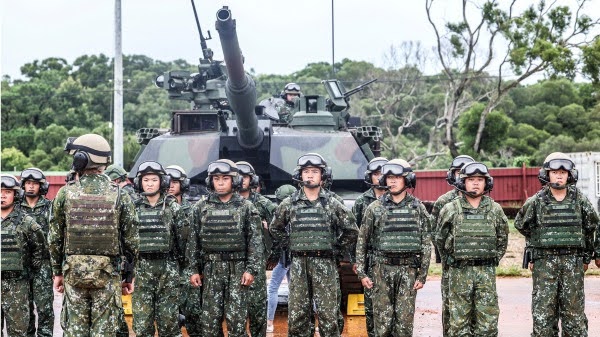
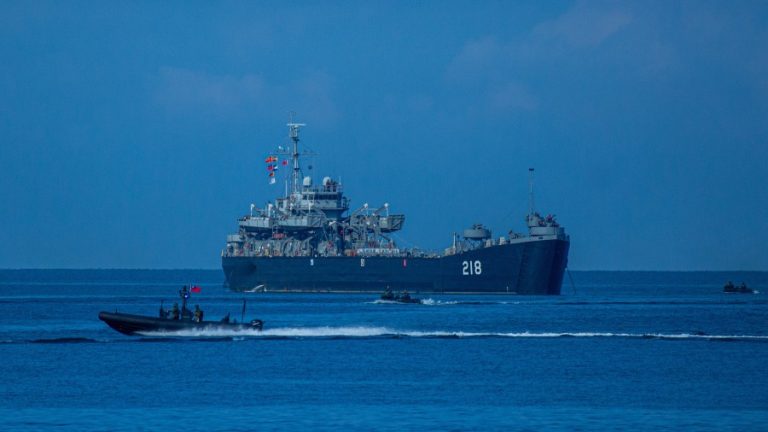
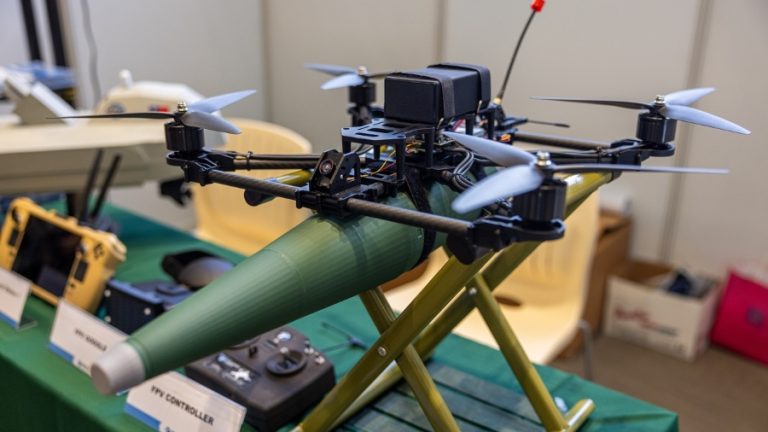
Under Tsai Ing-wen and now Lai, Taiwan has increased defense expenditure from 1.8% of GDP to about 3.3% in 2025, with a goal of reaching 5% by 2030. The funding, he said, is not only for foreign arms purchases but also to build domestic defense capacity through industries such as semiconductors, ICT, and electronics manufacturing.
“As President and Commander-in-Chief,” Lai declared, “I have full confidence in protecting our national security, sustaining economic growth, and improving the lives of 23 million people. Democratic Taiwan will continue to stand as a stabilizing force in the Indo-Pacific.”
The exchange between Xi, Cheng, and Lai underscores Taiwan’s enduring debate over how to preserve peace across the Taiwan Strait — through dialogue with Beijing or through deterrence and defense.
For Cheng, the challenge lies in positioning the KMT as a credible alternative to the ruling Democratic Progressive Party without being branded as overly accommodating to China. For Lai, the moment reinforced his administration’s narrative that true peace can only be secured through strength and sovereignty.