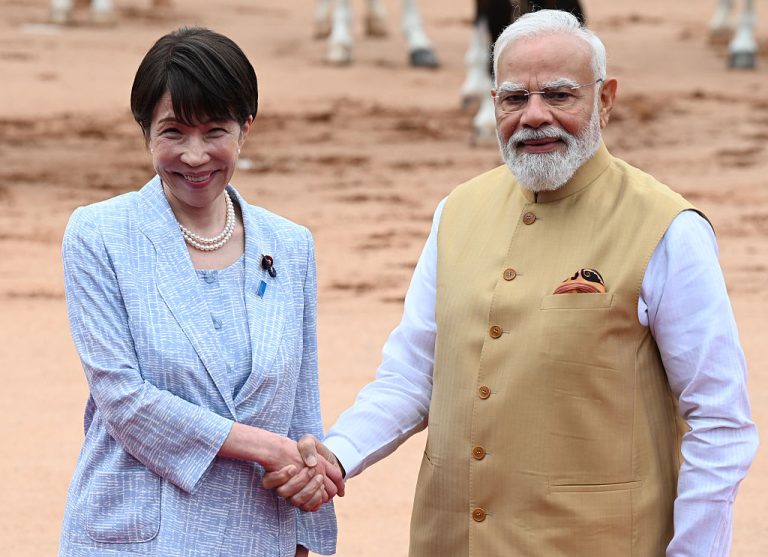
According to Japanese media reports, on Nov. 7 (Friday), Prime Minister Takaichi Sanae made a clear statement in the House of Representatives Budget Committee regarding whether a “Taiwan contingency” would constitute a “situation threatening Japan’s survival.”
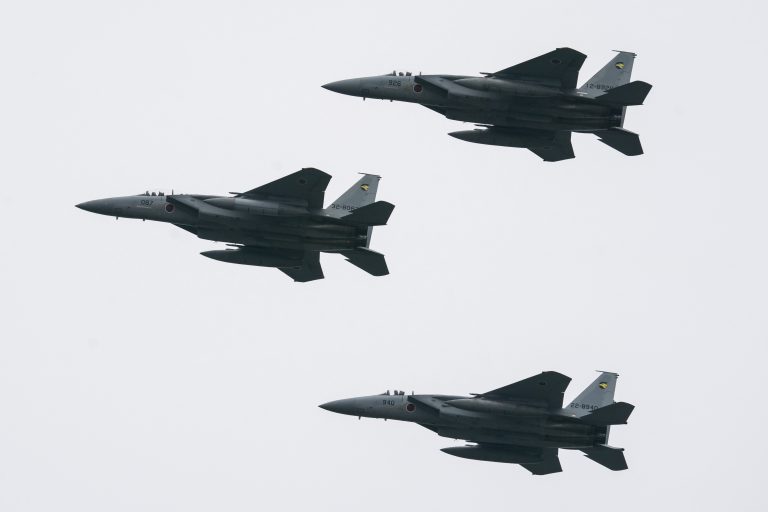
She said that if the People’s Republic of China (PRC) were to attack Taiwan using military force, such as warships, the Japanese government could determine it to be such a situation, thereby invoking the right of collective self-defense and allowing the Self-Defense Forces (SDF) to use force.
Takaichi on Monday, Nov. 10, stood by what she’d said on Friday in response to criticism from Beijing.
Under Japan’s post-World War II constitution, the country is only allowed to use military force in response to a direct threat against Japanese territory.
As reported by Asahi Shimbun, Nikkei, and Jiji Press, Takaichi said in response to a question from Constitutional Democratic Party (JCDP) leader Katsuya Okada that stability in the Taiwan Strait is directly linked to Japan’s security.

Success
You are now signed up for our newsletter
Success
Check your email to complete sign up
If Communist China attempts to change the status quo by force — especially through military actions involving warships — Japan would assess the situation under the criteria of a “situation threatening Japan’s survival” and determine whether it has a serious impact on Japan’s existence, Takaichi added. If confirmed, the SDF could act under the 2015 Security Legislation, exercising collective self-defense in cooperation with allies.
Further, Takaichi stressed that Japan would be responsible for ensuring the safety of Japanese nationals in Taiwan should Beijing attempt to invade or blockade the island.
Building on precedent
This was Takaichi’s first formal statement on the Taiwan Strait issue in parliament since becoming Japan’s first female prime minister on Oct. 21. She reaffirmed that “a Taiwan contingency is a Japan contingency,” stressing that the Taiwan Strait issue has become central to Japan’s security policy and that her government will strengthen crisis management and intelligence capabilities. In fact, this position builds on earlier precedents: in 2015, then–Prime Minister Abe Shinzo enacted the Peace and Security Legislation, which first allowed for collective self-defense under “situations threatening Japan’s survival” — explicitly including a Taiwan contingency as one scenario.
In 2021, Prime Minister Yoshihide Suga publicly stated the same phrase, and in 2022, Prime Minister Fumio Kishida included for the first time in Japan’s National Security Strategy that peace and stability in the Taiwan Strait are essential for the security and prosperity of the international community, while reinforcing the defense of Japan’s southwestern islands.
Takaichi, known for her conservative stance and open support for Taiwan, is seen as continuing her predecessors’ security line. Analysts expect her position to further impact Sino–Japanese relations and the broader Indo-Pacific situation.
‘If the lips are gone, the teeth are cold’
An ancient Chinese proverb, from the Spring and Autumn era over 2,500 years ago, describes the strategic relationship between two states, Guo and Yu, as that of lips and teeth; “if the lips are gone, the teeth will be cold” (唇亡齒寒). When Guo was threatened by a third power — the powerful state of Jin — it impacted the security of Yu.
Taiwan, home to around 23 million people, controls an important sea lane upon which Japan and South Korea — both U.S. allies — are reliant for trade and supplies of critical goods like fuel and food.
The Chinese Communist Party (CCP) views Taiwan as a rightful part of PRC territory, and insists on the eventual “reunification” of Taiwan with the Chinese mainland, including by force if necessary. Taiwan maintains its de facto independence as the Republic of China (ROC).
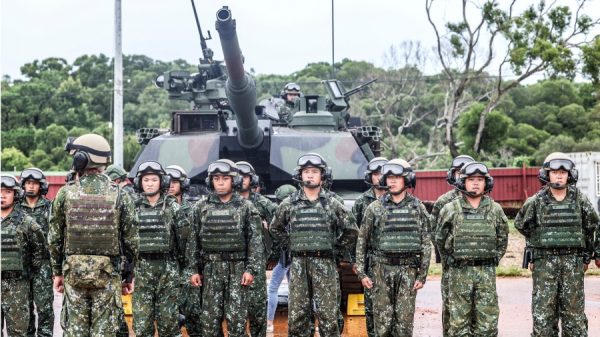
Akio Yaita, a Japanese journalist residing in Taiwan, commented that this marks the first time a sitting Japanese prime minister has formally acknowledged that if war breaks out across the Taiwan Strait, Japan’s Self-Defense Forces could intervene. Under Japan’s current security framework, if a close partner nation is attacked in a way that threatens Japan’s survival, Tokyo can exercise collective self-defense — even if Japan itself is not directly attacked. In other words, if the PRC launches a military assault on Taiwan, Japan could deem it a matter of national concern and take concrete action.
Yaita added that Takaichi’s stance builds upon former Prime Minister Abe’s post-retirement declaration that “a Taiwan contingency is a Japan contingency,” giving it real policy substance. For decades, Japan constrained by its pacifist constitution to rely only on diplomacy and economics without military power to support national strategy. Now, Japan is gradually breaking free from that passive posture, Yaita said.
According to Yaita, Takaichi’s remarks symbolize not just a declaration of defense policy, but a revival of Japan’s national consciousness. Eighty years after its defeat in World War II, Japan is preparing to return to the international stage as a “normal nation.” For Taiwan, this is clearly a positive development: any PRC military move would now have to account not only for a U.S. response but also for possible Japanese involvement.
Yaita concluded that for the CCP, the increasing clarity of Takaichi’s position raises the costs of trying to take Taiwan, reducing the likelihood of a military adventure.
By Wang Jun (王君).