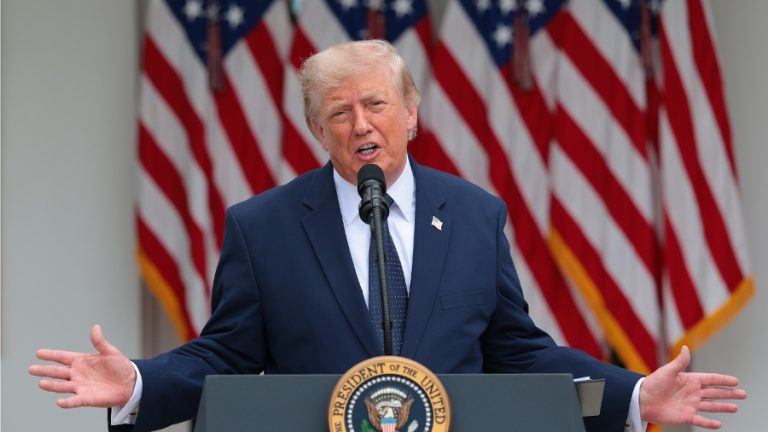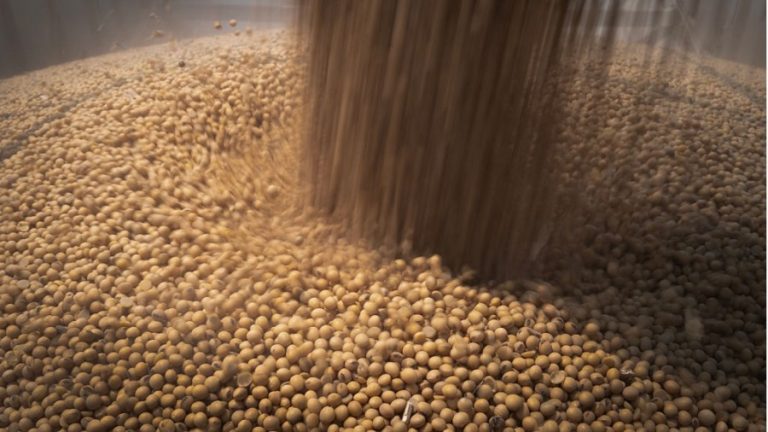
Following the Xi–Trump meeting in Busan, South Korea — where both sides agreed to a one-year truce in the trade war — Beijing has begun implementing a sweeping set of trade policy adjustments effective Nov. 10, 2025. The changes mark what analysts see as a tentative new phase in U.S.–China economic relations.
The People’s Republic of China (PRC) General Administration of Customs (GAC) announced the reinstatement of import qualifications for three American soybean exporters and lifted the suspension on U.S. timber imports previously halted over quarantine concerns.
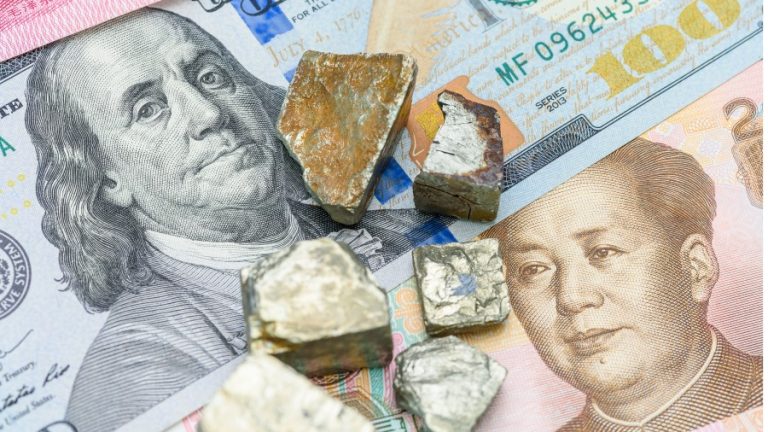
Simultaneously, the Ministry of Commerce (MOFCOM) and GAC jointly declared the “temporary suspension” of export controls on rare earths, super-hard materials, lithium batteries, and graphite anodes, all of which are key components in the global new-energy supply chain.
Markets widely interpreted these steps as a goodwill gesture and a pragmatic follow-up to the Busan consensus between the two leaders.
Soybeans have long anchored U.S.–China trade, serving as a vital link in agricultural and food supply chains. As the world’s largest soybean importer, the PRC depends heavily on U.S. crops for animal feed and cooking oil.
Success
You are now signed up for our newsletter
Success
Check your email to complete sign up
In recent years, Beijing had suspended several American firms’ import licenses, citing contamination concerns such as ergot fungus and seed-coating residues.
Restoring those licenses ensures Chinese processors have a stable year-round supply, bridging seasonal gaps between northern and southern hemisphere harvests while giving U.S. farmers renewed access to their most lucrative market.
The reopening of the U.S. timber channel also carries industrial weight.
With China’s construction and real-estate sectors showing signs of gradual recovery and demand rising for high-quality materials in furniture manufacturing, renewed U.S. supplies could help stabilize prices and diversify sourcing.
Analysts predict particular benefits for lumber producers across the U.S. West Coast and Pacific Northwest, whose exports had sharply declined during the trade freeze.
Rare earths: A ‘loosen without letting go’ strategy
Rare earths, sometimes called the “vitamins of modern industry,” are essential for high-tech manufacturing, clean energy, and defense applications.
China dominates this global supply chain, controlling both mining output and refining capacity.
The now-suspended export restrictions had targeted:
- Raw and processed rare-earth materials
- Synthetic diamonds and cubic boron nitride (super-hard materials)
- Lithium-battery components and graphite anodes
By suspending rather than abolishing the controls, Beijing reduces short-term global anxiety while preserving long-term leverage.
For sectors like electric vehicles, renewable energy, and precision electronics, this move temporarily eases supply-chain shocks and offers a measure of predictability.
Sources cited by Reuters say China is drafting a new export-licensing framework to streamline approvals without removing oversight entirely. Analysts describe this as a “loosen without letting go” policy — one that signals restraint, not retreat.
Market and strategic implications
From a macroeconomic standpoint, Beijing’s post-Busan adjustments are expected to:
- Strengthen access to agricultural and forestry imports for Chinese companies.
- Support U.S. exporters facing surplus pressure amid domestic overproduction.
- Ease global production bottlenecks in new-energy vehicles, wind power, and advanced machinery.
The synchronized timing of announcements from Customs and Commerce highlights an increasingly direct policy execution model — “political direction, departmental action.”
Domestically, the moves stabilize supply chains and reassure private industry; internationally, they convey pragmatism over confrontation.
Crucially, Beijing used the phrase “temporary suspension” instead of “permanent cancellation,” leaving itself room to maneuver.
This “reversible flexibility,” experts note, reflects a hallmark of strategic governance in major-power competition.
Observation points for the one-year truce
The Busan summit marks an important inflection point in U.S.–China relations.
This one-year truce provides both sides with breathing space — a pause to recalibrate rather than capitulate.
However, the landscape differs sharply from earlier Trump–Xi encounters:
- Focus shift: From tariffs and commodity purchases toward technology and supply-chain security.
- Policy tools: From blanket measures to case-specific, reversible adjustments — suspensions, exemptions, and targeted relaxations.
- Mechanisms: Renewed efforts to establish crisis-management and communication frameworks.
In the coming months, several key indicators will reveal the depth of this détente:
- Details of China’s new rare-earth export licensing regime — whether it introduces credit-based white lists or more transparent approval standards.
- Possible reciprocal U.S. actions, such as selective tariff recalibration or export-license flexibility on high-tech equipment.
- The pace and scale of China’s agricultural purchases, and how Beijing balances U.S. soybeans versus South American imports.
- Corporate-level responses — renegotiating contracts, building inventories, and designing risk clauses.
A pause, not a pivot
China’s decision to ease trade tensions — resuming imports of key U.S. goods and temporarily lifting strategic-material controls — marks the first tangible outcome of the Busan truce.
While the measures are provisional, the message is clear: Beijing is seeking stability amid pressure, signaling openness to dialogue without abandoning leverage.
For global markets, this shift brings a rare moment of calm after years of uncertainty — but few believe the competition between the world’s two largest economies is truly over.
The truce may be temporary, but the opportunity for mutual recalibration has arrived.
By Yang Tianzi and Wendy Xue.