By Yi Fan, Vision Times
Chinese-Canadian pop star Kris Wu (Wu Yifan), who’s currently serving a 13-year sentence in Beijing for allegations of rape and “group licentiousness,” has once again become the subject of frenzied death rumors inside China’s tightly-censored social media sphere. Claims that the disgraced singer died in prison after a prolonged hunger strike erupted on Weibo this week, only to be swiftly scrubbed by China’s stringent internet controls. The rumor is now fueling suspicion and speculation among netizens.
Now, one sharply-worded comment from Taiwanese financial influencer Hu Caiping — mocking the idea that Wu would ever “starve himself to death” — unexpectedly ignited a firestorm. Netizens flooded her post with dark jokes, including one refrain repeated across the thread: “He’s been matched already.”
Some readers interpreted it as a grim reference to forced organ-matching, a topic that has increasingly dominated online conversations amid recent high-profile disappearances and renewed scrutiny of China’s opaque prison system.
RELATED: Inside China’s ‘Rejuvenation’ Scandal: Rumors of Organ Transplants, Blood Replacements
Rumors of Wu’s demise
Success
You are now signed up for our newsletter
Success
Check your email to complete sign up
Wu Yifan, now 35, was sentenced in November 2021 to 13 years in prison and deportation after serving his term. For the past four years, unconfirmed claims about his death have circulated periodically inside China.
This latest wave began when a Chinese entertainment blogger alleged that Wu had “died after a long hunger strike” and that his health had deteriorated rapidly. Another version claimed he was placed in a “little black room” — a term used for punitive solitary confinement — where he allegedly refused food and later perished while protesting his treatment.
However, nothing has been verified, and no official statement has been issued by Beijing’s Public Security Bureau, the prison authority, or any government department. But still, silence only deepened suspicion among netizens. Within hours, the rumor shot onto the Weibo Hot Search rankings, but users who clicked the topic found the entries wiped clean. Posts discussing Wu’s alleged death returned “content not available” errors.
One blogger noted that this was already the fifth time in four years that news of Wu’s supposed death had circulated: “Because the CCP blocks information, it’s extremely difficult to confirm anything.”
Other online theories ranged from the lurid to the political:
- Wu was “disappeared” after refusing advances from a powerful official
- He offended the wrong family by entangling himself with “a high-ranking leader’s girlfriend or daughter”
- He died during “punishment detention” and the truth is being covered up
Debunking lies
Taiwanese finance commentator and influencer Hu Caiping poured gasoline on the fire when she mocked the hunger-strike rumor in a Facebook post on Nov. 11. She wrote: “Wu Yifan starving himself to death? Impossible. If he had that kind of courage, he wouldn’t have ended up like this in the first place. A hunger strike requires bravery and the resolve to face death. Wu Yifan didn’t even have the courage to face women—how could he possibly starve himself to death?”
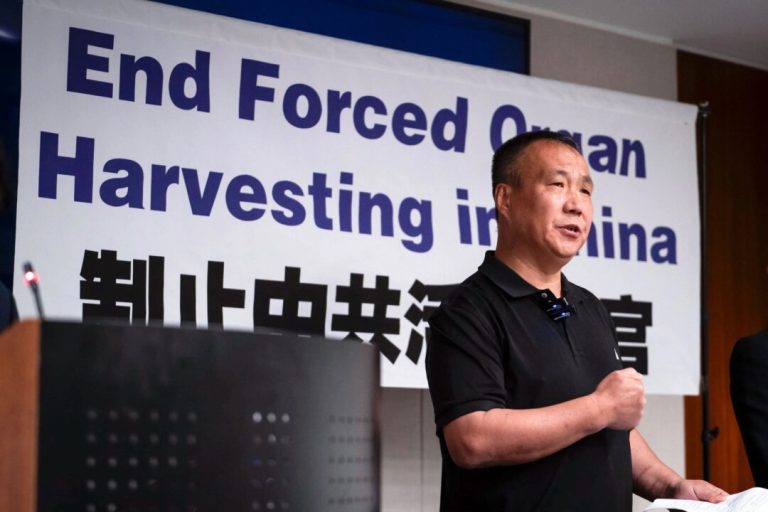
RELATED: Hospitals in China Admit to Live Organ Harvesting of Falun Gong Practitioners
Hu went on to speculate that if Wu had died in prison, it would more likely be due to contaminated food: “If Wu Yifan really died in prison, it was probably from eating expired aflatoxin-contaminated rice and developing hepatitis or liver cancer. People say Liu Xiaobo died this way—‘the cow and the thoroughbred sharing the same trough.’”
She later added in a comment: “I have no idea whether he’s still alive or dead—we don’t have ‘spirit-calling services’ here. I just don’t believe he would starve himself to death.”
Her post triggered a wave of replies, many rife with dark humor:
- “Executed by starvation.”
- “He’s been matched already.”
- “Better check whether all his organs are still there.”
- “He’s alive — inside some official’s body.”
- “More likely he choked on a mantou bun.”
The “matched” comments, which appeared repeatedly, were widely interpreted as a reference to organ matching, echoing ongoing concerns about unexplained deaths and disappearances in China’s detention system.
The downfall of a superstar
Wu Yifan’s downfall began in July 2021 when Chinese influencer Du Meizhu accused him of luring women — some underage — by pretending to “audition MV actresses,” supplying alcohol, and then coercing them into sex. The allegations sparked national outrage due to the speed in which the case was handled.
- Beijing police launched an investigation, and Wu was detained within weeks.
- He was convicted of rape and group licentiousness in November 2022.
- His appeal was rejected the following year.
Under the court’s decision, Wu will reportedly be deported back to Canada after completing his sentence.
A vacuum of information
In China’s tightly-controlled information environment that’s rife with censorship and cover-ups, silence only acts as oxygen for speculation. With no official confirmation, zero media transparency, and Weibo’s immediate censorship of related posts, Wu Yifan’s fate has become a kind of “Rorschach test” for a society steeped in mistrust.
Whether the singer is alive, hospitalized, punished, or simply locked away, the state’s refusal to answer even basic questions leaves room for the most extreme narratives, including forced organ harvesting, political retaliation, and secret executions.
For now, the only certainty is uncertainty. Until Beijing breaks its silence, the question remains open: Is Kris Wu really gone, or just another victim of China’s information blackout?
Editor’s Note: This article reports on ongoing public discussions and unverified claims circulating on social media. Views expressed in this article are the opinions of the author and do not necessarily reflect the views of Vision Times.