By Yang Tianzi
South Korea marked the first anniversary of its martial-law crisis with a statement that immediately reignited political tensions.
From a small cell in the Seoul Detention Center, former president Yoon Suk-yeol accused the country of sliding into “a spy paradise controlled by pro-Communist forces,” issuing one of his most pointed messages since his arrest.
His words landed at a combustible moment. Yoon and his wife now sit behind bars; prosecutors are seeking a 15-year sentence for the former first lady.
Outside prison walls, anti-Communist protests stretch from Myeongdong to Daerim, turning what began as a legal fight into a broader confrontation over South Korea’s identity and geopolitical compass.
Success
You are now signed up for our newsletter
Success
Check your email to complete sign up
Yoon’s prison message: reframing martial law as a constitutional defense
In a written statement titled To the People, Yoon defended the martial-law order he issued a year earlier as a “constitutional act to protect freedom” and to counter “forces that paralyzed the government and damaged the foundations of the republic.”
He directed most of his fire at the opposition Democratic Party, which he accused of practicing “parliamentary dictatorship” through repeated impeachment attempts, sweeping budget deletions, and more than 1,200 alleged illegal personnel appointments.
But the line that drew the most attention was his claim that South Korea had become a “haven for spies,” enabled—he argued—by the Democrats’ refusal to strengthen espionage laws.
The remark tapped into a long-standing public anxiety: China’s political influence and foreign interference.
South Korea’s National Security Act remains narrowly focused on North Korean espionage. Activities carried out for other foreign governments, including China, fall under lighter penalties—a gap conservatives have long sought to close. Progressives worry that expanding the law could revive the political abuses of earlier eras.
A second arrest, a revoked security detail, and no special treatment
The political showdown escalated in the early hours of July 10, 2025, when a Seoul court issued Yoon’s second arrest warrant in four months.
The new charges centered not on rebellion but on alleged efforts to destroy evidence, obstruction of government functions, document falsification, and violations of presidential-protection rules.
Once the warrant was approved, the Presidential Security Service revoked all remaining protections normally afforded to former presidents.
Yoon was placed in a roughly 10-square-meter cell with basic furnishings—a folding table, a storage cabinet, a small TV, a toilet, and a mat. He wears inmate clothing, follows standard medical checks, and receives the same meals as other detainees.
For many South Koreans, the “de-privileging” carried symbolic weight: a reminder that no political figure is exempt from the judicial process.
His wife, Kim Keon-hee, is also in custody. On Dec. 3, prosecutors requested a 15-year sentence, adding further volatility to an already fraught situation.
A deeply polarized public—and an anti-China mood at its highest in decades
Yoon’s arrests have divided the country. Critics see the case as political payback, pointing to South Korea’s near-unbroken history of prosecuting former presidents. To them, the pattern risks turning transfers of power into existential battles.
Supporters of the investigation counter that the courts are showing independence—that no officeholder should operate beyond scrutiny.
But this legal fight is unfolding alongside a surge of anti-China sentiment.
Polls show that South Koreans now express some of the world’s strongest distrust toward China, a trend that accelerated after Beijing’s economic retaliation during the THAAD missile-defense dispute.
Public anger sometimes spills into symbolic gestures. In February 2025, a man dressed as Captain America attempted to break into the Chinese Embassy in Seoul; he received an 18-month sentence. The episode—strange as it appeared—reflected deeper frustrations brewing beneath the surface.
Protests swell across Seoul, fueled by fears over influence and national direction
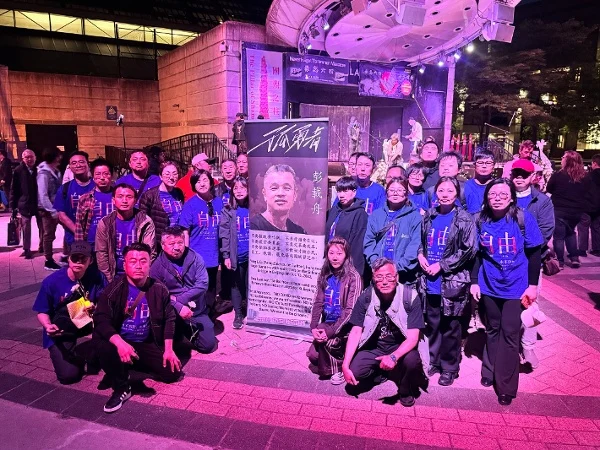
Demonstrations have become a near-daily feature in the capital. Recent protests have spread beyond station hubs and shopping districts into Daerim and even Seoul’s Chinatown.
On Sept. 28, conservative activists rallied near Seoul Station before marching toward Namdaemun. Protesters waved South Korean and American flags, chanting:
- “Free Yoon Suk-yeol”
- “Eliminate the Chinese Communist Party”
- “Abolish fraudulent elections”
- “Arrest Lee Jae-myung”
Some wore shirts referencing the attempted assassination of U.S. conservative activist Charlie Kirk. Police reported no violent clashes.
President Lee Jae-myung criticized elements of the anti-China rallies, saying some had crossed into “hateful and degrading speech.”
Still, public anger has intensified as the government moves to introduce visa-free entry for Chinese tour groups—sparking fears of additional influence or pressure from Beijing. China’s embassy has cautioned Chinese nationals in Seoul to avoid protest areas.
Negative views of China reach historic highs
Multiple surveys underscore the mood.
A 2025 JoongAng Ilbo poll found 66.3 percent of South Koreans view China negatively. Pew Research Center recorded an even starker figure in 2024: 97 percent expressing unfavorable views—one of the highest rates globally. In 2022, the Sinophone Borderlands Project reported 81 percent.
The sentiment spans generations.
Younger South Koreans, especially active online, frequently criticize China’s political, economic, and cultural posture. Their social media commentary often drives national debate and further shapes public perception.
Analysts point to China’s retaliation during the THAAD dispute as a major turning point—one that hardened attitudes and continues to shape politics.
A looming showdown over the espionage law
Yoon’s call to expand the espionage law is now shaping up to be a central fight in the National Assembly. Conservatives argue the law must cover espionage conducted for countries beyond North Korea—especially China—given the shifting landscape of regional competition.
Progressives warn that broadening the law risks reviving the same abuses once committed in the name of national security.
International attention is growing. As a key U.S. ally, South Korea’s political stability affects trilateral coordination with Washington and Tokyo. Yoon’s former pro-U.S., pro-Japan, and anti-China policies now hang in uncertainty as he remains behind bars.
In his message, Yoon called on citizens to “show this regime a red card.”
Whether that card lands on the ruling party or on Yoon’s own legacy will be settled through democratic processes. What is already clear is that this political confrontation has reconfigured South Korea’s landscape—and its implications are likely to reverberate long after the protests fade.