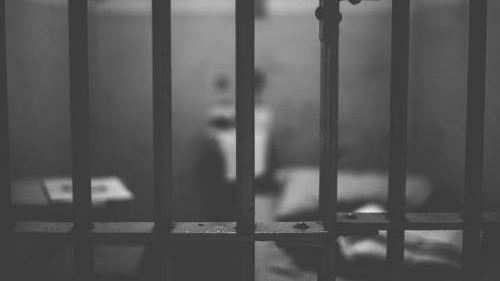
Under the rule of the Kim family, North Korea’s prisons are notorious for their harsh conditions, where inmates are routinely subjected to inhumane treatment. According to insider accounts, prison authorities plant informants among detainees, and anyone who shows even the slightest sign of discontent may “vanish” overnight—disappearing without a trace.
Multiple inmates in North Korean prisons mysteriously disappear
According to a report by Daily NK, North Korean prisons are described as “hell on earth,” with survival conditions brutally harsh. In addition to being forced into extremely strenuous labor, prisoners have seen their food rations continually reduced, leaving them in a constant state of severe hunger and exhaustion. Even when inmates are injured or fall ill, they receive almost no medical care and are often left to die without intervention.
During the winter, prisoners sleep on mats as thin as paper, resulting in widespread frostbite cases. Contaminated drinking water further fuels severe diarrhea and infectious disease outbreaks inside the facilities. The extreme filth, stench, and pest infestations force inmates to endure unrelenting physical and psychological torment.
Sources inside North Hamgyong Province say that recent testimonies from former detainees released from the Hamhung and Kaechon re-education camps have gradually exposed these shocking realities. One insider said, “A single careless remark inside a re-education camp can cost you your life,” confirming that detainees have indeed been taken away in the dead of night and never seen again.
Former prisoners revealed that since 2025, living conditions inside the camps have deteriorated further, while surveillance and control have intensified. This has caused mounting resentment among detainees, who often utter remarks like “I’d be better off dead,” “Living is too painful,” or “We work like animals but get barely any food.” Such statements are immediately classified as politically inappropriate and punished severely by the authorities.
Success
You are now signed up for our newsletter
Success
Check your email to complete sign up
To prevent dissatisfaction from spreading, camp administrators have planted informants among the prisoners. According to sources, these informants’ secret reports have led to many inmates being taken away in the middle of the night—never to return.
In the severe material shortages of North Korea’s prisons, even soap, toilet paper, and menstrual products are considered luxuries. As a result, authorities use cigarettes and snacks as rewards to encourage informants to report on fellow inmates.
This distorted system has created a mindset among prisoners that “survival is impossible without informing,” driving them to betray each other in hopes of self-preservation. One source lamented that what was supposed to be a rehabilitation system helping offenders reintegrate into society has instead become a space of mutual surveillance and entrapment—so brutal that inmates say, “To survive, you must become a beast.”
READ MORE:
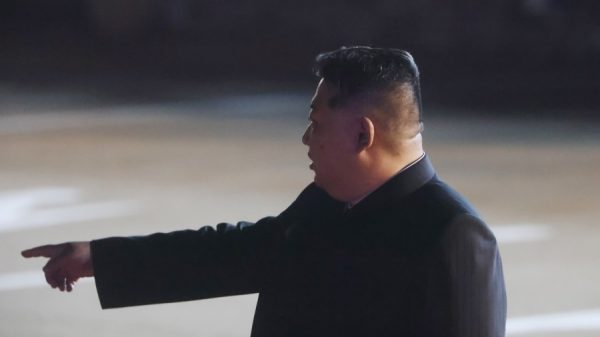
Nonprofit exposes inhumane treatment of prisoners in North Korea
On March 24, 2023, CNN reported that individuals who had been held in North Korean prisons or detention facilities described countless atrocities to the nonprofit organization Korea Future. In its report, Korea Future incorporated interviews and testimonies from hundreds of North Korean defectors, supported by official documents, satellite imagery, structural analyses, and digital simulations of correctional facilities, revealing in detail the previously unknown suffering of North Korean prisoners. The organization stated bluntly that North Korean leader Kim Jong Un must be held accountable.
The sources included survivors, eyewitnesses, and even perpetrators of abuse. Korea Future documented over 1,000 cases of prison abuse, several hundred incidents of sexual violence, and hundreds of human rights violations. The report identified hundreds of individuals repeatedly involved in the abuse and called for official investigation and prosecution. It also cross-referenced eyewitness accounts with satellite images of 206 detention facilities across various provinces, accusing high-ranking officials, including major generals, of personally committing atrocities.
Some of the accounts are particularly harrowing. Three individuals were imprisoned for attempting to defect: one woman alleged that authorities forced her to have an abortion at seven to eight months pregnant; a man reported surviving on only 80 grams of corn per day, losing weight from 60 kilograms to 37 kilograms in a month, and being forced to eat cockroaches and rats to survive; a third person was required to maintain a painful position for 17 hours a day for 30 consecutive days.
A man who repeatedly committed escape attempts between 2000 and 2017 revealed that prison guards sexually assaulted female inmates and brutally beat prisoners. They were forced to walk bent at a right angle, and earlier, prisoners had to crawl on hands and feet; by 2017, standing upright was allowed only if they bent at a 90-degree angle.
He also described that in winter, temperatures dropped as low as –10°C, and five prisoners were confined to 6.6-square-meter cells without heating. In 2000, no warming supplies were provided, and only by 2017 did blankets become available. Other forms of abuse persisted: some prison guards would make female inmates wash clothes at night and then sexually assault them.