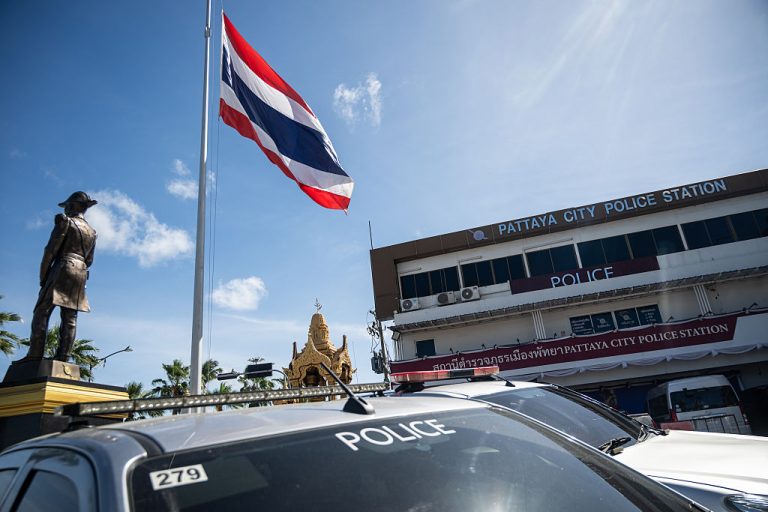
On Dec. 8, Thailand launched airstrikes on its border with Cambodia, threatening the uneasy ceasefire between the two countries.
A spokesman for the Thai military said in a statement on Monday that aircraft were deployed to “suppress” Cambodian forces from Thai territory after they “fired small arms and curved weapons.” One Thai soldier was reported killed in the Ubon Ratchathani province, with at least another eight wounded, Major-General Winthai Suvaree said.
According to Thailand’s Foreign Ministry, the country will resume military action against Cambodia until its sovereignty is secured, as reported by al-Jazeera.
Ministry spokesperson Nikorndej Balankura also said that Cambodia had “trampled” on the ceasefire deal.
Despite Thailand’s claims, Cambodia refuted on Facebook saying that it was Thailand who struck first at 5:00 a.m. local time on Monday.
Success
You are now signed up for our newsletter
Success
Check your email to complete sign up
Cambodia’s Information Minister Neth Pheaktra told the AFP news agency that four Cambodian civilians were killed in the airstrikes, and 10 more were wounded.
The local news outlet, Cambodian Journalists Alliance Association (CamboJA), reported that a Cambodian journalist, Pol Chham, is in critical condition after a bullet fragment was lodged in his tongue in the attacks in Oddar Meanchey province.
Cambodia defended itself, saying that it had not retaliated against Thailand, even as it was under fire.
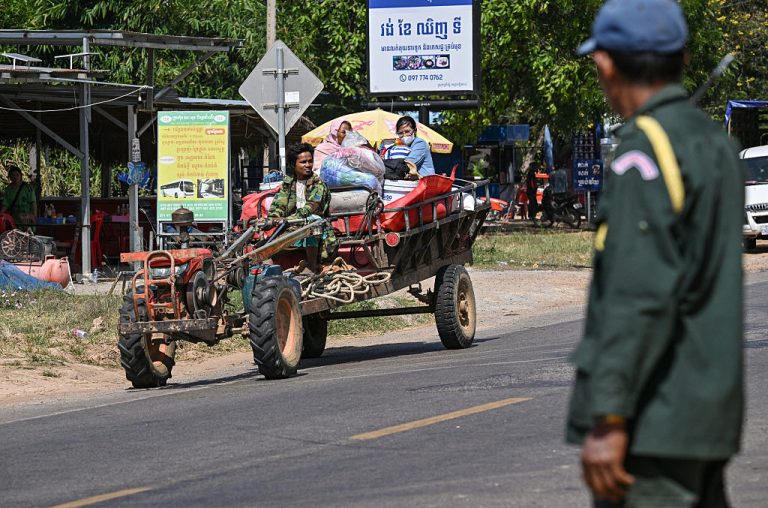
Thailand’s army later stated that more than 50,000 people had fled areas close to the border following the renewed strikes. Pheaktra also added that tens of thousands of residents were forced to leave their villages nearby.
Cambodian prime minister Hun Manet also warned that Thailand “must not use military force to attack civilian villages under the pretext of reclaiming its sovereignty.” He added that it is the government’s priority to both defend its people and “Cambodia’s sovereign territory.”
Manet’s father — former prime minister Hun Sen — accused Thailand’s prime minister, Anutin Charnvirakul, of “using the lives of soldiers and civilians to declare war on Cambodia.”
READ MORE:
- Why the UN Resolution 2758 on Taiwan Still Haunts Beijing: 5 Hidden Mistakes in a Diplomatic ‘Victory’
- Beijing’s Coercion Backfires, Boosting Japan’s Takaichi
- Southeast Asia Floods and Cyclones Kill Over 900, Displace Hundreds of Thousands
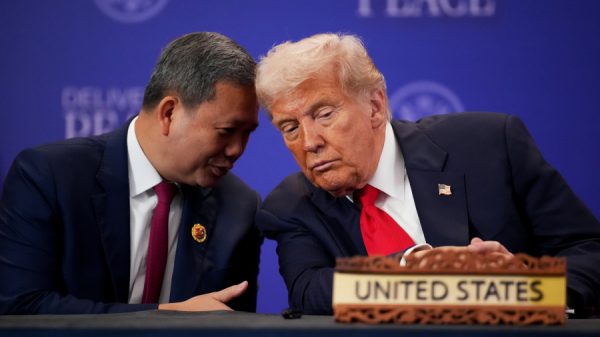
Renewed tensions between Thailand and Cambodia
U.S. President Donald Trump and Malaysia’s Prime Minister Anwar Ibrahim — both of whom brokered the ceasefire deal in October — called for Thailand and Cambodia to cease hostilities.
“We urge both sides to exercise maximum restraint, maintain open channels of communication and make full use of the mechanisms in place,” Anwar said on X.
“Malaysia stands ready to support steps that can help restore calm and avert further incidents. Our region cannot afford to see longstanding disputes slip into cycles of confrontation,” he added.
Antonio Guterres, Secretary-General of the United Nations (UN), urged Cambodia and Thailand to prevent escalations.
“The United Nations stands ready to support all efforts aimed at promoting peace, stability, and development in the region,” the UN said in a statement, adding that the conflict had already caused “significant civilian casualties, damage to civilian infrastructure, and displacement on both sides of the border.”
Montse Ferrer, regional research director for Amnesty International, said that renewed attacks threaten “civilian lives, mass displacement and the destruction of essential infrastructure,” calling for both governments to “protect civilians in line with international humanitarian law.
Monday’s attacks were the latest act of violence between Thailand and Cambodia since a five-day clash in July, when rockets and artillery rounds were launched between the two countries.
The conflict began after a landmine blew up along the border, wounding five Thai soldiers. What followed was five days of clashes which killed 48 people, ultimatly ending in an “immediate and unconditional” ceasefire with negotiations brokered by Malaysia and the U.S.
In October, an expanded peace agreement was signed in Kuala Lumpur, Malaysia, but the implementation of the deal was suspended by Thailand after another landmine blast heavily injured one of its soldiers. Cambodia has denied responsibility for the explosion, claiming the mine was a leftover from previous conflicts.