Southeast Asia has been hit by powerful floods and cyclones in recent weeks, triggering deadly floods and landslides that have claimed over 900 lives.
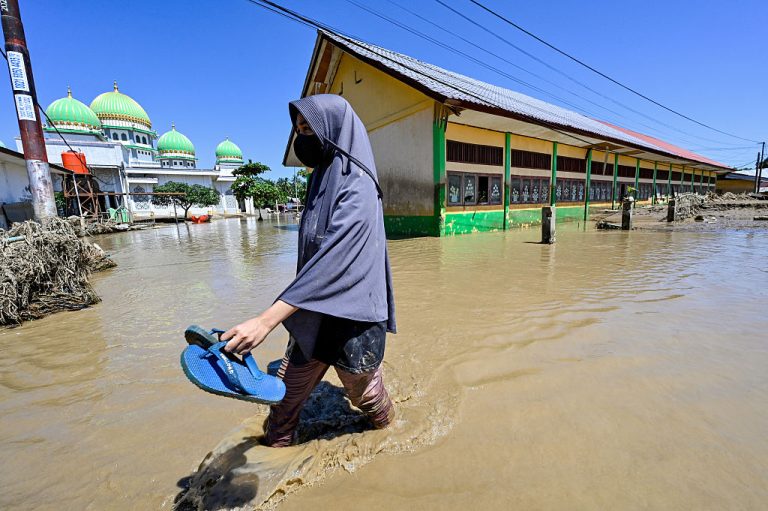
Monsoon rains have submerged roads, hindering rescuers from reaching those stranded as floodwaters swept many away. Even aerial and naval teams had to navigate severe weather and damaged infrastructure to carry out their missions.
Among the affected countries, Indonesia was hit hardest, particularly after Cyclone Senyar swept through, followed by impacts in Malaysia and Thailand. As of Dec. 2, the head of the disaster mitigation agency reported 659 deaths, with roughly 475 people still missing.
The floods have also displaced about 290,700 people in the provinces of North Sumatra, West Sumatra and Aceh, the disaster management agency said.
“The water just rose up into the house and we were afraid, so we fled,” Afrianti, a man who only used one name, told Reuters in Padang — West Sumatra’s capital — where she fled to. “Then we came back on Friday, and the house was gone, destroyed.
Success
You are now signed up for our newsletter
Success
Check your email to complete sign up
According to the Independent, police spokesperson Ferry Walintukan reported incidents of looting for food and water.
”The looting happened before logistical aid arrived,” he said. He later added that residents were unaware that rescue was coming, fearing starvation.
Visiting the affected areas on the island of Sumatra, President Prabowo Subianto promised to help the nation recover with its infrastructure, saying, ”We need to confront climate change effectively. Local governments must take a significant role in safeguarding the environment and preparing for the extreme weather conditions that will arise from future climate change.
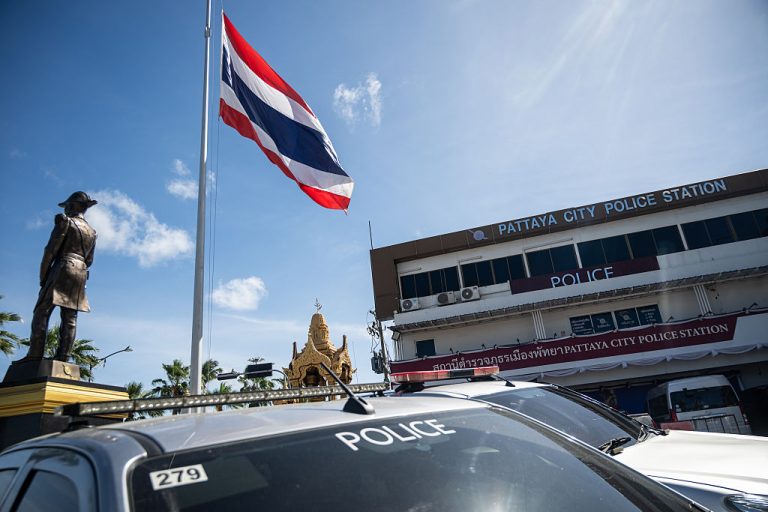
Naval rescue in Thailand
As of Dec. 1, Thailand had suffered major casualties, with 176 dead and 366 missing.
Southern Thailand in particular saw more than 2.08 million people across eight provinces, with a total of 819,432 households, affected by the floods. While the disaster is said to be “beginning to resolve,” several key areas are still submerged and rescue missions have been rolled out.
Songkhla province has been the hardest hit, affecting 582,053 households—about 70 percent of all households in the impacted provinces. On Nov. 28, the province’s largest city, Hat Yai, recorded 335 millimeters of rainfall in a single day, the highest in 300 years, Reuters reported.
In response to the disaster, the Royal Thai Navy (RTN) deployed two vessels — the HTMS Ang Thong, a large landing ship, and the HTMS Chakri Naruebet (No. 911), an aircraft carrier — to send supplies to citizens across the southern provinces, Nation Thailand reported.
”All donated items will be transferred ashore immediately by ship, vehicle and aircraft upon arrival to be distributed to the affected public as quickly as possible,” the RTN confirmed in a statement.
READ MORE:
- Toxic Spill in Zambia Mine Puts China–Africa Relations Under Severe Strain
- The Green Veil: How Climate Policies Risk Wealth, Rights, and Sovereignty
- Hundreds Feared Dead in Massive Hong Kong Tower Fire
Floods in northern Malaysia
Malaysia suffered fewer casualties, though damages have still been high.
In the northern state of Terengganu, more than 10,000 families had been evacuated.
In the state of Selangor, further south, 4,141 people had been pulled out of their homes.
Selangor Fire and Rescue Department operations deputy director, Ahmad Mukhlis Mukhtar, told local news outlet Malay Mail that four people were said to have been trapped in a clinic in the district of Sepang. While three were saved, one is believed to have drowned.
Several more states have seen thousands more people and families rescued. The death toll so far has been reported to be two, including one non-citizen.
According to flood watch site InfoBanjir, several rivers had exceeded dangerous levels following the rainstorms.
Malaysia and Thailand have cooperated to save as many victims as possible. Hundreds of Singaporeans were evacuated from Hat Yai as a result.
Heavy rain in Vietnam
According to The Guardian, beginning two weeks ago, 1,900 millimeters of rainfall had fallen in parts of central Vietnam, sweeping almost 800 kilometers from Quang Tri to Lam Dong provinces. The local weather bureau also stated that the Ba River, located in Dak Lak province, “surpassed a 1993 record in two places,” while the Cai River in Khanh Hoa province rose “to a new high.”
Casualties were reported in those two provinces, along with Dak Lak, Khanh Hoa, Gia Lai, Danang, and Hue. Roads have been blocked from the floods, with helicopters sent to provide supplies and rescue those stranded.
The mountainous province of Dak Lak suffered the worst amount of casualties, with 63 killed mainly from drowning.
Local news outlet VnExpress published a report detailing the experiences of those caught in the chaos.
“When the water recedes and the first layer of mud dries, flood-hit residents will rebuild their lives from scratch and with great trepidation,” Le Phong, a content creator for VNExpress, wrote.
In central Gia Lai, state media reported that rescuers on boats evacuated people from flooded homes, with military and police forces helping relocate them to safer areas. Meanwhile, in Quy Nhon city, Binh Dinh province, rescuers delivered food and water to overcrowded hospitals, according to state-run Thanh Nien newspaper.