By Li Muzi, Vision Times
China’s economy continues to deteriorate, marked by a collapsing property sector, the withdrawal of foreign capital, widespread business closures, and surging unemployment. Public frustration is growing rapidly.
Recently, a Chinese Communist Party (CCP) insider who said he works in a “sensitive position” posted an account online describing the country’s economic reality, concluding bluntly that “children from poor families have no path upward.” The post has since been deleted.
On Dec. 3, YouTube commentator Lao Liu Mantan reported that the post came from a CCP system insider responding to questions from netizens about China’s economic prospects following the tariff confrontation with the United States. Some had claimed that the U.S. would ultimately collapse and ordinary Chinese people would benefit. According to Lao Liu Mantan, the insider’s response was later removed from the internet.
The insider wrote that such optimism mostly comes from those already receiving pensions. “Look at how bad layoffs have become—complaints and despair are everywhere,” he said.
Success
You are now signed up for our newsletter
Success
Check your email to complete sign up
He stated that he works in the public security sector and interacts directly with people at the grassroots level, where he has clearly felt rising social hostility. This year, he said, tensions have escalated sharply, with numerous violent criminal cases reported in Fuzhou, many linked to wage disputes and debt collection.
He described a young couple in his residential community who recently bought a home and have since been constantly switching jobs in search of work. Shortly after the Lunar New Year, they were already unable to make their mortgage payments.
An increasingly common situation
Situations like this, he said, are becoming increasingly common in Fujian Province, where layoffs at private enterprises have become routine. Cities such as Xiamen and Quanzhou, once seen as relatively stable, have grown noticeably more pessimistic.
Beginning in the spring of 2023, he noted, “multiple bridges in Fuzhou entered a pattern of repeated jump incidents.” Since then, cases of people driven to despair have increased, with April of this year seeing a particularly sharp rise.
According to the insider, almost every village in Fujian now has human smuggling brokers who help people leave the country illegally. In the past, it cost about 80,000 yuan to arrange an exit; now the price has risen to 200,000 yuan. Many of these operations, he said, are scams that exploit widespread anxiety.
He added that the situation for migrant workers has grown increasingly difficult. Looking at former employees he once started businesses with, he remarked that their current circumstances, visible through social media updates, are “truly miserable.”
The insider also described conversations in a WeChat group that includes several community police officers. From their exchanges, he said, it is clear that social hostility is intensifying.
With more people losing their jobs, many are bottling up anger while numbing themselves by endlessly watching short videos. “These people are time bombs,” he wrote, adding that the officers regularly remind one another to be especially cautious when dealing with them.
Aside from pension recipients and those with secure government posts, he argued, very few ordinary people now care about “grand narratives.” “If you stop working, your income stops,” he wrote, adding that everyone is focused on finding a job.
Among middle-aged groups, he estimated that at least 30 to 50 percent are currently job hunting. The situation for young people, he said, is even worse, with a high proportion of neighbors’ and colleagues’ children either unemployed or stuck in endless exam preparation.
He observed that many people in Fujian are once again leaving their hometowns in search of work, resembling conditions from decades earlier. Fuzhou and Xiamen, he asked, how many people have they lost this year alone?
Foreign trade has collapsed
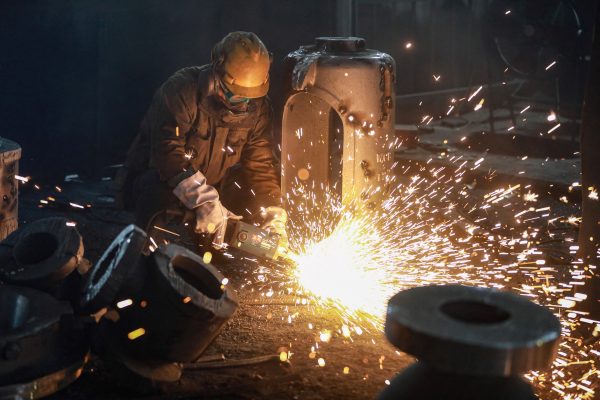
Foreign trade has collapsed, he said, and large swathes of enterprises across Fujian have failed. Xiamen’s migrant worker population has reportedly dropped by nearly two million.
Export-oriented companies around the Xiamen Software Park and the deep-water port area have fallen in large numbers, leaving unemployed middle-aged workers facing collapse while supporting elderly parents and children. Despair-driven incidents, he added, have also increased in Xiamen.
Anticipating the argument that the tariff conflict was initiated by the United States, the insider responded that the government should still bear responsibility for redistribution. “Can’t the government allocate more resources to ordinary people?” he asked.
He argued that expanding domestic demand and reforming distribution should involve shared sacrifice, “like going to war together,” rather than allowing generals to live well while soldiers go hungry.
He said the CCP has no intention of reforming the distribution system and is determined to “extract every last advantage.” He cited the recent Peking Union Medical College “4+4” program controversy as exposing this structural inequality, concluding again that “children from poor families have no way up.”
The insider also addressed innovation and distribution, stating that innovation requires freedom of thought and independent thinking. “If people aren’t even allowed to criticize, and any independent thinking is labeled heretical, how can there be innovation?” he wrote.
Yet, he added, once intellectual and spiritual freedom exists, “certain groups will no longer be able to sit still.” He cited former Chinese Premier Wen Jiabao’s remark that “China needs political system reform.”
Online responses echoed these sentiments. Some netizens commented that private entrepreneurs in China have little chance of survival, that domestic media offers “not a single truthful sentence,” and that without reform from top to bottom, upheaval from below is inevitable.
Others remarked that Eastern European communist regimes did not collapse without reason and argued that the CCP would fall quickly if it abandoned violent stability maintenance.
Separately, Hu Liren, a former Shanghai entrepreneur now living in the United States, said on the program Real China that those who believe China’s economy has already hit bottom must reassess reality.
He argued that 2026 will not mark the end of a downturn, but the beginning of a second phase of systemic economic rupture. According to Hu, the collapse of real estate, the breakdown of local government finances, foreign capital flight, supply chain fractures, and the comprehensive spread of unemployment are converging.
The roughly 300 million people who form the backbone of urban economic activity, he warned, are falling in large numbers. “What the CCP fears most,” Hu said, “is people realizing that this is not a short-term difficulty, but the beginning of institutional collapse.”