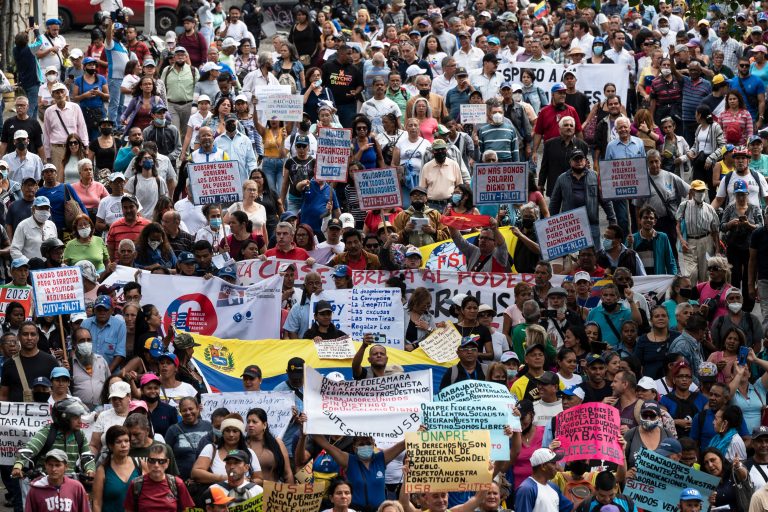
Between 2013 and 2023, Venezuelans experienced a 74 percent collapse in living standards, one of the steepest declines ever recorded in modern economic history.
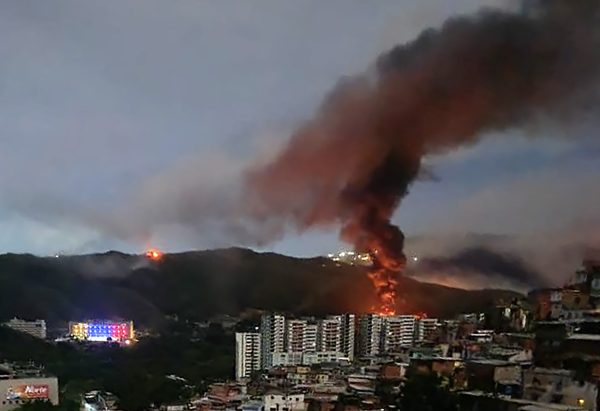
On the streets of Caracas, rubble from explosions and missile fragments lies scattered across the pavement. In front of the few shops that remain open, long queues form as people silently exchange anxious glances.
At the outset of 2026, a dramatic announcement stunned the world. U.S. President Donald Trump declared that American special operations forces, acting under an operation code named “Absolute Resolve,” had captured Venezuelan president Nicolás Maduro and his wife and transferred them to the United States for detention and trial.
The episode once again focused global attention on a South American nation that was once among the wealthiest in the region but is now deeply mired in crisis.
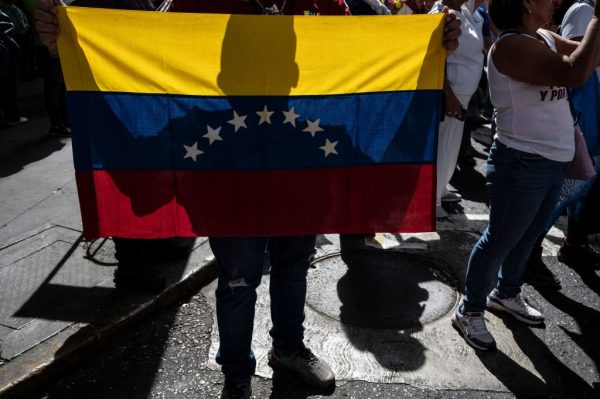
Economic collapse
At the beginning of the 21st century, Venezuela stood as Latin America’s richest country and, for a time, possessed the region’s highest GDP per capita. Endowed with the world’s largest proven oil reserves, the country prospered under the steady flow of petrodollars, reaching the height of its economic expansion around 2001.
Success
You are now signed up for our newsletter
Success
Check your email to complete sign up
The turning point came around 2014. From that moment onward, Venezuela’s economy entered what can only be described as a free fall. According to International Monetary Fund data, by 2025 inflation had surged to 2,000 percent, while GDP had contracted by more than 80 percent from its peak.
The most revealing measure of this collapse is the decline in living standards. Over the decade from 2013 to 2023, Venezuelans saw their standard of living fall by 74 percent, ranking this downturn as the fifth-largest decline in living standards in modern global economic history.
Key indicators illustrate the scale of the deterioration. Oil production fell from approximately 2.86 million barrels per day in 2015 to about 850,000 barrels per day in 2023. Following the imposition of U.S. secondary sanctions in 2020, output briefly collapsed to 337,000 barrels per day. Inflation reached levels that rendered the national currency effectively worthless, while the gap between official and black-market exchange rates widened dramatically. Since 2016, millions of Venezuelans have fled the country, creating one of the largest migration waves in modern Latin American history. Between 2014 and 2020, the economy contracted by roughly 80 percent, with output alone falling 73 percent in 2020.
Policy miscalculations
Venezuela’s collapse was not the product of a single decision. The decisive shift began after Hugo Chávez assumed office in 1999 and launched the “Bolivarian Revolution” and what he termed “21st-century socialism.”
At the core of this model was the extensive use of oil revenues to finance ambitious and ultimately unsustainable social programs. Through initiatives collectively known as the Bolivarian Missions, the government provided free healthcare and education, heavily subsidized food, and direct cash transfers to the poorest citizens.
These programs carried enormous fiscal costs. During Chávez’s twelve years in power from 1999 to 2011, social spending reached $772 billion, with welfare expenditures rising to roughly 60 percent of total government spending, far exceeding the levels seen under previous administrations.
The model of universal subsidies rapidly exceeded the country’s fiscal capacity. Fuel subsidies, in particular, drove gasoline prices to extremely low levels, encouraging large-scale smuggling to neighboring countries and generating annual fiscal losses estimated at $12–15 billion.
Unlike oil-producing states such as Norway, which established sovereign wealth funds to buffer against price volatility, Venezuela spent nearly all of its oil revenues during boom years and built no financial cushion for a downturn.
Institutional breakdown
When global oil prices collapsed from above $100 per barrel and government revenues plummeted, Chávez and his successor, Nicolás Maduro, chose not to reduce spending. Instead, they implemented a series of increasingly destructive economic controls.
The government imposed strict price controls on nearly all goods. Artificially suppressed prices failed to cover production costs, forcing businesses to shut down and triggering widespread shortages. These shortages, in turn, fueled black markets and smuggling networks.
Foreign exchange controls further distorted the economy. The state allocated dollars at artificially low official rates, but pervasive corruption ensured that much of this currency flowed to a narrow elite. Estimates suggest that losses from these practices amounted to as much as $300 billion in state assets.
To finance persistent deficits, the central bank resorted to unchecked money printing, expanding the money supply by 20 to 30 percent per month and pushing the country into hyperinflation.
At the same time, the state-owned oil company PDVSA, long the backbone of the economy, suffered from chronic underinvestment, politicized management, the loss of technical expertise, and aging infrastructure. Production capacity steadily eroded, transforming the company from an economic engine into a fiscal liability.
External sanctions
While domestic policy failures were the primary driver of Venezuela’s collapse, escalating U.S. sanctions significantly accelerated the country’s decline by cutting off remaining avenues of relief.
Beginning in 2015, when the United States designated Venezuela an “unusual and extraordinary threat” to U.S. national security, sanctions were steadily expanded.
In 2019, Washington recognized opposition leader Juan Guaidó as Venezuela’s interim president and imposed a comprehensive embargo on the country’s oil and gold sectors.
The most damaging measures were so-called secondary sanctions, which threatened penalties against any country or company that continued to trade with Venezuela. In effect, these sanctions excluded the country from global oil markets and the international financial system.
As a result, Venezuela’s ability to import food, medicine, and other essential goods deteriorated sharply. United Nations human rights experts have characterized these unilateral coercive measures as a form of “economic warfare,” warning of their devastating humanitarian consequences for ordinary citizens.
Social collapse
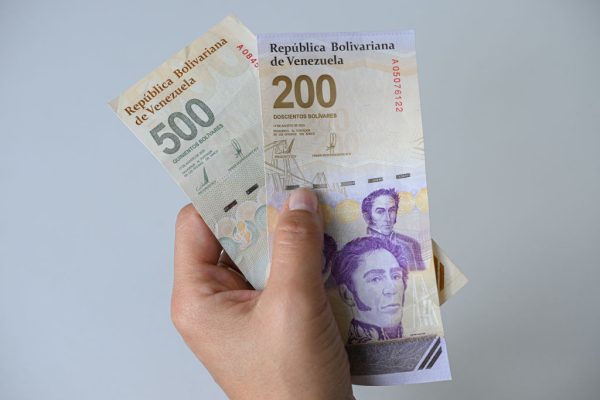
The combined effects of economic mismanagement and sanctions ultimately fell on the population. Hyperinflation reduced the national currency to little more than waste paper, erasing personal savings almost entirely.
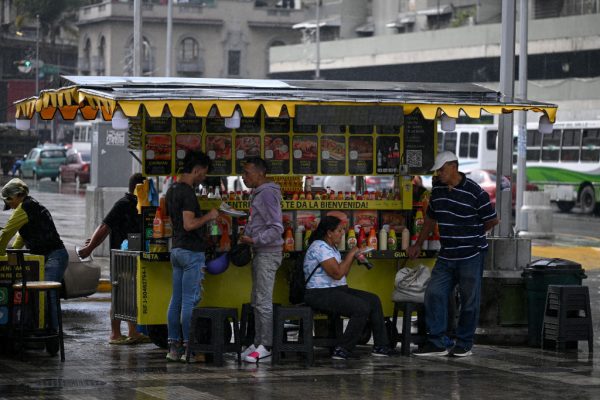
Shortages of basic necessities became routine. Store shelves stood empty, queues for food stretched for hours, and many elderly people and children scavenged for scraps in garbage.
Public security deteriorated alongside economic conditions. In 2023, Venezuela remained among the twenty countries worldwide with the highest homicide rates per 100,000 inhabitants.
The social infrastructure unraveled. Only about 30 percent of public schools remained operational, while nearly half of all students were unable to attend regularly due to teacher shortages and closures. The healthcare system collapsed under chronic underfunding; 91 percent of hospitals required patients to supply their own surgical materials, and more than 10 million people lacked access to essential medical care. Approximately half of all communities were unable to obtain safe drinking water.
In this context of desperation, flight became the only option. Over the past decade, more than 7.7 million Venezuelans have fled the country, producing the largest migration crisis in modern Latin American history. In 2023 alone, 260,000 people risked their lives crossing the treacherous Darién Gap.
Venezuela’s experience demonstrates that even immense natural wealth cannot shield a country from the consequences of misguided economic policy, failed governance, and international isolation. The collapse of living standards is not an abstract statistic but a daily struggle for millions seeking food, medicine, and personal safety.
Political abduction
In 2026, Venezuela’s national trajectory took an even more dramatic turn.
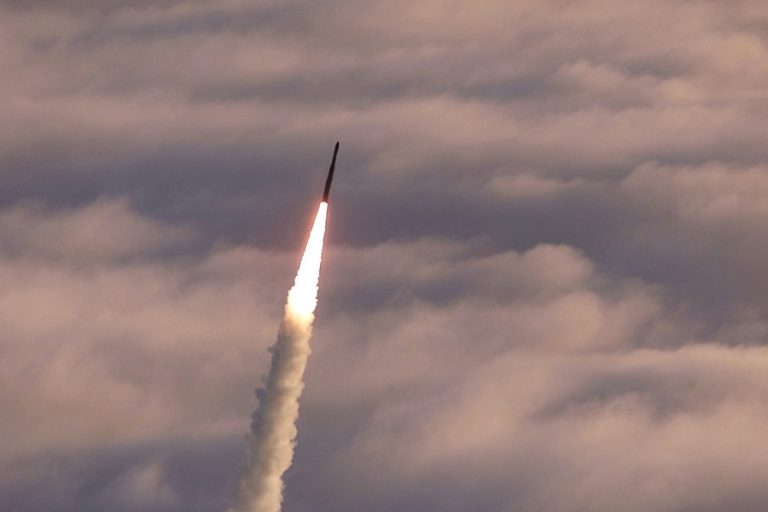
After four months of preparation, U.S. special forces raided Maduro’s residence in Caracas in the early hours of Jan. 3. The operation was swift, taking approximately five minutes from entry to the capture of Maduro and his wife.
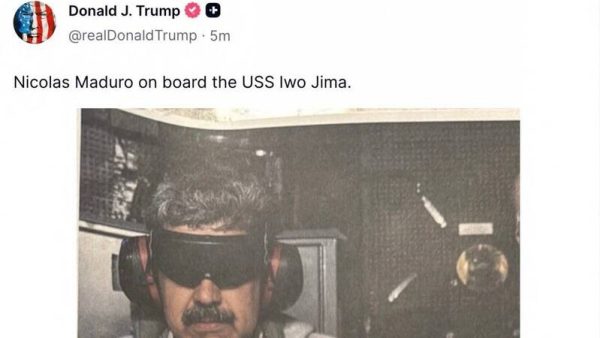
Maduro was quickly transferred to a U.S. naval vessel and flown to the United States. Appearing before a federal court in New York, he declared, “I am the president of Venezuela. I consider myself a prisoner of war. I was captured in my home in Caracas.”
U.S. authorities described the operation as a counter-narcotics law enforcement action, charging Maduro with narcoterrorism conspiracy and cocaine trafficking.
Many observers, including Cuban state media, condemned the operation as the abduction of a sovereign head of state and a blatant violation of international law and the United Nations Charter.
Analysts argue that the move reflects Washington’s long-standing effort to control Venezuela’s oil resources and dismantle the political legacy of Chavismo. As early as 2002, the United States supported a failed coup attempt against Chávez.
The Trump administration’s objective, according to this view, was clear: to combine coercion and inducement to secure cooperation from a post-Maduro government at minimal cost, ultimately regaining access to Venezuelan oil and reasserting influence over Latin America.
Following Maduro’s detention, Vice President Delcy Rodríguez assumed acting presidential authority. Caracas remained unusually calm, as residents stayed indoors and followed two starkly divergent narratives on social media: America’s “war on drugs” and Venezuela’s “resistance to foreign aggression.”
Whatever Maduro’s personal fate, Venezuela’s future remains deeply uncertain.
As one Venezuelan university professor observed somberly after the incident, “For Venezuela, this is only the beginning of a new and prolonged war.”