By Meng Hao
On Jan. 4, 2026, outside the Chinese Consulate in Los Angeles, what began as a peaceful protest escalated into a violent incident that shocked the world. Security personnel at the consulate allegedly used chemical weapons in indiscriminate attacks against pro-democracy activists, leaving multiple victims injured and facing serious long-term effects. The incident is being viewed as a textbook case of China’s transnational repression, drawing swift condemnation from the U.S. State Department and several members of Congress. Vision Times interviewed the chairman of the International Alliance of Chinese Democracy Party, Jie Lijian, for insight.
Incident recap: peaceful protest met with violence
The protest took place on Jan. 4, 2026, from 1:30 p.m. to 3:30 p.m., organized by the International Alliance of Chinese Democracy Party. Its theme was: “Support the Venezuelan People’s Democratic Victory, Thank the U.S. for Arresting Maduro, Call on All Chinese Citizens to Rise Up and End CCP Tyranny.” The location was the Chinese Consulate in Los Angeles, intended both to celebrate the arrest of former Venezuelan President Maduro and to inspire Chinese citizens to resist authoritarian rule.
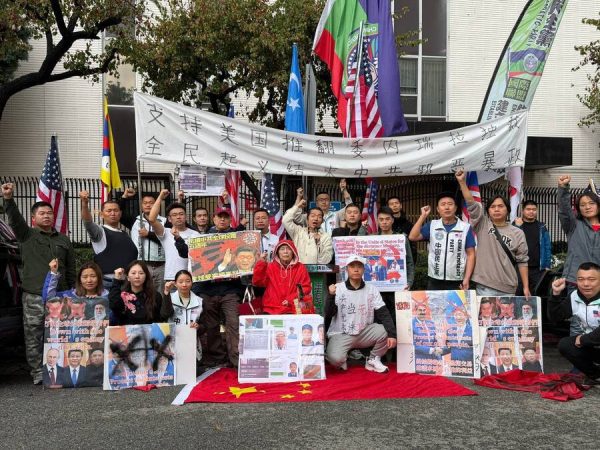
According to eyewitnesses and victims, the event proceeded smoothly, including speeches and symbolic actions like graffiti on the Chinese flag. However, around 3:20 p.m., near the event’s conclusion, consulate security personnel began to provoke protesters. The security chief, Wu Xian, repeatedly threatened participants verbally, saying, “Do you have three lives? Can you die three times?” and made gestures as if pointing a gun at protesters’ heads, even unholstering a firearm. These actions were treated as direct death threats.
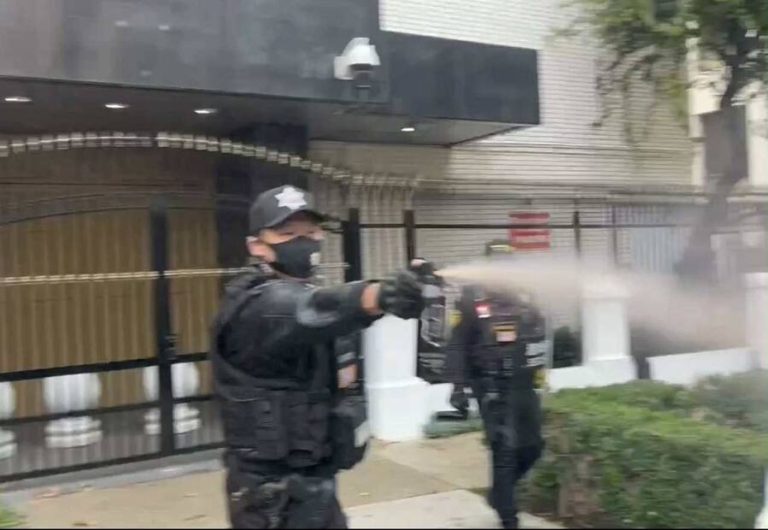
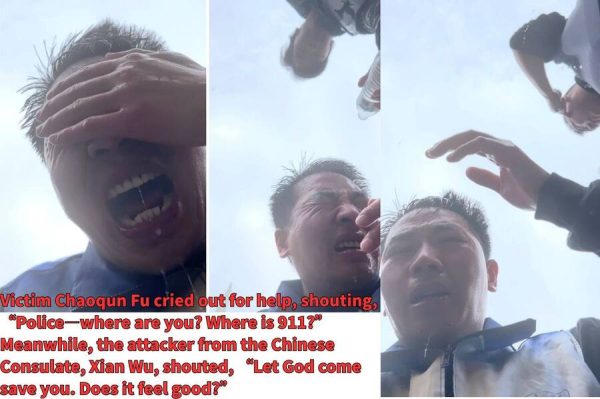
Wu Xian then sprayed chemical liquid, suspected to be homemade biochemical agents, at multiple protesters at the consulate entrance. The spraying was repeated 3–4 times on each side, causing two people to collapse immediately. Wu subsequently ran into the street, indiscriminately attacking bystanders and continuing to spray fleeing victims. Eight protesters were injured, suffering eye burns, breathing difficulties, chest tightness, coughing, and psychological trauma. Victims cried out for help, while Wu mockingly said, “Let God save you, feel good?”
Success
You are now signed up for our newsletter
Success
Check your email to complete sign up
This violent attack was not an isolated incident. On Dec. 14, 2025, Wu Xian had already clashed with protesters during his first duty, attempting to use lethal force. Authorities were informed at the time, and the case was forwarded to the U.S. State Department and federal agencies. On Jan. 4, prior to the protest, Wu had provoked protesters multiple times, however the presence of journalists likely prevented further escalation.
Jie Lijian recalled the events to Vision Times: “As we set up the stage and flags, he began provoking us, saying ‘Come closer, do you dare?’ trying to start a physical conflict. We didn’t fall for it. Near the end, he threatened, ‘Do you have three lives?’ then sprayed us with chemical agents. The pain in the eyes was burning and unbearable, breathing became difficult, like suffocation. The smell was extremely pungent—not ordinary pepper spray, likely chemically enhanced. My throat still hurts and my eyes keep watering.”
Jie emphasized that the security company Wu belonged to had been registered for only a year but possessed over a hundred police-like vehicles, creating a false sense of law enforcement authority. This reflects the CCP’s strategy of using agents overseas to suppress dissent. Los Angeles police intervened promptly after the incident, arresting Wu, who now faces felony charges and has been released on bail, awaiting trial. Jie expressed concern: “Even with police and Secret Service nearby, he acted so brazenly, ignoring U.S. law.”
The injured were members of the Chinese Democracy Party or unaffiliated citizens, all attending to celebrate Maduro’s arrest. Jie said, “Maduro’s capture was a huge boost for us. Like Venezuela ending a dictatorship, we hope China can do the same. This event had laughter and tears; the CCP has enslaved us for so long, when will it end?”
Victims’ testimonies: physical and psychological trauma, shadow of transnational repression
Jie Lijian revealed that volunteer Chen Ning was the first victim. “The last words that angered the guard were from our volunteers warning him that his actions threatened U.S. sovereignty. Wu Xian replied, ‘Stop talking or I won’t hold back,’ then sprayed Chen. He chased Chen onto the street and sprayed him again, twice.”
Another volunteer, who had not spoken or interacted, was also sprayed. Wu justified it by saying, “This is all your people.”
Among the eight victims, the most seriously injured suffered severe eye pain, constant tearing, inability to drive, chest tightness, labored breathing, and acute psychological panic. Medical diagnoses included conjunctivitis, throat inflammation, and heart palpitations. Photographs and medical records were documented.
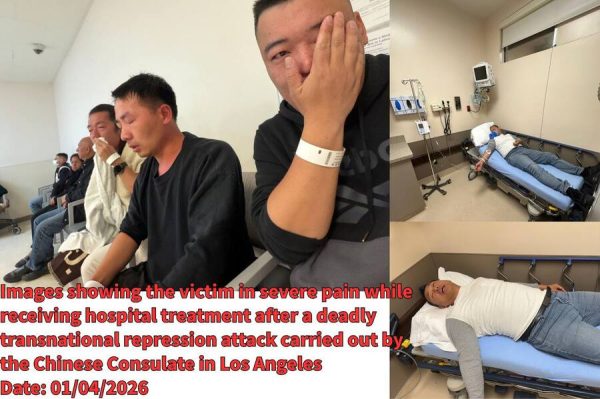
Jie described the chemical liquid: “The bottle was large, with a strong, pungent smell—not commercially available, likely homemade.” Wu’s release on bail exacerbated the victims’ psychological trauma. “This kind of danger may increase; we call on U.S. police for protection.”
Jie himself has been a victim of repeated transnational repression. He recalled being attacked by CCP-hired security during Xi Jinping’s U.S. visit: “I personally experienced eye spraying, burning, pain, and suffocation.” He explained the CCP’s motivation: “Domestic persecution is worse, but overseas protests embarrass them. Our live streams reach 50,000–100,000 viewers, many from inside China (via VPN), giving hope. Like the Arab Spring, a small incident spreads. The CCP fears overseas dissent sparking domestic uprisings.”
He cited examples like the Iron Chain Woman and Little Luoxi cases: “These touch sensitive nerves of ordinary people. Overseas support gives hope at home. The CCP exports repression abroad because it fears a global democratic wave.”
US officials condemn transnational repression, defend freedom
Following the incident, a U.S. State Department spokesperson said: “The First Amendment of the U.S. Constitution protects the right to peaceful assembly. Any attempt to suppress this basic freedom in the U.S. is intolerable.”
Several members of Congress also spoke out. John Moolenaar, Republican Representative from Michigan and Chair of the House China Task Force, strongly condemned the CCP’s transnational coercion: “The CCP uses transnational repression and intimidation to silence critics abroad.” The committee pledged to “continue exposing and countering CCP human rights violations and intimidation of dissenters.”
Florida Republican Byron Donalds also expressed support. Darrell Issa, California Republican and Vice Chair of the House Foreign Affairs Committee, cited the 1989 Tiananmen Square crackdown: “Since Tiananmen, we know the CCP uses covert methods; I’m not surprised they do this in the U.S.”
Jie Lijian said: “These public statements are our greatest protection. The State Department and Congress demonstrate U.S. seriousness. But more action is needed. The CCP is increasingly reckless; this event insults U.S. law. We hope the FBI and DOJ apprehend more agents to deter them.”
In recent years, the U.S. has arrested and prosecuted multiple CCP agents.

Global pattern of transnational repression: from Shen Yun to cyber threats
This incident is just the tip of the iceberg of CCP transnational repression. Jie Lijian mentioned that Shen Yun performances have faced global harassment, and he himself was targeted: “The CCP sent fake bomb threats to theaters worldwide, impersonated officials to stop performances. In December 2025, my name and Sheng Xue’s email were misused to send threats to Taiwan, warning of explosions or shootings at Shen Yun theaters. Last year, they impersonated me to threaten Taiwan 101 and Double Ten celebrations to block a film release.”
In 2025, the Falun Dafa Information Center and Longquan Temple received firearm threat letters in his name, which were reported to Congress and the White House. Jie commented: “These are crude, obviously fake threats, meant to create panic. CCP agents, desperate to prove themselves, have no other options.”
On Jan. 11, the International Alliance of Chinese Democracy Party plans a press conference outside the consulate. Victims will recount the attack, its physical and psychological toll, reconstruct the violent incident, and discuss Congressional responses and legal proceedings. Global democracy groups will simultaneously show support, protesting CCP transnational repression.
Jie Lijian said victims are calling for the National Security Agency to fully investigate and hold the consulate, security company, and Wu Xian accountable. “We urge the U.S. government to take stronger action. This event is a wake-up call. The international community must actively respond to CCP global repression.”