By Yang Tianzi
The Middle East situation escalated sharply at the beginning of 2026. Iran, once the regional hegemon, is now facing the most severe survival crisis since the 1979 Islamic Revolution. What began as an economic strike in Tehran, led by merchants protesting inflation, has in just a few weeks evolved into a nationwide anti-government political storm across all 31 provinces. Across the globe, U.S. President Donald Trump issued a stern warning of possible military action, bringing U.S.–Iran relations to a tense crossroads between war and negotiation.
Tehran’s two-pronged strategy: prepare for war, seek peace
Facing both internal and external pressures, the Iranian government has displayed a contradictory and anxious posture.
On one hand, Iran is trying to show strength. Iranian Foreign Minister Abbas Araghchi, in a briefing to foreign ambassadors on Jan. 12, explicitly stated: “Iran does not seek war, but is fully prepared for it.” He blamed Trump’s military threats for giving violent actors an excuse, which escalated the demonstrations into bloody clashes. Supreme Leader Ali Khamenei directed blame outward, calling it a “conspiracy instigated by hostile forces in the U.S. and Israel,” and cursed Trump as having “blood-stained hands.”
On the other hand, signals for negotiation are equally clear. Araghchi emphasized in the same briefing: “We are also ready to negotiate, but negotiations must be fair, based on equal rights and mutual respect.” Interestingly, Trump claimed that after he issued military warnings, Iranian leaders reached out seeking talks. The Iranian Foreign Ministry spokesperson, Esmaeil Baghaei, confirmed today that, despite no formal diplomatic relations, communication channels between Iran and Trump’s Middle East envoy have indeed been maintained.
Success
You are now signed up for our newsletter
Success
Check your email to complete sign up
This “sword in one hand, olive branch in the other” strategy reflects the extreme fragility of the Iranian regime. It cannot show weakness at home for fear of collapse, yet it cannot afford a full-scale war with the United States.
Trump’s ‘maximum pressure 2.0’ and military warning
Since taking office, the Trump administration has implemented an even harsher “maximum pressure” policy toward Iran. From 2025 through early 2026, the U.S. and its allies carried out a series of precise, lethal actions:
- Military strikes: In June 2025, the U.S. and Israel jointly attacked Iranian nuclear facilities, weakening Iran’s defense capabilities and severely damaging the regime’s prestige.
- Sanctions snapback: In September 2025, the U.N. activated the “snapback” mechanism, fully blocking Iran’s oil exports and cutting off its major sources of foreign currency.
- Cutting off allies: In January 2026, the U.S. captured Venezuelan President Nicolas Maduro and, with the U.K., intercepted Iran’s “shadow fleet” tanker Bella 1 (later renamed Marinera), severing Iran’s illicit network for transporting oil through Venezuela to evade sanctions.
As domestic bloodshed intensified, Trump issued a final warning on Jan. 9: if Iranian authorities continued killing protesters, the U.S. would not rule out “military intervention.” This put Tehran under tremendous pressure, as Iran had no remaining safe options.
The tech front: Starlink and the digital iron curtain
Technology has become another critical battlefield in this conflict. To prevent the spread of dissent and the leakage of information, Iranian authorities implemented a near-total internet shutdown. International phone lines were blocked, domestic mobile communications disrupted, and only a select group of officials and institutions on a “whitelist” could access the network.
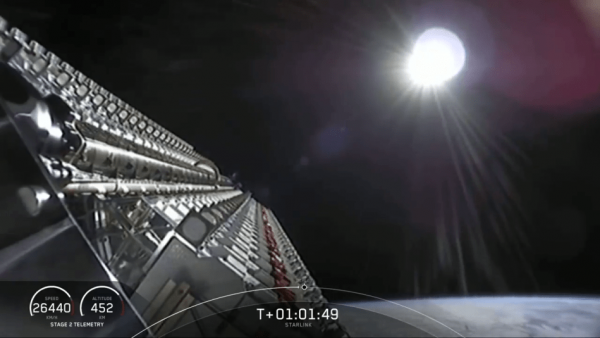
However, U.S. tech intervention broke this digital barrier. Elon Musk’s SpaceX launched the Starlink satellite network over Iran, enabling some citizens to bypass government firewalls, broadcast street-level atrocities to the world, and maintain communication among protesters. Iran viewed this as direct evidence of U.S.-instigated unrest, but for Iranian citizens, it was the only window to the outside world.
Crisis flashpoint: currency becomes worthless
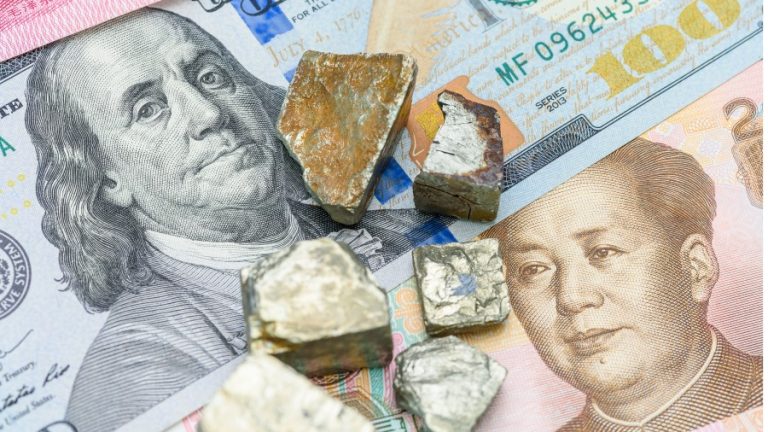
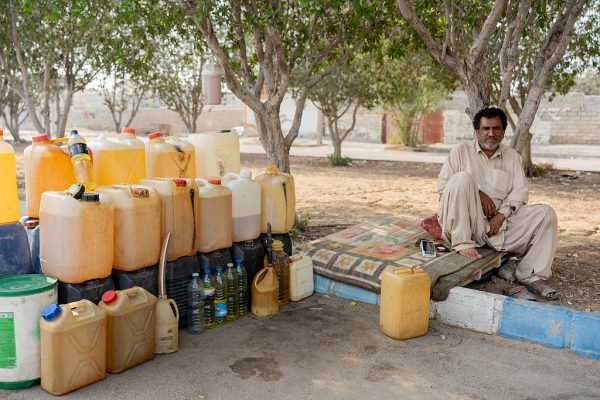
To understand the current anger on Iran’s streets, one must first look at its collapsing economy. This unrest is not a random political incident but the inevitable result of long-term economic suffocation. As of Dec. 28, 2025, the Iranian rial had plummeted to a historic low: 1 USD = 1,420,000 Rial.
This corresponds to an inflation rate exceeding 42 percent. For Iran’s middle class and merchants, this was not just a number—it was survival itself. Over the past decade, the rial’s devaluation accelerated to the point where morning earnings were insufficient to restock goods by afternoon. As money became effectively worthless, merchants had no choice but to close their shops in protest. What started as an economic strike against runaway prices quickly ignited a nationwide powder keg of public resentment.
From ‘food and shelter’ to ‘death to the dictator’
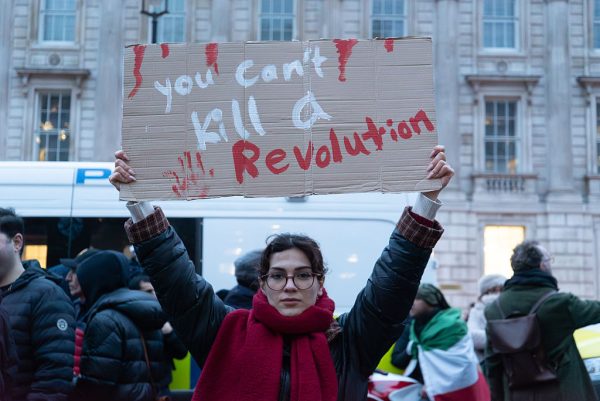
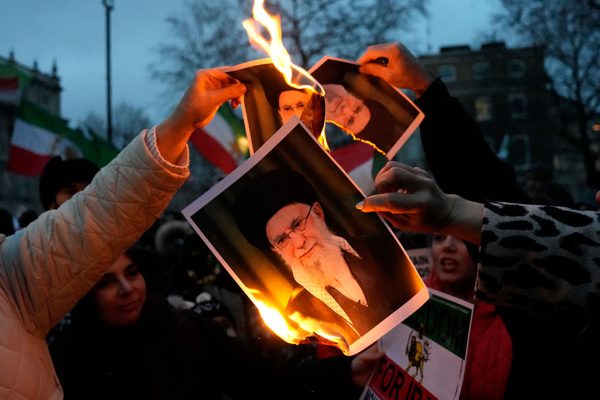
The hardline response of Supreme Leader Khamenei further escalated the crisis. Labeling protesters as “rioters” and “saboteurs” and claiming the Islamic Republic “will never yield” enraged the public. Demonstrators who had initially shouted “Fight Inflation” and “We Are Hungry” now demanded “Death to the Dictator” and “Down with the Islamic Republic.” Protests spread from Tehran to all 31 provinces and over 100 cities nationwide.
The crackdown turned bloody. Iranian security forces used tear gas, shotguns, and live ammunition. According to U.S.-based HRANA (Human Rights Activists News Agency) as of mid-January 2026:
- Total deaths: At least 538
- Protester deaths: 490
- Security forces deaths: ~50
- Arrests: Over 10,600
Hospital conditions are harrowing. Doctors reported emergency rooms resembling “nightmares.” At Tehran’s Farabi Eye Hospital, 200–300 patients suffered eye injuries from shotguns, indicating targeted head and eye fire. Orthopedic wards were filled with gunshot victims. Due to strict censorship and network shutdowns, the true casualty numbers are likely much higher.
The ultimate test of regime legitimacy
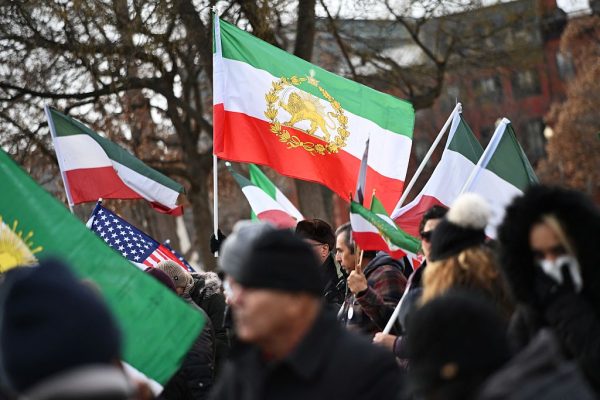
In summary, the early 2026 Iranian uprising is far more significant than any previous protest.
- Collapse of regime legitimacy: Former supporters, including middle- and lower-class citizens and bazaar merchants, have become anti-government forces. With the economic contract broken and religious influence weakened, the Khamenei regime relies solely on violent suppression to maintain power.
- Peak geopolitical risk: The Trump administration clearly aims to change Iran’s behavior through internal unrest and external pressure, potentially even seeking regime change. If Iran opts for an all-out fight, it may retaliate against the Strait of Hormuz or neighboring oil-producing countries, triggering a global energy crisis; if it seeks compromise, it risks internal political purges.
Iran is at a historical crossroads. With casualties rising and U.S. forces deployed nearby, the coming weeks will be critical in shaping the Middle East. Whether Iran’s “full preparedness,” as stated by its foreign minister, serves as deterrence or prophecy, the world watches in bated breath.