News analysis
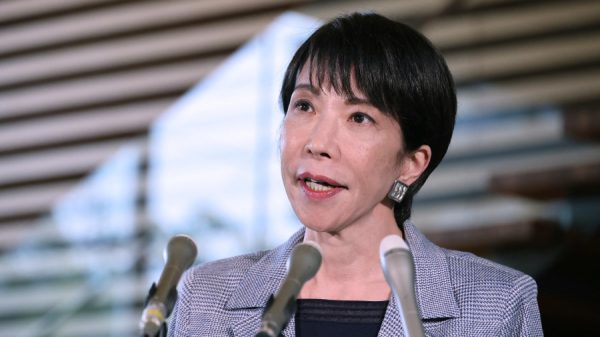
On Jan. 19, Japanese Prime Minister Sanae Takaichi announced a decision that sent shockwaves through Tokyo’s political establishment: she will dissolve the House of Representatives on Jan. 23, the opening day of the regular Diet session, and call a snap general election for Feb. 8.
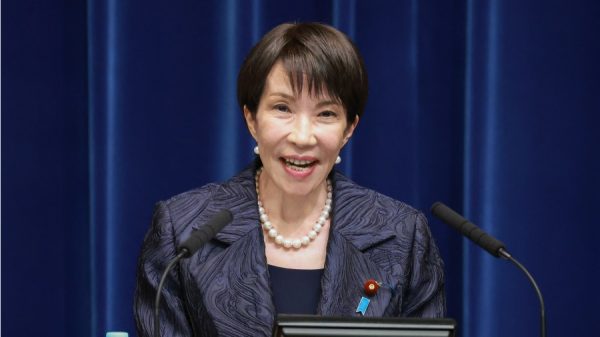
For a prime minister who has been in office for barely three months, the move is nothing short of a political all-in. At a press conference at the Prime Minister’s Office in Tokyo, Takaichi stated that the core purpose of the dissolution was to allow voters to judge, directly and unequivocally, whether she “is fit to serve as prime minister.”
The timing has drawn criticism. Elections will be held while snow continues to blanket parts of the country, during a major examination period for students, and before the passage of the new fiscal year budget. From both ethical and practical perspectives, the decision has been questioned. Yet Takaichi’s logic is internally consistent: while she secured the leadership of the Liberal Democratic Party (LDP), she argues that she has not yet received a direct mandate from the electorate — particularly now that the ruling coalition has shifted from the long-standing LDP – Komeito alliance to a new partnership with the Japan Innovation Party (Nippon Ishin no Kai).
Approval for shifting policies
Takaichi has openly acknowledged that she was not the prime minister voters expected at the time of the last general election. That mandate, she concedes, was granted to the LDP–Komeito coalition, not to today’s LDP–Ishin configuration.
Success
You are now signed up for our newsletter
Success
Check your email to complete sign up
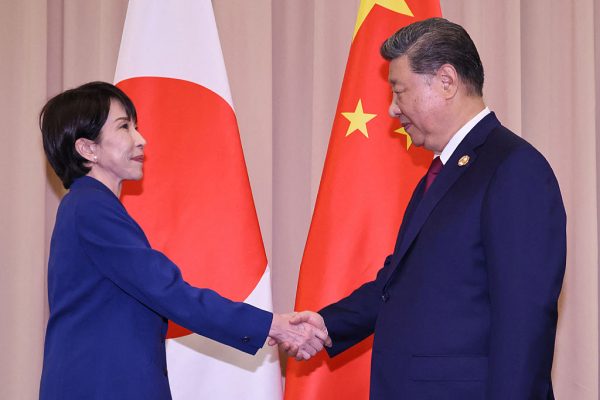
More critically, the “major policy pivot” Takaichi now advocates, including aggressive fiscal expansion, a sharp strengthening of national defense, and a tougher stance toward China, was largely absent from the LDP’s previous election platform.
The politically centrist Komeito had been in a coalition with the LDP since 1999, but broke off that relationship late last year when Takaichi, a right-wing nationalist, was elected prime minister.
Ishin, meanwhile, is a new right-wing party with liberatarian inclinations. It is particularly strong in Osaka, Japan’s largest city following the capital Tokyo.
Keiji Furuya, chairman of the LDP’s Election Strategy Committee, has accurately labeled the coming contest a “Takaichi choice election.” If Japan is to embark on sweeping changes in economic, fiscal, and security policy, he argues, the prime minister must first secure the trust of the public. The election is thus designed to shed Takaichi’s image as an “accidental prime minister” and replace it with unambiguous democratic legitimacy.
Reshaping of Japan’s political landscape
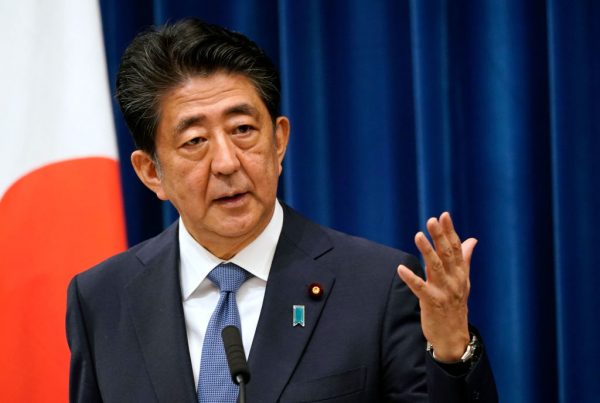
In laying out her vision, Takaichi invoked a well-known line from late former Prime Minister Shinzo Abe: “The future is not something handed to us by others; it is something we carve out with our own hands.” The quote signals not only ideological continuity with Abe’s conservative legacy, but also a deliberate appeal to voters who favor a more assertive and proactive Japan.
Takaichi has branded the election as “a vote to create the future ourselves,” projecting a long-term vision of Japan as a “shining beacon in the Indo-Pacific.” The message is clear: this is not merely an election about governance, but about national ambition.
The most consequential backdrop to this election is the fundamental transformation of Japan’s party system. The 26-year-long LDP–Komeito ruling arrangement has formally come to an end, replaced by a new conservative alignment between the LDP and the Japan Innovation Party.
This is more than a reshuffling of power; it represents a substantive shift in policy direction. Ishin leader Hirofumi Yoshimura has confirmed that the two parties have signed a joint governing agreement covering some 50 policy items. Long associated with administrative reform, deregulation, and decentralization, Ishin has found common ground with Takaichi’s LDP on economic strategy and national security.
On constitutional revision, defense expansion, and China policy, the new LDP–Ishin coalition is widely expected to move further and faster than the previous LDP–Komeito partnership ever could.

The shock merger: Constitutional Democrats and Komeito
Facing this new ruling bloc, Japan’s opposition has undergone its own dramatic realignment. In a move that stunned political observers, the center-right Constitutional Democratic Party of Japan (CDP) and Komeito on Jan. 15 announced a sudden merger, forming the Centrist Reform Alliance.
The decision raised eyebrows across the spectrum. Komeito had only recently ended its decades-long cooperation with the LDP and has now allied itself with a party it long opposed. The merger underscores the depth of anxiety provoked by Takaichi’s agenda.
Japanese journalist Akio Yaita has offered a sharply critical assessment of the new party’s prospects, identifying three fundamental weaknesses.
First, Yaita notes that the CDP and Komeito have long been divided on security policy, environmental issues, fiscal strategy, and foreign affairs. Their hurried merger lacks a unifying ideological adhesive. This critique is compelling, though it arguably underestimates the power of political realism: faced with a shared threat, parties can and do set aside differences.
Second, Komeito’s abrupt pivot after 26 years alongside the LDP risks leaving voters with the impression of pure electoral opportunism. Yet it can also be read as a principled rejection of Takaichi’s political direction.
Third, the new party’s deliberate refusal to take clear positions on key national issues may leave voters disoriented. Still, in an era of polarization, a consciously moderate stance could appeal to an electorate weary of confrontation.
How the parties are fighting the election
The Constitutional Democrats’ livelihood-first appeal: Party leader Yoshihiko Noda has centered his campaign on “putting daily life first,” criticizing the timing of the government dissolution amid rising prices. He has proposed concrete measures such as reducing the consumption tax on food to zero, attempting to shift the debate from “national strength” to bread-and-butter concerns.
Representative Tetsuo Saito has accused Takaichi of failing to directly address issues of “politics and money,” and of irresponsibly creating a political vacuum at a time of international instability. He has staked his own career on the outcome, pledging to resign as co-leader if the new party fails to meet its seat targets.
The Democratic Party for the People (DPFP) has adopted a more moderate posture — questioning Takaichi’s government dissolution but committing to a full campaign focused on increasing disposable income. The Japanese Communist Party has maintained its traditional class-based rhetoric, denouncing the dissolution as the “ultimate act of self-serving politics” and explicitly rejecting cooperation with the Centrist Reform Alliance. The right-wing Sanseito party, a newer force, is attempting to carve out political space beyond the existing party framework.

Implications for Taiwan–Japan relations
Yaita predicts that Taiwan–Japan relations could continue to deepen under the current political conditions—a forecast grounded in clear logic. Takaichi is widely regarded as a pro-Taiwan figure. Her emphasis on “free and democratic values” and “Indo-Pacific stability” closely aligns with Taipei’s strategic outlook.
Should Takaichi secure a firm public mandate, several trends are likely to accelerate:
- Under the shared understanding that “a Taiwan contingency is a Japan contingency,” intelligence sharing and strategic communication could become more institutionalized.
- Cooperation on semiconductor supply chains and critical technologies would likely intensify.
- As key members of the so-called free and democratic camp, Japan and Taiwan would coordinate more frequently on the international stage.
The LDP–Ishin alliance, united on China policy and security, signals a Japan prepared to take clearer positions within the U.S.–Japan alliance, the Indo-Pacific strategy, and cross-strait stability. For Taiwan, this offers a partner whose stance is both firm and predictable.
A government led by the Centrist Reform Alliance would not fundamentally reverse Japan’s friendly posture toward Taiwan, but it would likely proceed more cautiously on concrete security cooperation and strategic alignment, constrained by internal policy compromises.
Historical significance
Takaichi’s decision to dissolve the Lower House carries multiple layers of historical significance. It is, first and foremost, a rare election explicitly aimed at confirming a prime minister’s legitimacy. Rejecting the role of a transitional leader, Takaichi is attempting to establish a popular mandate at the earliest possible moment. The risks are enormous, but the move also reflects a serious respect for democratic procedure.
The end of the “LDP–Komeito era” marks Japan’s entry into a new phase of party politics. Regardless of the election’s outcome, this realignment will shape the country’s political trajectory for the next decade. By personalizing the election in a political culture traditionally centered on party competition, Takaichi may also push Japan toward a more leader-centric model of politics.
Ultimately, the Feb. 8 election concerns the deeper questions of whether Japan will attempt to play a more active international role, or if it will stick with its cautious approach. The outcome of Takaichi’s bid to dissolve the government and select another will have profound implications for Japan’s position in the Asia-Pacific region, as well as its role in the U.S.–Japan alliance.