By Li Ting
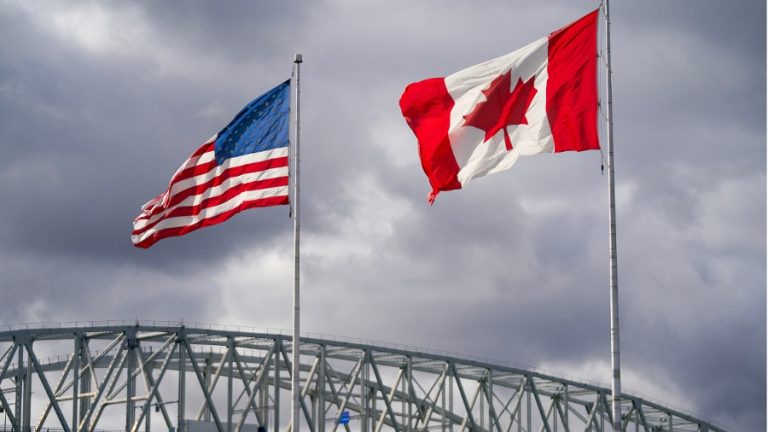
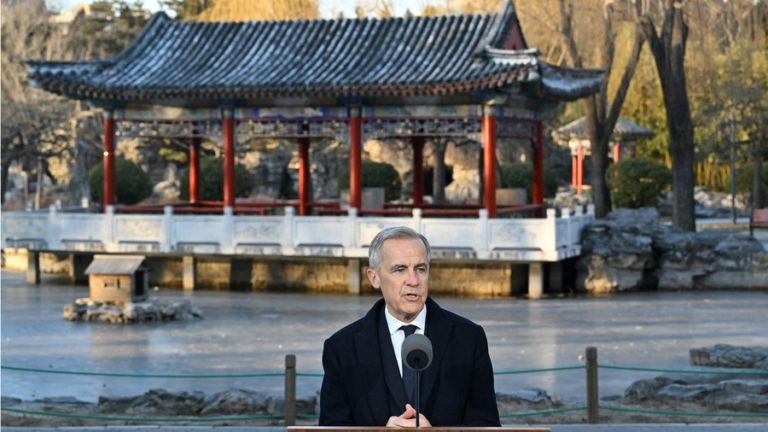
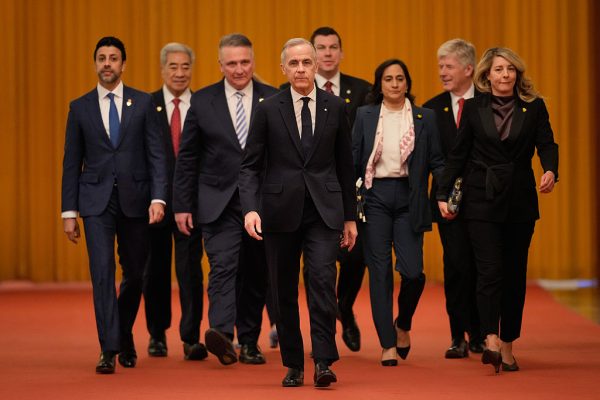
Canadian Prime Minister Mark Carney’s visit to China from Jan. 14 to 17, during which he announced the establishment of a “new strategic partnership” with Beijing, has triggered a fierce domestic debate over national security and democratic values.
Carney said the partnership aims to help Canada navigate renewed trade friction with the United States under President Donald Trump’s second term by diversifying exports and reducing overreliance on the U.S. market. His remarks, particularly references to a “new world order,” quickly drew criticism from opposition Conservatives and other critics, who warned that Canada risked aligning itself with Beijing’s authoritarian narrative at the expense of security and democratic principles.
Opposition alarmed by ‘new world order’ language
Under the announced arrangements, China pledged to cut tariffs on Canadian canola seeds from 84 percent to about 15 percent and eliminate tariffs on canola meal, with changes expected to take effect on March 1. Canada, in turn, agreed to cap annual imports of Chinese electric vehicles at 49,000 units, while reducing tariffs from 100 percent to the most-favored-nation rate of 6.1 percent.
The government also expects Chinese joint ventures to invest in Canada’s auto manufacturing sector over the next three years, supporting employment and electric vehicle supply chains. Additional measures include visa-free entry for Canadian tourists to China for stays of up to 30 days, the resumption of Chinese group tourism to Canada, expanded direct flights, and multiple memoranda of understanding covering energy, timber, pet food, finance, green technology, and cultural tourism.
Success
You are now signed up for our newsletter
Success
Check your email to complete sign up
More controversially, Ottawa agreed to renew and update a memorandum of understanding between the Royal Canadian Mounted Police (RCMP) and China’s Ministry of Public Security, covering cooperation on counterterrorism, cybercrime, organized crime, drug investigations, and telecom fraud, including intelligence and evidence sharing. The Carney government said the move was intended to strengthen efforts against transnational crime and protect public safety.
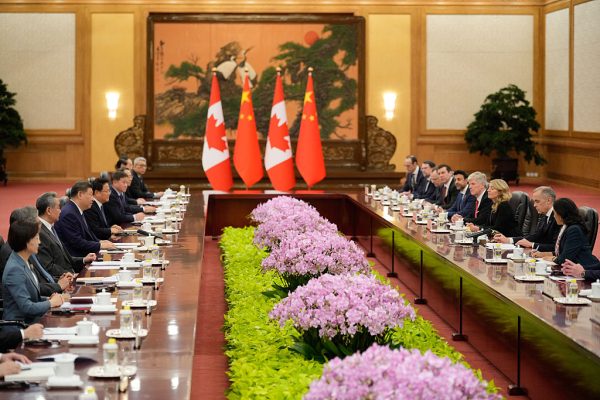
During a Jan. 15 meeting with Premier Li Qiang, Carney thanked Chinese leader Xi Jinping for helping pave the way for improved bilateral relations, calling it the foundation for “strategic partnership” discussions across a broad range of issues. He said Canada was entering a “new era” in relations with China and that the partnership would help prepare for a “new world order,” citing cooperation in energy, security, people-to-people exchanges, and multilateralism.
The comments prompted sharp criticism from Conservative MP Shuv Majumdar, who wrote on X that “Canada does not belong in Beijing’s ‘new world order.’” Conservative MP Michelle Rempel Garner questioned whether the phrase implied a shift toward a communist model or greater state control, calling the remarks “deeply disturbing.” MP Matt Strauss criticized a government social media video describing bilateral ties as bringing “opportunity and prosperity,” saying China is ruled by a communist dictatorship responsible for genocide.
Shift from campaign rhetoric draws scrutiny
Critics noted a stark contrast between Carney’s current approach and his statements during the 2025 election campaign, when he described China as Canada’s primary security threat. While he emphasized Asia’s importance for trade diversification at the time, he also stressed that China’s values differed fundamentally from Canada’s.
In recent months, however, the government’s tone has softened. Foreign Minister Anita Anand has avoided labeling China a “disruptive” global power, as previously stated in Canada’s Indo-Pacific strategy, instead referring to Beijing as a “strategic partner” and highlighting cooperation in energy, agriculture, security, and environmental issues.
During Carney’s meeting with Xi, the Chinese leader said he was encouraged by progress toward a “full resumption and restart” of bilateral cooperation. Carney responded that Canada and China could build a new relationship based on the best elements of past ties to adapt to new global realities and deliver stability, security, and prosperity across the Pacific.
Conservatives warn of security blind spots
Conservatives have urged Carney to prioritize democratic partners in the Indo-Pacific, such as South Korea and Japan, rather than Communist China. Former national security analyst Dennis Molinaro said the concern was that framing ties with Beijing as a “new era” and “partnership” ignored hard security realities.
Former Canadian ambassador to China David Mulroney argued that the Liberal government had “smothered” the foreign interference scandal, allowing Beijing’s influence to expand. A public inquiry last year concluded that the Chinese Communist Party was the most active foreign actor interfering in Canadian affairs.
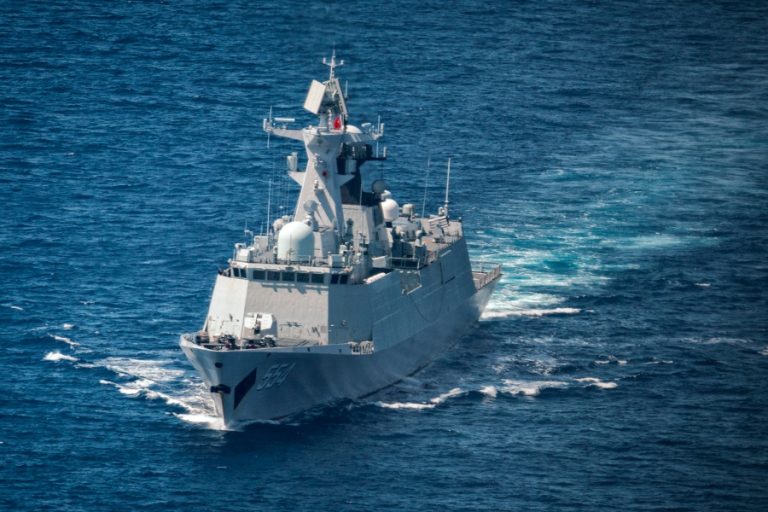
Canada has previously condemned Beijing over human rights abuses, the crackdown in Hong Kong, and aggressive actions in the South China Sea. Ottawa has also faced direct pressure from China, including repeated close encounters between Chinese military aircraft and Canadian vessels in international waters, and the detention of Michael Kovrig and Michael Spavor following the 2018 arrest of Huawei executive Meng Wanzhou.

Trump’s view of Canada and Arctic pressure
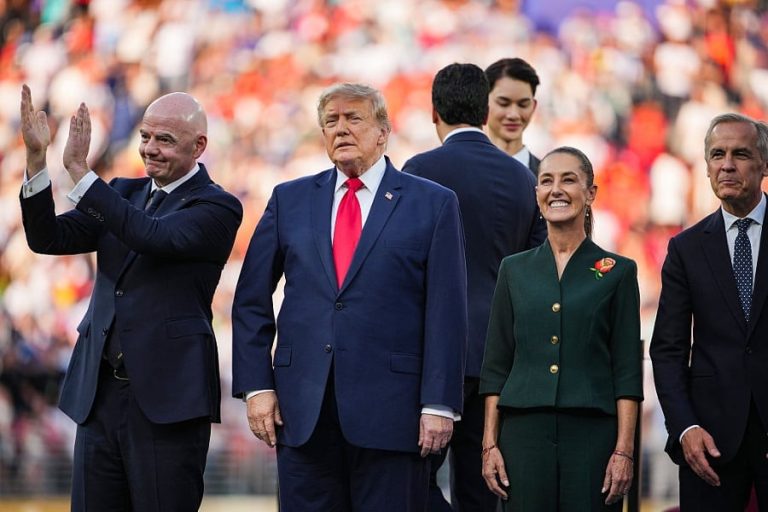
President Trump’s stance toward Canada has been assertive and complex. According to NBC News, Trump has privately complained to aides about Canada’s limited ability to defend the Arctic, viewing the northern frontier as vulnerable to Russian or Chinese infiltration.
Current and former U.S. officials told NBC that Trump has pushed for expanded U.S.-Canada military cooperation in the Arctic, including upgrades to early warning systems, increased joint exercises, air and maritime patrols, and greater U.S. naval activity. He has criticized Canada’s defense spending, which stands at roughly 1.4 percent of GDP, well below NATO’s two percent target.
Trump has publicly supported Carney’s trade deal with China while privately pressing Ottawa to boost defense capabilities and consider a new agreement strengthening northern border defenses. U.S. officials have stressed that Washington has no intention of stationing ground troops in northern Canada or pursuing territorial acquisition.
Carney’s assertion that relations with China are “more predictable” than those with the United States has heightened concern among analysts, who warn that such a pivot could strain the Five Eyes intelligence alliance and weaken the shared strategy of “de-risking” from China.
Warnings over economic leverage and security traps
Carney’s references to a “new strategic partnership” and “new world order” have also drawn criticism from former diplomat Michael Kovrig and democracy activist Sheng Xue, whose analyses focus on economic leverage, security risks, and long-term sovereignty.
Sheng has expressed strong concern over the RCMP’s cooperation agreement with China’s Ministry of Public Security, which she described as a political enforcement arm of the Chinese Communist Party rather than an independent law enforcement body. She warned that intelligence sharing cannot be depoliticized under China’s system and risks being exploited for political purposes.
Canadian intelligence agencies, including CSIS, have repeatedly identified China as the primary source of foreign interference, including election manipulation, diaspora intimidation, united front operations, information warfare, and transnational repression. Sheng argued that sharing intelligence and evidence in such a context creates a fundamental contradiction and could expose Canada to complicity if information is used to persecute dissidents.
Kovrig, who was arbitrarily detained in China for more than 1,000 days between 2018 and 2021, has focused on the gradual accumulation of economic leverage. He said that while Canada can export commodities such as food and energy without immediate security risks, overdependence on the Chinese market gives Beijing tools to influence Ottawa’s policy choices.
He warned that major decisions are often not spelled out in official communiqués and stressed the importance of maintaining red lines on national security, foreign interference, coercion, and human rights. Kovrig cautioned that Carney’s public smiles and references to a “new world order” alongside Chinese leaders could be interpreted as acquiescence to authoritarian narratives.
Divided reactions at home and abroad
Domestic reaction has been sharply divided. Conservative leader Pierre Poilievre called the approach a “naïve surrender” and demanded immediate parliamentary review of the security agreements. Some Liberal MPs have also expressed concern that intelligence sharing could violate the Charter of Rights and Freedoms and harm Canada’s auto industry.
Human rights organizations, including Amnesty International Canada and Hong Kong Watch, have called for independent risk assessments, warning that Chinese surveillance and repression of diaspora communities must not be ignored.
Polling shows that while roughly 55 to 60 percent of Canadians support economic engagement with China to ease inflation and cost-of-living pressures, more than 70 percent oppose sacrificing national security, human rights, or policy autonomy. Members of Chinese Canadian dissident and diaspora groups have voiced fears that intelligence cooperation could intensify transnational repression.
Internationally, Trump’s Arctic pressure has compounded Canada’s dilemma. While he has publicly endorsed trade engagement with China, experts warn that Ottawa’s “new strategic partnership” risks reopening old vulnerabilities within the Five Eyes alliance.
Carney’s visit delivered visible short-term benefits, including an estimated $3 billion boost to canola exports, investment incentives tied to electric vehicle manufacturing, and tourism gains from visa-free travel. Critics caution, however, that the long-term costs could include erosion of policy autonomy, weakened alliances, and increased exposure to authoritarian networks.
For Canada, analysts argue, safeguarding sovereignty will depend on setting and enforcing clear red lines, strengthening oversight of security cooperation, and diversifying trade through frameworks such as the Comprehensive and Progressive Agreement for Trans-Pacific Partnership. Without such discipline, critics warn, Canada risks becoming a passive actor in great-power competition rather than an independent strategic player.