By Jin Yan
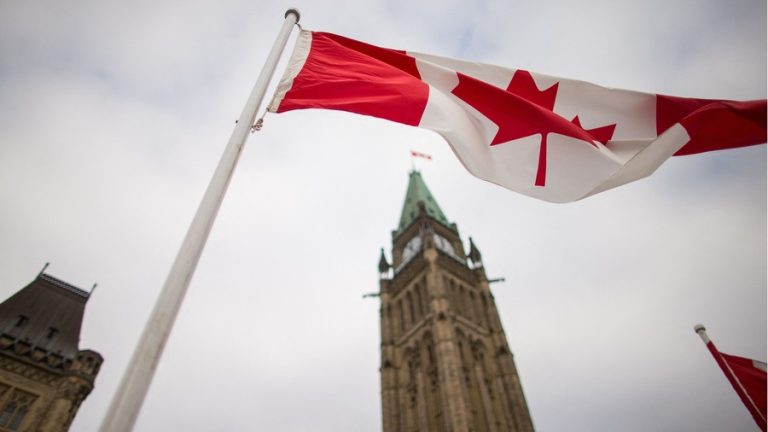
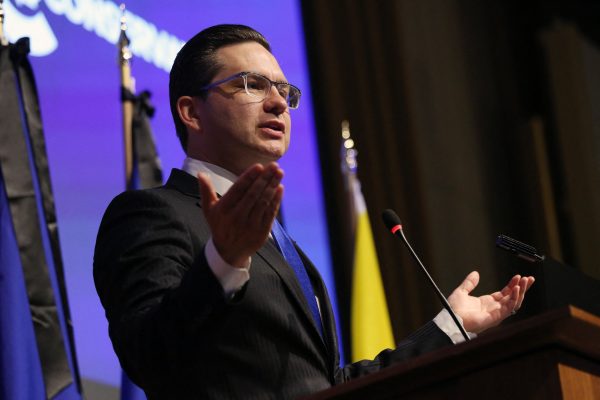
After Canadian Prime Minister Mark Carney publicly outlined a “new world order” and a diplomatic pivot at the World Economic Forum in Davos, debates within Canada’s political scene over China policy, national security, and economic strategy quickly intensified. Conservative Party leader Pierre Poilievre and several opposition MPs spoke out in succession, criticizing the Liberal government as “grand in rhetoric but hollow in action,” and warning that Ottawa’s deepening ties with Beijing could undermine Canada’s security foundations and its relationship with the U.S.
Trump warns: China could annex Canada in the first year
Around the time of the Davos forum, U.S. President Donald Trump’s attitude toward Canadian Prime Minister Carney showed a clear shift. On Jan. 23, Trump posted on Truth Social criticizing Canada’s stance on Greenland and China, accusing Canada of opposing the construction of a “Golden Dome” air defense system in Greenland—which could protect Canada—while voting to do business with China, and warning that China could “annex them in the first year.”
In his Davos speech, Carney criticized major powers for manipulating order through coercion and tariffs, emphasizing that Canada must increase its self-reliance while building new strategic alliances with other “medium powers” to adapt to a forming new global order—a subtle challenge to U.S. policy. Shortly afterward, Trump’s tone turned cold, publicly accusing Canada of ingratitude and withdrawing Canada’s invitation to join his “Peace Commission,” signaling tension between the two leaders.
In his speech, Carney cited the late Czech president and anti-communist symbol Václav Havel, noting that authoritarian regimes often rely on people’s tacit acceptance of a “fictional order” to endure. He said the past system, centered on U.S. hegemony, provided public goods and collective security for the world, but the gap between rhetoric and reality can no longer be ignored.
‘Strategic partnership’ with China draws criticism—Davos speech vs. Beijing reality
Success
You are now signed up for our newsletter
Success
Check your email to complete sign up
However, this part of Carney’s remarks became the focus of intense opposition criticism. On Jan. 22, Conservative Party leader Pierre Poilievre issued a statement saying Carney’s citation of Havel was “highly ironic,” noting that just days earlier, Carney had concluded a visit to China and publicly expressed his desire to establish a “strategic partnership” with Beijing. Poilievre stressed that Havel spent his life resisting authoritarian communism, while the Chinese Communist Party is one of today’s most representative authoritarian regimes.
“Quoting Havel less than a week after announcing deeper cooperation with the CCP exposes a serious contradiction in the Liberal government’s diplomatic narrative,” Poilievre said.
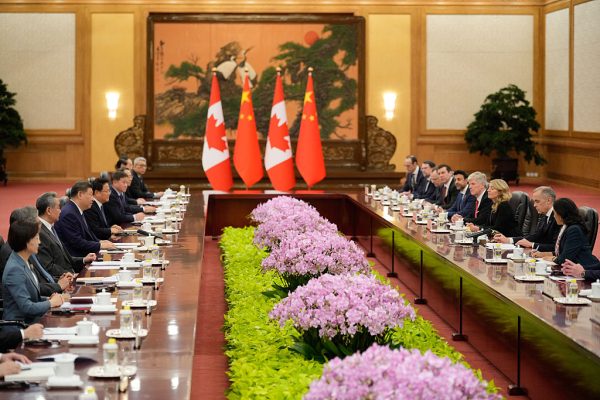
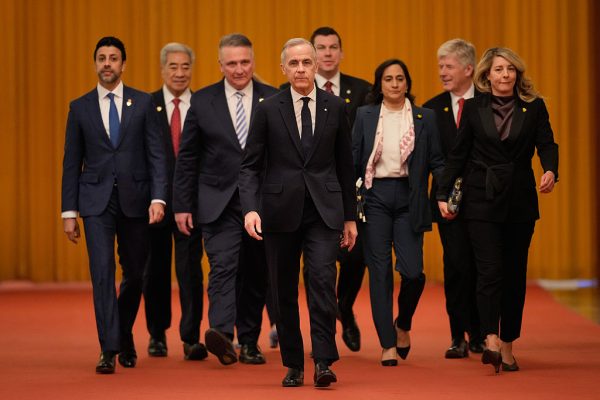
Carney visited China from Jan. 13–17, meeting with CCP leader Xi Jinping, and subsequently announced that Canada would sharply reduce tariffs on Chinese electric vehicles—from a planned 100 percent to 6.1 percent, with an annual import limit of 49,000 units. In exchange, Beijing agreed to lift or reduce multiple retaliatory tariffs on Canadian agricultural products at least until the end of the year. Carney described Canada-China relations as entering a “new era,” with cooperation aimed at expanding non-U.S. markets, attracting investment, and “laying the foundation for adapting to the new world order.”
However, Poilievre and the Conservatives view this pivot as short-sighted economically and potentially hazardous for national security. Poilievre warned that China has previously kidnapped Canadian citizens, stolen technology, interfered in elections, and set up illegal police stations in Canada, and that Canada should not “take Beijing lightly” in this context.

TikTok ban reversal sparks national security concerns after China visit
National security debates have recently intensified over TikTok. Conservative MP Raquel Dancho noted that shortly after Carney’s visit to China, the Liberal government asked the federal court to revoke a previous order to shut down TikTok’s Canadian operations, sending a “troubling signal” to the public. On Jan. 21, the federal court ruled that TikTok could temporarily continue operating in Canada and returned the case to Industry Minister Mélanie Joly for a new round of national security review. Previously, on Jan. 19, the federal government submitted a letter to the court stating it had reached an agreement with TikTok to lift the shutdown order and reassess risks.
Dancho pointed out that TikTok’s parent company, ByteDance, is headquartered in China and legally bound by China’s National Intelligence Law to cooperate with Beijing’s intelligence collection. She warned that shelving the original security-based closure decision could undermine Canada’s consistency in data protection and national security. Although the government responded that the new review would follow the revised Investment Canada Act to address potential risks more comprehensively, opposition parties and security agencies remain concerned that China could use TikTok’s data and algorithms for surveillance, public opinion manipulation, and foreign interference.
The Canadian Security Intelligence Service (CSIS) has repeatedly warned that authoritarian states are using big data collected from social media platforms to carry out foreign interference, potentially harming Canada’s democratic system and national security.
Opposition criticizes Carney government
Beyond China policy, Poilievre also criticized the Carney government for domestic inaction on reforms. He called for immediate structural reforms, including expediting approval of a new oil pipeline from Alberta to the British Columbia coast, expanding the Canadian Armed Forces, and repealing several federal laws he believes obstruct resource development and exports.
Currently, Alberta is drafting a new pipeline proposal to submit to the federal Major Projects Office in June, urging Ottawa to make a decision by fall at the latest. According to a recent agreement between Alberta and the federal government, if private developers submit feasible plans, the federal government will approve the new pipeline, in exchange for Alberta increasing industrial carbon taxes and enhancing methane reduction measures.
On the diplomatic and security front, Poilievre also named multiple threats from China, Russia, and Iran, calling for the immediate expulsion of senior members of Iran’s Islamic Revolutionary Guard and increased sanctions on Tehran’s regime.
Most importantly, Poilievre repeatedly emphasized that Canada-U.S. relations remain the core pillar of Canadian prosperity and security. He noted that Canada’s exports to the U.S. are 20 times larger than those to China, with roughly one-tenth of Canadian employment directly or indirectly dependent on the U.S. market. While trade diversification is the correct direction, it should not come at the expense of weakening the long-term partnership with the United States.
As the Carney government’s choices on China policy, energy development, data security, and U.S. relations continue to generate controversy, political battles over Canada’s national positioning and security bottom lines are intensifying across the country.