How the Cultural Revolution’s “February Adverse Current” exposed deep fractures within the Chinese Communist Party, triggered a purge of senior leaders, and left Mao Zedong obsessed with the specter of military defection.
By He Zi
Chaos after 1966: the military on the brink
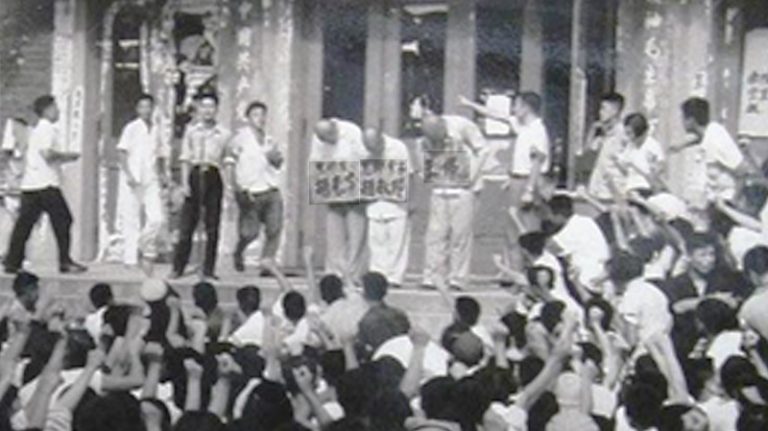
When the Cultural Revolution erupted in 1966, Red Guards and rebel factions rampaged across China—beating, smashing, looting, and burning. The country slid rapidly into near-total disorder. Even senior party and military elders within the Chinese Communist Party (CCP) found themselves suddenly vulnerable, unsure whether their status, their safety, or even their lives could be preserved.
Alarmed by the spreading chaos, marshals such as Ye Jianying and Nie Rongzhen insisted that stability within the People’s Liberation Army (PLA) was nonnegotiable. They collided head-on with the Central Cultural Revolution Group (CCRG)—the radical body personally assembled by Mao Zedong to command the movement—over whether the military should be dragged into the “Four Bigs” (big-character posters, big debates, big criticism, and big airing of views). Neither side backed down. The confrontation hardened into an open and personal rupture.
February 1967: Huairen Hall becomes a battleground
On February 11 and February 16, 1967—the third and eighth days of the Lunar New Year—meetings were convened at Huairen Hall, a central venue inside Zhongnanhai, under the chairmanship of Premier Zhou Enlai. Officially, the agenda was to discuss “grasping revolution and promoting production.”
Success
You are now signed up for our newsletter
Success
Check your email to complete sign up
In reality, the meetings detonated into bitter confrontation.
Veteran leaders Chen Yi, Li Fuchun, Tan Zhenlin, Ye Jianying, Xu Xiangqian, Nie Rongzhen, and Li Xiannian launched scathing attacks on CCRG figures Chen Boda, Kang Sheng, Xie Fuzhi, Zhang Chunqiao, Wang Li, and Yao Wenyuan, condemning what they saw as the Cultural Revolution’s ruinous abuses and lawless excesses.
Lunar New Year, day three: a deafening clash
At the February 11 meeting, Ye Jianying and Xu Xiangqian confronted Chen Boda and Kang Sheng directly over the destabilization of the military.
Ye Jianying erupted:
“You’ve thrown the Party into chaos, thrown the government into chaos, thrown factories and the countryside into chaos! And now you’re still not satisfied—you want to throw the army into chaos as well! What exactly are you trying to do?”
Turning on Zhang Chunqiao, Ye pressed further:
“The seizure of power in Shanghai, renaming it the ‘Shanghai Commune’—this concerns the state system itself. How could such a decision be made without Politburo discussion? What are you really after?”
Xu Xiangqian slammed the table and shouted at Chen Boda:
“The army is the pillar of the dictatorship of the proletariat. If you smash the army like this, do we still have a pillar? Are people like us all useless now? Should figures like Kuai Dafu be put in charge of the army?”
Chen Boda tried to shield himself by citing Marx’s praise of the Paris Commune. Kang Sheng responded with open contempt:
“What’s so impressive about you, Xu Xiangqian? Is the army your private property?”
Throughout the exchange, Zhou Enlai—hardened by decades of revolutionary struggle—said nothing. In the end, he offered only a perfunctory closing: unresolved issues could be discussed later. The meeting was adjourned.
From ripples to shockwaves
The confrontation did not subside. Three days later, on February 14, Mao Zedong ordered the CCRG to convene a meeting to criticize Chen Boda and Jiang Qing—Mao’s wife and a central figure in the Cultural Revolution. Jiang Qing did not attend. Chen Boda, under crushing pressure, reportedly threatened suicide.
The ‘February adverse current’ breaks the surface
On the afternoon of February 16, the Huairen Hall meeting resumed. This time, the conflict erupted in full.
Inside the hall, the lines were unmistakably drawn.
- On the right, branded the “Rightist” side: Chen Yi, Ye Jianying, Xu Xiangqian, Nie Rongzhen, Li Fuchun, Li Xiannian, and Tan Zhenlin, joined by Yu Qiuli and Gu Mu.
- On the left, the self-styled “Leftist” side: Kang Sheng, Chen Boda, Zhang Chunqiao, Yao Wenyuan, and Xie Fuzhi. Jiang Qing was absent; Wang Li attended as an observer.
- Zhou Enlai sat rigidly in the center, aligned with neither camp.
From the outset, Tan Zhenlin—infamous inside the Party as a “big cannon”—seized on the persecution of Chen Pixian, the Party secretary of Shanghai, to assault Zhang Chunqiao:
“Your aim is to knock down every veteran cadre. A revolutionary of forty years ends up with his family destroyed and his life ruined. This is the most brutal internal struggle in the Party’s history—worse than any before it. If this continues, carry on without me. I won’t follow anymore. Beheading, prison, expulsion from the Party—I’ll fight you to the end!”
Zhang Chunqiao replied with bureaucratic coolness:
“The masses won’t allow it.”
Tan shot back:
“Party organizations can do the work!”
Zhang sneered:
“The Party? The Party doesn’t work anymore. In Shanghai, everyone above section chief has been sidelined.”
The provocation enraged Tan Zhenlin:
“So sidelining people and striking down whole swaths—that was your leadership?”
Finally, losing all restraint, Tan roared:
“I’ve made three mistakes in my life: first, I shouldn’t have lived to today; second, I shouldn’t have followed Mao Zedong in making revolution; third, I shouldn’t have joined the Chinese Communist Party!”
He stormed out of the hall.
A last, desperate stand by the old guard
Tan’s outburst stunned the room. Seizing the moment, Chen Yi, Ye Jianying, Nie Rongzhen, and Li Xiannian turned their fire on the radical faction.
Chen Yi accused Lin Biao’s clique of hiding behind Mao’s banner while engaging in counterrevolutionary double-dealing. Ye Jianying declared bluntly:
“Veteran cadres are priceless assets of the Party and the state. Our tradition has always been to cure the illness and save the patient—since when do we casually knock people down?”
Li Xiannian condemned a Red Flag magazine editorial that had sparked nationwide campaigns to drag veteran officials into public denunciations:
“So many cadres have been hauled out and struggled against!”
Yu Qiuli—himself a victim—stood up, shaking with rage:
“If cadres are treated this cruelly, next time you can struggle without me. Do whatever you like!”
The meeting collapsed in acrimony. This confrontation—later denounced as the “February Adverse Current”—entered history as the “Four Marshals and Three Elders Storming Huairen Hall.”
After the meeting: mobilizing the inner circle
After adjournment, Zhang Chunqiao, Yao Wenyuan, and Wang Li rushed to Diaoyutai State Guesthouse No. 15 to brief Jiang Qing. She immediately hurried to Mao Zedong, visibly agitated:
“Chairman, they caused a huge disturbance at Huairen Hall!”
Jiang embellished the infighting, naming Tan Zhenlin, Chen Yi, and Li Xiannian, and broke down in tears.
Mao listened in silence. At first, he dismissed the episode as the grumbling of old marshals whose thinking had fallen behind the times.
That changed when Zhang Chunqiao read aloud:
“Li Xiannian said: ‘After Stalin died, Khrushchev emerged. While Stalin was alive, Khrushchev sang the loudest praises.’”
Mao’s face darkened. Sensing danger, Zhang and Yao stopped reading and placed the Minutes of the February 16 Huairen Hall Meeting directly on Mao’s desk.
Before leaving, Zhang added one more spark:
“Comrade Chen Yi is dissatisfied with the Yan’an Rectification Movement and opposes it…”
Mao erupted:
“What—was the Yan’an Rectification wrong? Do you want to overturn it and bring Wang Ming back?”
Tan Zhenlin pushes on—and pays the price
Tan Zhenlin did not retreat. On February 17, he wrote directly to Lin Biao, denouncing Jiang Qing and her allies as “more vicious than Empress Wu Zetian” and declaring himself prepared to “sacrifice and fight to the end.” Lin Biao rushed the letter to Mao, adding coldly:
“Tan Zhenlin’s thinking has deteriorated to an unimaginable degree.”
Mao responded with just two characters: “Read.”
Mao’s fury and the road to purge
On February 18, Mao summoned Ye Qun—Lin Biao’s wife—and declared:
“Chen Yi, Tan Zhenlin, Li Fuchun, Xu Xiangqian, Nie Rongzhen, Ye Jianying, Li Xiannian—they all oppose the Cultural Revolution. They won’t follow me anymore. My resolve will not change: the Cultural Revolution must be carried through. If they won’t follow, I’ll go south with Lin Biao and you.”
Later that day, Mao convened a Politburo meeting and erupted:
“To deny the Cultural Revolution—impossible! Storming Huairen Hall was an attempt at capitalist restoration, to bring Liu Shaoqi and Deng Xiaoping back. If necessary, I’ll retreat south and return to Jinggangshan. Execute Chen Boda and Jiang Qing! Exile Kang Sheng! Reorganize the CCRG!”
He ordered Tan Zhenlin, Chen Yi, Xu Xiangqian, and others to suspend their duties and submit to investigation.
Tan protested defiantly:
“I shouldn’t have joined the Party so early, shouldn’t have followed you in revolution, shouldn’t have lived to 65.”
Mao stormed out of the meeting.
Mass mobilization against the ‘February adverse current’
On March 14, 1967, under the direction of Lin Biao and Chen Boda, 100,000 students marched through Beijing, chanting slogans such as “Strike Back at the February Adverse Current,” “Down with Five Vice Premiers and Four Vice Chairmen of the Central Military Commission,” and “Defend the Central Cultural Revolution Group with Blood.”
At the Twelfth Plenum of the Eighth Central Committee, Mao again denounced the “February Adverse Current,” unleashing a nationwide campaign to “repel capitalist restoration.” All those implicated in “storming Huairen Hall” were subjected to struggle sessions and persecution.
A Vice Premier branded a “Great Traitor”
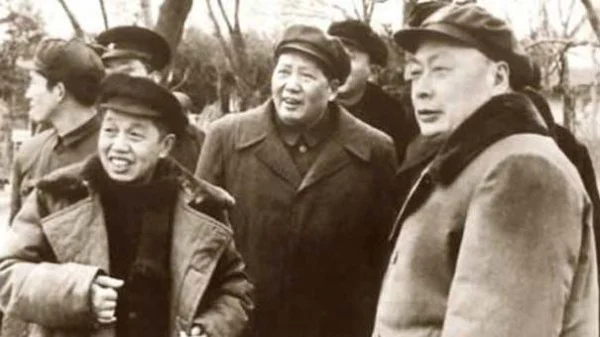
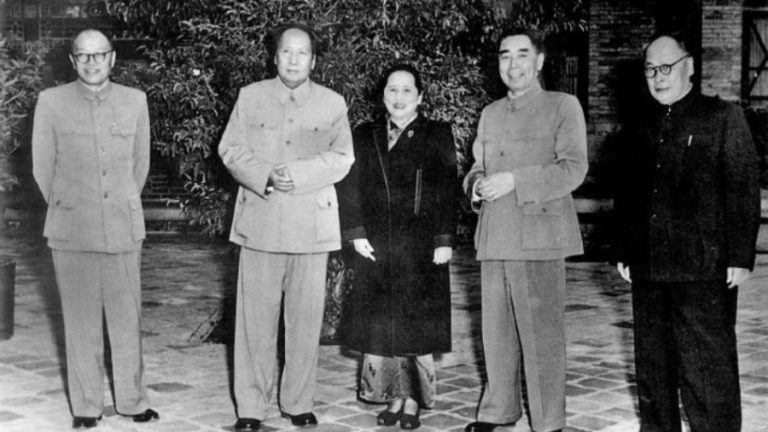
Tan Zhenlin (left), Mao Zedong (center), Chen Yi (right). (Source: Internet)
On March 21, 1968, at the Jingxi Hotel Auditorium, Jiang Qing announced:
“We have conclusive evidence—Tan Zhenlin is a great traitor!”
Red Guard tabloids echoed the charge the following day. Six days later, Jiang Qing and Kang Sheng repeated it from the rostrum at the Workers’ Stadium, unleashing a nationwide frenzy to denounce “Tan-style figures.”
Mao’s Fear of military defection
According to CCP historical materials, Mao deeply distrusted the veteran marshals after Huairen Hall, fearing their lingering influence within the PLA. He placed informants around Ye Jianying, Xu Xiangqian, and Nie Rongzhen to monitor their words and actions.
As recorded in Wu Faxian’s memoirs, Mao ordered Wang Bingzhang to live with the marshals in Beijing’s Western Hills and secretly report on their conversations. Wang submitted at least two handwritten reports detailing walks and discussions with the marshals, concluding that they had accepted criticism and now supported the Cultural Revolution.
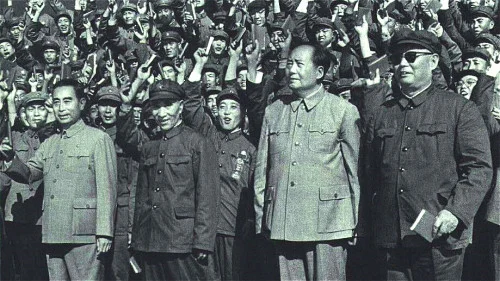
Wu later wrote that these reports inadvertently protected the marshals. On May 1, 1967, Mao allowed all but Tan Zhenlin to appear atop Tiananmen Gate.
Survival by defiance
Why was Tan Zhenlin not killed? Above all, luck. After Lin Biao’s failed escape in 1971, Mao softened his stance toward those associated with the “February Adverse Current.” Tan wrote a letter of contrition. In 1973, with Mao’s special approval, his treatment and privileges were restored. He was elected to the Central Committee and later became Vice Chairman of the NPC Standing Committee.
Compared with Liu Shaoqi, Peng Dehuai, and He Long—all destroyed by the Cultural Revolution—Tan Zhenlin’s thunderous declaration of regret for joining the Party ultimately spared his life.