By Yang Tianzi
A cyber intrusion into Iran’s state media
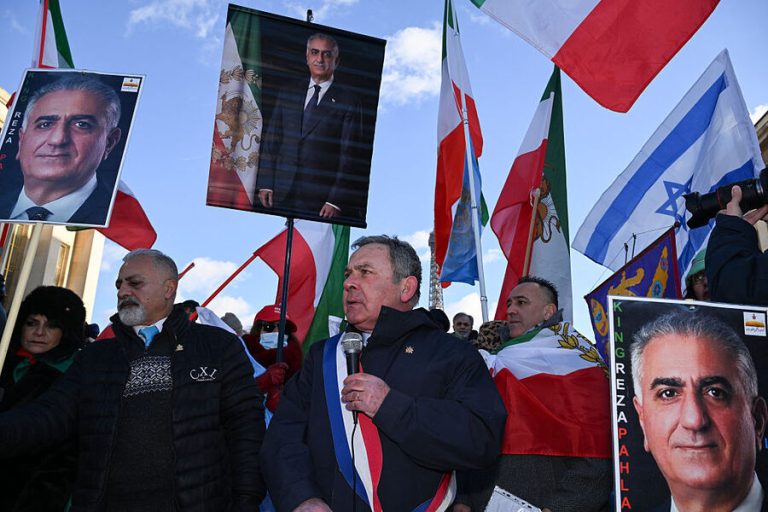
Iran experienced a politically charged cyber incident on Jan. 18, when multiple channels of the Islamic Republic of Iran Broadcasting (IRIB), the country’s state-controlled media monopoly, were disrupted and forced off the air. Regular programming was abruptly replaced by footage of a speech delivered by the exiled crown prince Reza Pahlavi, the son of Iran’s last monarch.
Videos circulating widely on social media confirmed the unprecedented takeover of state television. Analysts described the incident as a significant breakthrough in the opposition’s information warfare capabilities, striking directly at one of the Islamic Republic’s core instruments of control.
How the broadcast was overridden
According to an analysis by the Associated Press on Jan.18, the operation likely relied on Starlink satellite services to override Iran’s tightly controlled broadcasting infrastructure. The suspected use of satellite communications carries strategic significance, allowing operators to bypass the regime’s long-standing internet censorship and information controls.
The incident underscored how advances in communications technology are reshaping political confrontation. For authoritarian systems that depend on centralized media control, maintaining a monopoly over information flows is becoming increasingly difficult.
A direct appeal to Iran’s armed forces
Success
You are now signed up for our newsletter
Success
Check your email to complete sign up
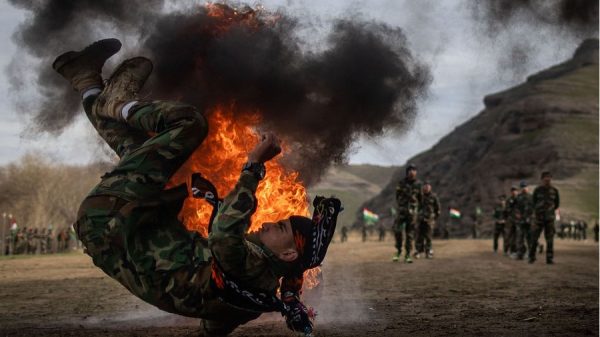
In the broadcast video, Pahlavi issued a direct appeal to Iran’s armed forces, positioning them as the decisive factor in the country’s political future.
“I want to speak to the military,” he said. “You are Iran’s army, not the Islamic Republic’s army. You have a responsibility to protect your own lives. Your time is short. Stand with the people as soon as possible.”
The message deliberately distinguished between “Iran” as a nation and the “Islamic Republic” as a ruling system. By reframing the armed forces as a national institution rather than an extension of the regime, the exiled crown prince sought to encourage defections, refusal of orders, or passive noncompliance within the security apparatus.
The footage also showed individuals wearing what appeared to be Iranian police uniforms, claiming they had “laid down their weapons and pledged loyalty to the people.” While these claims could not be independently verified, their function was evident: to project an image of internal fracture within the security forces and to weaken the loyalty of other personnel.
An ambiguous official response
Iranian authorities responded cautiously. The semi-official Fars News Agency acknowledged that IRIB signals in certain regions had been disrupted by an “unknown source,” but avoided specifying what content had been broadcast or how the intrusion occurred.
Pahlavi’s office confirmed that the interference had taken place but declined to disclose technical details. This strategic ambiguity may reflect security considerations or an effort to preserve an informational advantage for future operations.

A history of broadcast intrusion
This was not the first time Iran’s broadcasting system has faced external interference. According to a 1986 report by The Washington Post, the U.S. Central Intelligence Agency once provided miniature television transmitters to allies of Iran’s exiled crown prince, enabling Pahlavi to conduct an 11-minute clandestine broadcast inside the country.
From covert transmitters in the 1980s to satellite-based technology today, the methods have changed, but the underlying strategy has remained consistent: breaking the state’s information monopoly and delivering opposition messages directly to the public and to key components of the state apparatus. The continuity suggests that broadcast intrusion has long been a central tactic for exiled groups confronting authoritarian systems.

Security forces as the decisive arena
The core significance of the Jan. 18 incident lies in its intended audience: Iran’s military and security forces. In the current political climate, these institutions stand between mass protest and regime survival. Continued loyalty reinforces the existing power structure; visible fractures or refusal to suppress demonstrations could trigger a structural crisis.
The broadcast takeover highlights a defining feature of contemporary political struggle. As technological advances erode state control over information, the successful insertion of opposition messaging into official channels delivers a symbolic blow to state authority.
Amplified by international media coverage and secondary dissemination across social platforms, the impact of such incidents now extends beyond Iran’s borders, shaping how the country’s political trajectory is perceived globally.
While there is no indication that this broadcast will produce immediate internal upheaval, it signals clearly that in the prolonged confrontation between the Islamic Republic and its opponents, the information domain has become a central battlefield—one in which technological change is steadily shifting the balance in an inherently asymmetric struggle.