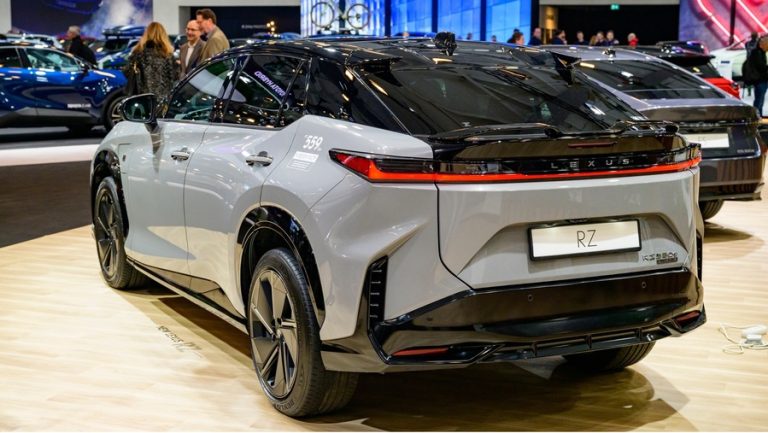
As global competition in the electric vehicle (EV) industry enters deeper waters, Toyota is quietly making breakthroughs in solid state batteries, a core technology that could reshape the industry.
In recent monthsm Toyota’s top management has emphasized that the Japanese auto giant’s solid-state battery research has entered a stage of substantial progress, and future models are expected to achieve generational improvements in range, charging efficiency, and safety. If successfully implemented, this technology could redefine the competitive boundary between electric and fuel-powered vehicles.
10-minute charging and 700-mile range?
According to Yahoo Finance, citing Toyota, EVs equipped with solid-state batteries could theoretically:
- Reach a range of about 745 miles (~1,200 km)
- Reduce charging time to about 10 minutes
- Achieve significantly higher energy density than current lithium-ion batteries
- Substantially lower fire risk
If these figures materialize, they would directly address the three core pain points of today’s EVs: range anxiety, charging time, and usage safety.
Compared with current mainstream liquid lithium-ion batteries, solid-state batteries use a solid electrolyte, which is not only more heat-resistant and stable but also better suited for high-power fast charging. This is the key reason traditional automakers like Toyota, BMW, and Honda have increased investment in this technology in recent years.

Success
You are now signed up for our newsletter
Success
Check your email to complete sign up
Consumer reality: EVs still haven’t crossed the ‘psychological barrier’
Despite optimistic technological prospects, the market still faces significant hurdles.
A joint survey by The Washington Post and the University of Maryland, involving 1,404 respondents, found:
- 74 percent believe fuel vehicles are more reliable for long-distance travel
- Only 10 percent think pure EVs are “convenient enough” for refueling
This highlights a key issue: technological progress in EVs has not fully translated into consumer trust. Range anxiety, charging queues, and inconsistent charging standards remain major obstacles to widespread adoption. This also explains why Toyota has maintained a cautious approach to “full electrification” in recent years, rather than aggressively transitioning to EVs like some other automakers.
Tech maturity before market hype
Despite not joining the EV bandwagon, Toyota has been working on solid-state batteries for years. At an October 2024 press event, Toyota President Koji Sato told the Financial Times: “The most important thing right now is to first truly bring solid-state batteries to market before considering scaling up.”
This statement reflects Toyota’s characteristic “engineer mindset” — preferring to move slowly rather than take risks. Unlike some new automakers who adopt a “launch first, improve later” strategy, Toyota emphasizes reliability, yield, and cost control. This means solid-state batteries will not rapidly proliferate in the short term, but once mass-produced, their stability could be higher.
Integration with Tesla’s system: strategic compromise in practice
At the infrastructure level, Toyota has begun aligning with industry realities.
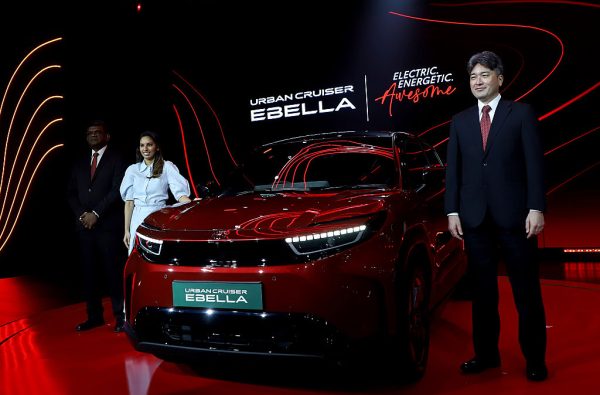
In October 2024, Toyota announced it would adopt Tesla’s North American Charging Standard (NACS) and integrate into Tesla’s network of roughly 12,000 Supercharger stations. Reuters and Bloomberg noted that this move effectively guarantees that Tesla will remain the de facto standard-setter for EV charging in North America.
The decision not only alleviates charging anxiety for Toyota users but also demonstrates traditional automakers’ heavy reliance on the broader “ecosystem” in their EV transition.
According to data from the U.S. Environmental Protection Agency (EPA), even when accounting for battery manufacturing, EVs’ lifetime carbon emissions remain significantly lower than those of gas-powered vehicles.
Moreover, as battery recycling technology matures and the recycling rates of critical metals like lithium, cobalt, and nickel rise, the environmental advantages of solid-state batteries will expand further.
Multiple research institutions note that solid-state batteries:
- Have longer lifespans
- Use resources more efficiently
- Pose lower fire risks
- Help reduce the overall carbon footprint of EVs
If this technology scales between 2027 and 2030, the global auto industry’s pace of emissions reduction could accelerate markedly.
If the past decade was a “proof-of-concept” period for EVs, the next five years could mark a true structural replacement phase. Solid-state batteries are standing at the critical point of this transformation.