By Li Muzi, Vision Times
As neighboring India reports new cases of the deadly Nipah virus, Chinese authorities insist that no infections have been detected within the country. But nearly simultaneously, state media confirmed that Chinese researchers have already identified an effective antiviral drug and that nationwide PCR testing capabilities for Nipah are fully prepared, prompting widespread fear among Chinese residents.
“Yesterday there was no medicine. Today, it’s already been developed,” one netizen scoffed online.
According to state media “Xinhua News”, India’s West Bengal state recently confirmed five Nipah virus infections, including cases involving medical staff. Nearly 100 people have been placed under home quarantine, and patients are being treated in hospitals in and around Kolkata. One patient is reportedly in critical condition.
RELATED: Early Coronavirus Samples Uploaded From China Had ‘Genetic Manipulation of the Nipah Virus’: Expert
Success
You are now signed up for our newsletter
Success
Check your email to complete sign up
Xinhua also noted that “there is currently no specific vaccine or proven treatment for Nipah virus.” China’s state broadcaster CCTV, however, emphasized on Jan. 27 that “at present, no Nipah virus cases have been detected in China. There is no need for excessive panic.”
Wuhan Institute unveils ‘breakthrough’ antiviral
Just one day later, “Jiemian News” reported that a joint research team led by scientists from the Wuhan Institute of Virology (WIV) under the Chinese Academy of Sciences had identified a promising antiviral treatment.
RELATED: Qingdao Residents Report Surge of ‘Deadly Virus’ as Chinese Authorities Remain Mum
According to the report, research teams led by Xiao Gengfu, Zhang Leike, and Shan Chao, in collaboration with the Shanghai Institute of Materia Medica and Viva Biotech, published findings in the international journal Emerging Microbes & Infections. Their study confirmed that the oral nucleoside drug VV116 exhibits “significant antiviral activity” against Nipah virus.
The report stated that this was the first confirmation of VV116’s therapeutic potential against Nipah virus and that it could be used both as a preventive treatment for high-risk groups, such as medical workers and laboratory staff, and as a ready-to-use option for current and future outbreaks.
Netizens react: ‘The drug came before the virus?’
The timing of these announcements ignited a firestorm online. Many questioned how China could rapidly develop an effective drug while simultaneously claiming there were no domestic cases. Comments flooded social media, including:
- “The virus hasn’t even started, and the medicine is already ready. This is terrifying.”
- “The antidote arrives the moment the virus appears.”
- “If the virus doesn’t come, who’s going to take these drugs?”
- “So impressive; the medicine is ready before the outbreak.”
Beyond drug development, Chinese authorities also confirmed that Nipah virus PCR testing is already in place nationwide. On Jan. 27, “Xinhua News” quoted Wang Huanyu, a researcher at the China CDC’s Institute for Viral Disease Control and Prevention, stating that China issued the Technical Guidelines for Nipah Virus Prevention and Control as early as 2021, covering surveillance, reporting, testing, diagnosis, outbreak response, personal protection, and disinfection.
RELATED: Here’s Just How Badly ‘Zero-COVID’ Has Damaged China’s Economy
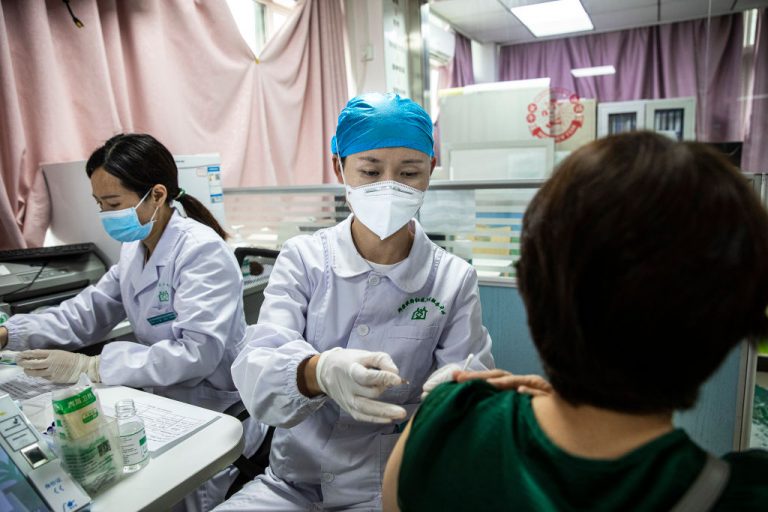
Wang added, “China has established nucleic acid testing methods for Nipah virus and has completed the development and stockpiling of emergency PCR testing kits with independent intellectual property rights. Disease control centers in all provinces are now capable of laboratory testing and confirmation.”
Public skepticism is fueled by China’s long record of tightly controlling information and revising or delaying the release of sensitive data, particularly during public health crises. During the COVID-19 outbreak, authorities were widely criticized for suppressing early warnings, censoring whistleblowers, and repeatedly adjusting case and death figures, undermining public trust at home and abroad.
What is Nipah Virus?
According to the World Health Organization (WHO), Nipah virus infection often begins with flu-like symptoms, including fever, headache, muscle pain, fatigue, and in some cases respiratory distress or pneumonia. The most severe complication is encephalitis, which can cause confusion, seizures, and coma within 24–48 hours.
WHO describes Nipah as a highly lethal zoonotic virus carried primarily by fruit bats. It can spread to humans through contaminated food, especially fruit, or via pigs, and can also be transmitted person-to-person through respiratory droplets or saliva. Reported fatality rates range from 40 percent to 75 percent.
Concerns surrounding China’s Nipah research extend beyond public health. According to a June 15, 2024 report by “The Epoch Times,” some scientists warn that the virus’s characteristics make it attractive for military misuse or even biochemical warfare.
Weaponization risks
Dr. Steven Quay, a physician-scientist and former Stanford University School of Medicine faculty member, told “The Epoch Times,” “After SARS, the Chinese Communist Party realized the power of viruses and began viewing them as potential biological weapons.”
Quay said evidence suggests that China has conducted Nipah virus research, including work originating from the Wuhan Institute of Virology. He warned that if Nipah were engineered for efficient human-to-human transmission, “the consequences would be catastrophic.”
Quay also noted that among numerous viral datasets released by WIV following the initial COVID-19 outbreak, Nipah virus research stood out for its absence of open publication, despite containing what he described as synthetic biology “handles” capable of moving genes. “These handles are typically used to create infectious clones. This violates every biological weapons convention,” he added.
‘A more effective bioweapon?’
Dr. Sean Lin, former director of the viral research laboratory at the U.S. Army’s Walter Reed Medical Center, expressed similar concerns. He warned that Nipah virus may cause severe neurological damage without immediate death, allowing infected individuals to spread the virus further. “It could be a more effective biological weapon,” Lin said. “That may be why the CCP is so interested in Nipah virus.”
While Chinese authorities maintain that no Nipah cases have been detected domestically, the speed with which antiviral drugs and PCR testing were rolled out has fueled public distrust, particularly given China’s history of information suppression during health crises.
For many observers, the question is no longer whether China is prepared for Nipah virus, but why it appears to be so prepared, before any officially acknowledged outbreak has even occurred.
Editorial note: This article is based on publicly circulating reports and commentary from independent analysts. The claims described have not been independently verified by Vision Times, and relevant authorities have not publicly confirmed the allegations.