By Li Muzi, Vision Times
Multiple online reports claim that an “unknown, deadly virus” is sweeping through Qingdao’s Jimo District in China’s Shandong Province, with local authorities allegedly conducting daily disinfection operations, restricting residents’ movement, and suppressing health data. While no official confirmation has been issued, the reports have drawn widespread concern across Chinese social media.
On Jan. 27, the X account “破幕推墙—Real China,” which frequently tracks developments inside mainland China, shared a submission from a Qingdao resident who shared information on a severe local outbreak. The contributor wrote: “My hometown, Jimo District in Qingdao, Shandong, is experiencing an outbreak of an unknown virus. Doctors say it’s just ordinary influenza. My mother says many elderly people around her couldn’t survive and have passed away.”
RELATED: India’s Nipah Outbreak Alarms China, Revives CCP Bioweapons Fears
The submission added: “These include photos my mother took over the past few days and real stories from locals. Many Douyin videos were deleted. The evil CCP won’t let us speak. We’ve been threatened twice by phone calls from the local police station.” The contributor said they decided to speak out so the situation would be seen by the outside world.
A sudden spike in fevers
Success
You are now signed up for our newsletter
Success
Check your email to complete sign up
According to the account, disinfection is being carried out daily, yet residents have allegedly received no clear information about food supplies. “The local neighborhood office keeps saying food is being coordinated, but nothing has arrived for days. Our household food is nearly gone,” the post said, adding that residents suspect local officials may be concealing the situation from higher authorities.

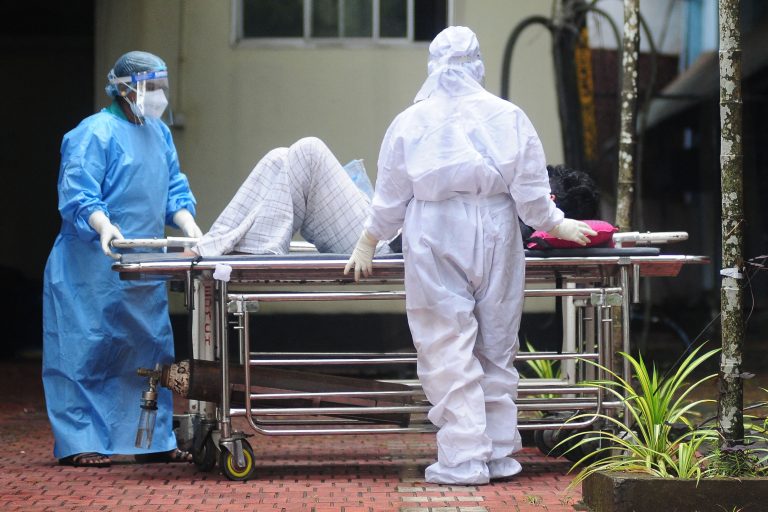
Photos attached to the submission appear to show personnel in full protective suits carrying disinfection equipment inside residential buildings. Separate from the Jimo allegations, mainland Chinese bloggers have recently reported sudden, unexplained high fevers, particularly among children, with symptoms appearing abruptly and worsening at night.

On Jan. 15, Qingdao-based Douyin blogger “喂兔兔” posted: “Didn’t Qingdao just get over a virus? Why is it back again? My child was lively during the day, then suddenly started coughing at night with a high fever of 39.5°C that wouldn’t go down even with medication. We’ve seen a doctor, used both Chinese and Western medicine, and it’s been two days. How long until it goes away?”
Another blogger, “丫头,” wrote: “What virus is this again? Sudden fever with no warning.” A third, “青岛第一深情,” shared screenshots of online discussions referencing the Nipah virus.

Comment sections under these posts revealed similar experiences nationwide. An Anhui user commented: “Same here, I’ve had repeated fevers. Medicine brings it down, but it comes back hours later. The child’s energy is okay. Doctors prescribed antivirals, but no one knows what virus it is.”
Users from Shandong, Zhejiang, and Guangdong echoed: “Fine during the day, fever at night,” and “Sudden high fever with no warning, we’re enduring it now.” A Guizhou user wrote: “Three days of repeated fever, no other symptoms, then a rash appeared after the fever broke.”
Speculation over Nipah virus
Amid these reports, speculation has surfaced online linking the situation to Nipah virus, a highly lethal zoonotic disease. Some netizens noted that India recently reported Nipah cases and questioned how quickly Chinese institutions appeared prepared.
According to publicly available medical sources, Nipah virus infection often begins with flu-like symptoms, which include fever, headache, muscle pain, and fatigue, and can progress to severe respiratory illness or encephalitis. The World Health Organization states that the virus is transmitted by fruit bats and can spread through contaminated food, animals such as pigs, or via droplets between humans. Reported fatality rates range from 40 percent to a whopping 75 percent.
Chinese state media reported that India recently confirmed five Nipah infections, including cases among healthcare workers, with one patient in critical condition and nearly 100 people quarantined. Authorities maintain that no Nipah cases have been detected in China.
RELATED: Norovirus Outbreak Sickens 103, Netizens Suspect Far Higher Toll
However, the speed of China’s response raised eyebrows online. On Jan. 27, “Jiemian News” reported that researchers at the Wuhan Institute of Virology had published findings confirming that the oral antiviral drug VV116 shows significant efficacy against Nipah virus. The report said the drug could be used both for treatment and as a preventative for high-risk groups.
On the same day, Xinhua quoted Chinese CDC researcher Wang Huanyu as saying: “China has established nucleic acid testing methods for Nipah virus and has completed the development and stockpiling of emergency test kits with independent intellectual property rights. Provincial CDCs now have the capability to conduct Nipah virus testing.”
Growing public skepticism
These announcements sparked intense online skepticism. Comments included: “Yesterday there was no medicine, today it’s already developed so fast,” and “The virus hasn’t even arrived yet, and the medicine is ready.” Others wrote: “If the virus doesn’t come, who will take these drugs?” and “The cure came before the disease.”
RELATED: Whistleblower: China Lost 500 Million People in 5 Years Following COVID Outbreak
As of publication, Chinese authorities have issued no official statements addressing the alleged situation in Qingdao’s Jimo District. The reports remain unverified, but the combination of sudden illness accounts, visible disinfection activity, censorship claims, and public distrust has fueled growing concern.
Whether the Qingdao reports reflect a localized outbreak, routine seasonal illness, or misinformation amplified by censorship and fear remains unclear. What is evident, however, is that lingering trauma from past epidemic cover-ups continues to erode public confidence, turning even unconfirmed reports into a source of widespread alarm.
Editorial note: This article is based on publicly circulating reports and commentary from independent analysts. The claims described have not been independently verified by Vision Times, and relevant authorities have not publicly confirmed the allegations.