By Gao Yun
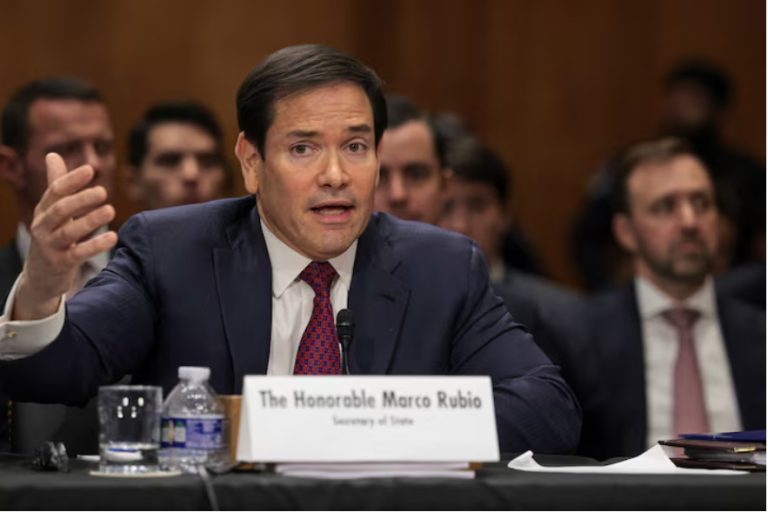
U.S. Secretary of State Marco Rubio said Wednesday that U.S.-mediated efforts to end the war between Russia and Ukraine are making progress, but that negotiations over the territorial status of Donetsk remain one of the most difficult and unresolved obstacles.
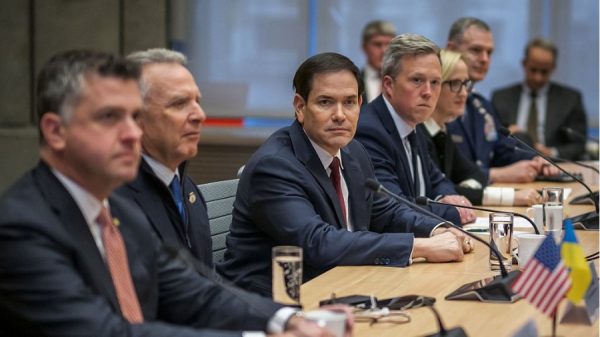
Speaking at a hearing of the Senate Foreign Relations Committee, Rubio said the dispute continues to pose a central challenge in the Ukraine–Russia peace talks.
“This is still a hurdle we have to get over,” Rubio said. “There is still a gap, but at least we’ve narrowed the scope of the problem to a core issue—and that core issue is likely to be very difficult.”

Russia’s demands over Donbas sovereignty
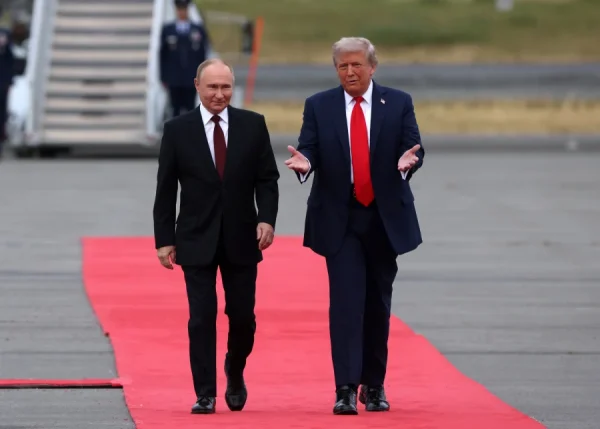
Reuters has reported that Russian President Vladimir Putin has repeatedly stated that unless Ukraine agrees to relinquish sovereignty over the eastern Donbas region—a coal-rich area that includes Donetsk—in a peace agreement, Russia will pursue full military control of the territory.
Success
You are now signed up for our newsletter
Success
Check your email to complete sign up
Russian forces currently hold about 90 percent of the Donbas region, including most of Donetsk, according to Western estimates.
Ukraine has maintained that it will not cede territory that Russian forces failed to seize on the battlefield. Ukrainian officials have repeatedly stated that any peace agreement requiring territorial concessions would violate national sovereignty.
Opinion polls consistently show strong public opposition in Ukraine to giving up territory as part of a negotiated settlement with Russia.
Putin is demanding that Ukraine surrender roughly 20 percent of the Donetsk region it still controls—an area of about 5,000 square kilometers. That demand has emerged as one of the largest barriers to a peace deal.
While most countries recognize Donetsk as Ukrainian territory under international law, Putin claims the region is historically Russian.
US role and upcoming talks in Abu Dhabi
Rubio said the United States may participate in future rounds of Ukraine–Russia negotiations, but noted that President Donald Trump’s chief envoys, Steve Witkoff and Jared Kushner, will not attend the next session. Both were present at the previous round of talks held last weekend in Abu Dhabi.
Those negotiations produced a rare face-to-face meeting between Russian and Ukrainian officials. Although no agreement was reached, both sides signaled a willingness to continue discussions.
A U.S. official who briefed reporters afterward said the next round of talks is expected to take place in Abu Dhabi on Sunday next week.
As diplomatic pressure from the Trump administration intensifies, Kyiv has been urged to make concessions on certain issues in an effort to bring an end to Europe’s deadliest and most destructive conflict since World War II.
The war began with Russia’s full-scale invasion of Ukraine and has since devastated large parts of the country.
Security guarantees and postwar arrangements
During the hearing, Rubio was also asked whether Washington and Kyiv had reached agreement on postwar security guarantees for Ukraine.
“I think, from our side, it’s fair to say those issues have been agreed upon,” Rubio said. He added that Russia’s position would still need to be considered and that any security guarantees would take effect only after the war ends.
The Financial Times reported Tuesday that U.S. officials have told Ukraine that securing security guarantees from Washington would require agreeing to a peace deal with Russia.
According to a report released on the 27th by the Center for Strategic and International Studies, Russian military casualties since the start of the invasion could be as high as 1.2 million.
Ukrainian casualties are estimated at between 500,000 and 600,000. The figures include those killed, wounded, or missing.