According to the Associated Press, as Chinese President Xi Jinping has recently held intensive meetings with multiple Western leaders, some traditional U.S. allies are being accused of prioritizing their short-term economic interests while ignoring broader strategic coordination within the transatlantic alliance.
Canada, the United Kingdom, and certain European countries have successively advanced high-level engagements and trade arrangements with Beijing. U.S. political and strategic circles view these moves as dangerous signals that could weaken a unified stance toward China and undermine long-term trust among allies.

Canada leads the way — Washington strongly displeased
Canadian Prime Minister Mark Carney visited Beijing this month and reached an agreement to lower tariffs on Chinese electric vehicles in exchange for China reducing import barriers on Canadian agricultural products. This action is seen as a clear deviation by Ottawa from the U.S.-led trade defense line toward China.
Previously, former Canadian Prime Minister Justin Trudeau had maintained alignment with the Biden administration, imposing tariffs of up to 100% on Chinese electric vehicles. Carney’s trip not only quickly overturned his predecessor’s policy but was also perceived by U.S. politicians as sending the wrong signal to China in key sectors.
U.S. President Donald Trump subsequently warned that deepening Canada-China trade cooperation carries “extremely high risks,” emphasizing that Canada cannot treat China as an economic lifeline. White House insiders privately noted that such unilateral actions are undermining the U.S.’s overall bargaining power in negotiations with China.
UK’s return to Beijing criticized for ignoring special US-UK relationship
Success
You are now signed up for our newsletter
Success
Check your email to complete sign up
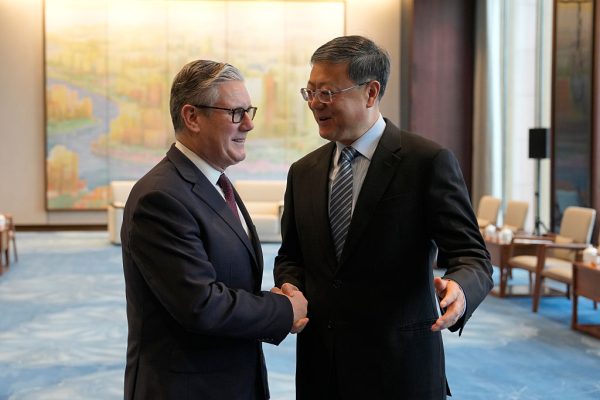
British Prime Minister Keir Starmer visited China this week, becoming the first British prime minister in eight years to do so. China and the UK announced the advancement of a “strategic cooperative relationship” and a package of trade and personnel exchange arrangements, including China lowering tariffs on British whiskey and granting 30-day visa-free entry for British citizens.
CNBC noted that London described Starmer’s visit as a “pragmatic reboot” of relations, but in Washington, the move came amid heightened U.S.-China strategic competition and could easily be interpreted by Beijing as a loosening of the Western alliance.
Several U.S. policy experts pointed out that the UK’s actions came at a critical time when the U.S. is attempting to tighten technology and investment restrictions on China, weakening Washington’s ability to pressure allies and coordinate a unified policy approach.
Trump publicly stated that doing business between the UK and China is “very dangerous.”

US concern: allies acting independently plays into Beijing’s hands
Multiple U.S. foreign policy and security experts noted that Beijing is using a “divide-and-conquer” approach with Western countries to weaken the unified strategy the U.S. is trying to build toward China.
Alicia Garcia Herrero, Chief Economist for Asia-Pacific at French investment bank Natixis, said China seeks to maintain preferential access to European markets without making substantial concessions on market openness. Some Western countries still accept this unequal arrangement to gain short-term economic benefits.
The U.S. strategic community broadly fears that if traditional allies like the UK and Canada continue to pursue “every country for itself” policies toward China, it will become increasingly difficult for the U.S. to coordinate unified actions in technology, supply chains, critical minerals, and geopolitical security.
Jeanne Shaheen, a senior member of the U.S. Senate Foreign Relations Committee, warned that if U.S. allies act independently on China-related issues, it will weaken overall Western strategic coordination and provide opportunities for Beijing.

White House response
Officials from the White House National Security Council (NSC), Treasury, and Commerce Departments stated that Washington is reassessing cooperation conditions with certain allies in trade, technology, and security. They are focusing on whether allies’ China-related trade and investment policies undermine the U.S. and its leadership of the alliance. The evaluation results will directly affect allies’ treatment regarding tariff exemptions, technology cooperation, export licenses, and access to key industries.
The U.S. Commerce Department has clarified that future export controls and supply chain arrangements in sectors such as semiconductors, artificial intelligence, advanced manufacturing, and critical minerals will more strictly distinguish between “highly coordinated allies” and “partners with divergent policies.”
Meanwhile, Congress—especially Republican and Democratic members of the House Foreign Affairs Committee and Senate Foreign Relations Committee—is pushing legislation requiring the administration to evaluate whether allies’ cooperation with China undermines the U.S.-led China strategy before granting trade or technology benefits.
U.S. officials emphasized that these measures are not symbolic warnings; rather, they aim to institutionalize constraints to prevent allies from inadvertently weakening the U.S.’s bargaining position and strategic leverage in competition with China in pursuit of short-term market access or investment opportunities.