By Yang Tianzi
The situation in the Middle East has sharply escalated over the past 24 hours. As U.S. President Donald Trump issued a final ultimatum to Iran over its missile and nuclear programs, war clouds have gathered over the Persian Gulf. Multiple media outlets and intelligence sources indicate that the U.S. military could launch operations as early as Feb. 1, with targets not limited to nuclear facilities and possibly including a “decapitation” strike against Iran’s top leadership.
Trump’s ‘mysterious deadline’ and a massive naval force
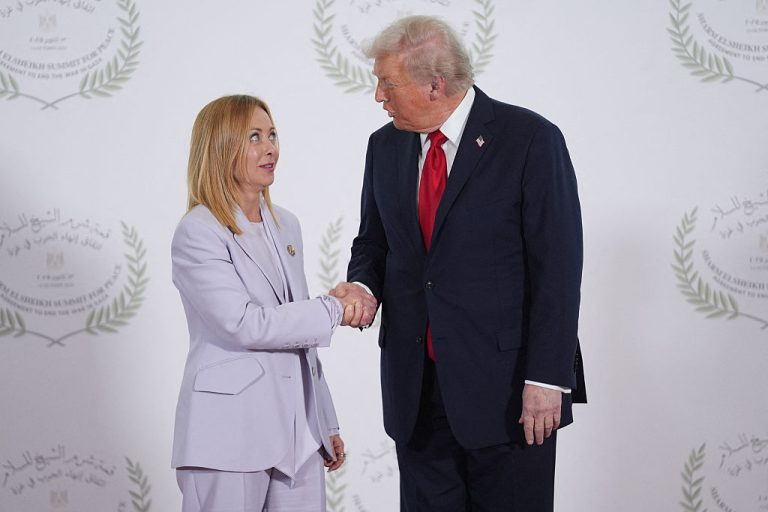
Trump’s remarks on Jan. 30 in the Oval Office set a countdown tone for the potential conflict. He said Iran “really wants” to reach an agreement with the United States and revealed that he had conveyed a clear final deadline to Tehran to reach a deal on its missile and nuclear programs.
However, Trump refused to disclose the specific date, cryptically stating that “only Iran itself knows.” This level of strategic ambiguity is rare in diplomacy and is widely seen as an escalated form of maximum-pressure tactics.
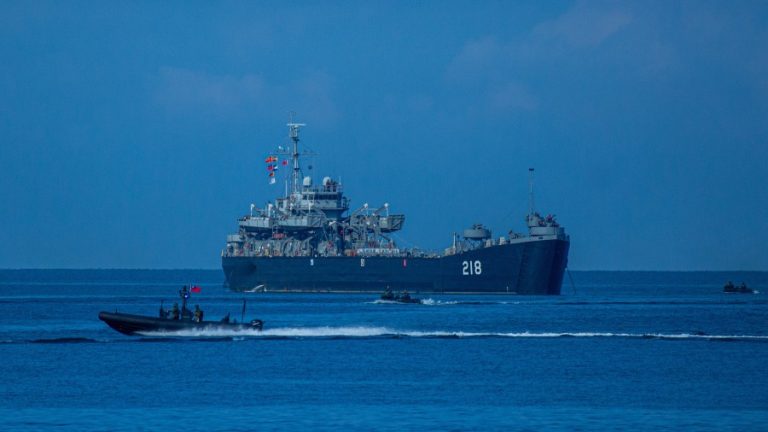
“I hope we can reach a deal. If not, we’ll see what happens,” Trump said. When asked whether the U.S. would take military action similar to its operation in Venezuela earlier this January, Trump said he did not want to discuss ongoing military plans, but immediately emphasized a key fact: “We have a very powerful fleet there [in the Middle East].”
Success
You are now signed up for our newsletter
Success
Check your email to complete sign up
Trump went further, saying that the fleet now heading toward Iran is even larger than the one previously deployed to Venezuela, which successfully captured Nicolás Maduro. His remarks have been widely interpreted as a signal that the U.S. is prepared for full-scale military intervention, potentially exceeding limited or conventional strikes.
Intelligence circles shaken: war as early as Feb. 1?
On Jan. 31, U.S. outlet Drop Site News disclosed explosive intelligence, citing multiple senior U.S. military sources who said Washington had informed a key Middle Eastern ally that Trump could authorize an attack on Iran between Jan. 31 and Feb. 1.
If true, this would mean military action could begin within hours.
A former senior U.S. intelligence official, now serving as an informal Middle East policy adviser to the Trump administration, revealed even more startling details. According to the source, U.S. operational planning goes far beyond a simple “punitive strike.”
The adviser said the target list includes:
- Nuclear facilities: to completely eliminate Iran’s nuclear weapons potential
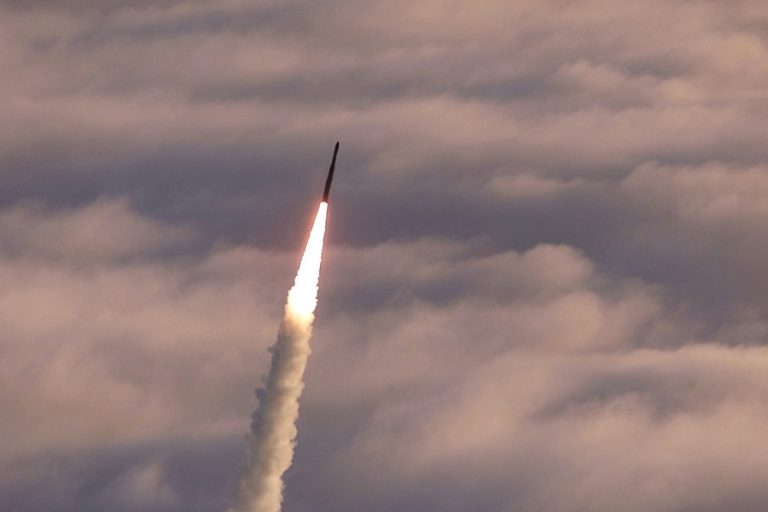
- Ballistic missile facilities: to remove direct threats to U.S. allies and bases
- Military infrastructure: to degrade Iran’s conventional combat capabilities
- ‘Decapitation’ strikes: directly targeting Iran’s senior leadership
“This isn’t about Iran’s nuclear or missile programs—it’s about ‘regime change,’” the former intelligence official said bluntly. He explained that internal strategic thinking within the Trump administration holds that successfully eliminating Iran’s top leaders could spark renewed mass protests and ultimately topple the regime from within.
The source also said Israeli Prime Minister Benjamin Netanyahu is eagerly anticipating “an attack” and has assured Trump that Israel could help establish a pro-Western government in Iran if operations proceed. Two senior intelligence officials from Arab states also confirmed they had been notified by the U.S. that an attack could be “imminent.”
In response, U.S. Central Command declined to comment, while the White House did not directly deny the reports, instead referring journalists to Trump’s recent public statements.

Mysterious explosions inside Iran
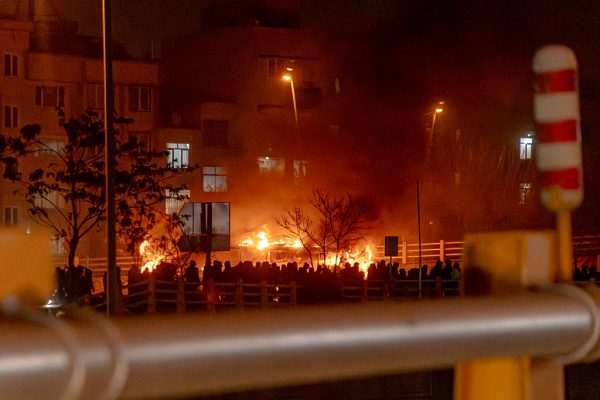
As war rumors intensified, two unexplained explosions occurred inside Iran on Jan. 31, fueling widespread speculation.
According to Reuters and Agence France-Presse, citing Iran’s semi-official Tasnim News Agency, a powerful explosion struck an eight-story building in Bandar Abbas, a strategic port city in southern Iran that guards the entrance to the Persian Gulf. Footage from the scene showed two floors completely destroyed, with nearby vehicles and shops damaged. Local officials confirmed at least one person was killed and 14 injured.
Social media quickly circulated claims that the intended target was IRGC Navy Commander Alireza Tangsiri. Tasnim swiftly denied the claim, calling it “completely false,” but amid heightened U.S.–Iran tensions, such rumors further inflamed the atmosphere.
Later the same day, a gas explosion hit a residential complex in Ahvaz, the capital of Iran’s southwestern Khuzestan Province, killing four people.
Although two Israeli officials told media that Israel was not involved in the incidents, some analysts view the explosions—given the looming threat of U.S. strikes—as possible “preludes” or part of an intelligence and psychological warfare campaign.
Military standoff: live-fire drills in the Strait of Hormuz
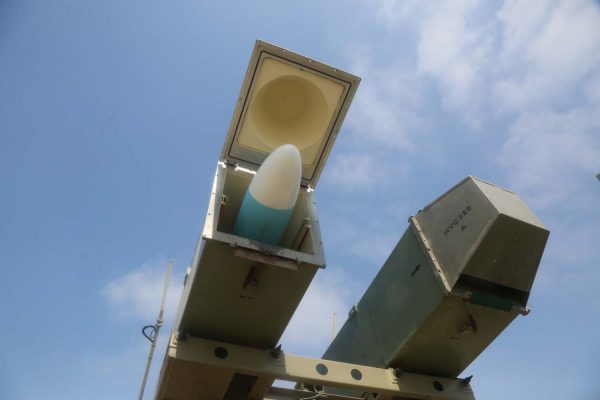
Facing mounting U.S. pressure, Iran has not backed down. The Islamic Revolutionary Guard Corps announced it would conduct live-fire naval drills in the strategically vital Strait of Hormuz from Feb. 1 to 2.
In response, U.S. Central Command issued a stern warning on January 30, stating it would not tolerate any “unsafe behavior” by Iran in the strait. The U.S. specifically warned that Iranian aircraft flying over U.S. warships or fast boats conducting close-approach maneuvers would be treated as threats and met with action. The statement underscores that the risk of a direct clash has reached a critical threshold.
A pivotal turning point for the Middle East
Beyond military deployments, the U.S. has simultaneously tightened diplomatic and economic pressure.
On Jan. 30, the U.S. Treasury Department updated its Iran sanctions list, adding seven individuals and two entities. Notably, those sanctioned include Iranian Interior Minister Eskandar Momeni and senior commanders within the IRGC’s intelligence apparatus, signaling that Washington is precisely targeting Iran’s security and intelligence core.
At the same time, the U.S. State Department announced a series of major arms sales to Middle Eastern allies, totaling staggering amounts. Military sales to Israel alone reached $6.67 billion, with additional deals approved for Saudi Arabia and others.
The Associated Press noted that the timing of these arms sales is extremely sensitive, coming as the possibility of U.S. strikes on Iran sharply escalates regional tensions. The sales are seen not only as bolstering allied defenses but also as part of a broader effort to build a regional defense alliance aimed at Iran, in preparation for a potential large-scale conflict.
From Trump’s ultimatum and leaked “decapitation” plans, to mysterious explosions inside Iran and escalating military drills on both sides, all signs point to a single conclusion: U.S.–Iran relations have reached a final showdown.
If the U.S. launches an attack on February 1, it may go far beyond strikes on nuclear facilities, representing a high-stakes gamble to reshape Iran’s political system and fundamentally alter the Middle East’s geopolitical landscape. The Trump administration appears to be attempting to replicate the Venezuela model—combining military pressure with internal unrest to achieve regime change.
However, Iran is not Venezuela. Its ballistic missile capabilities, network of proxy forces across the Middle East, and ability to block the Strait of Hormuz mean that any conflict could trigger unpredictable and far-reaching consequences.