
By Lu Yixin, Vision Times
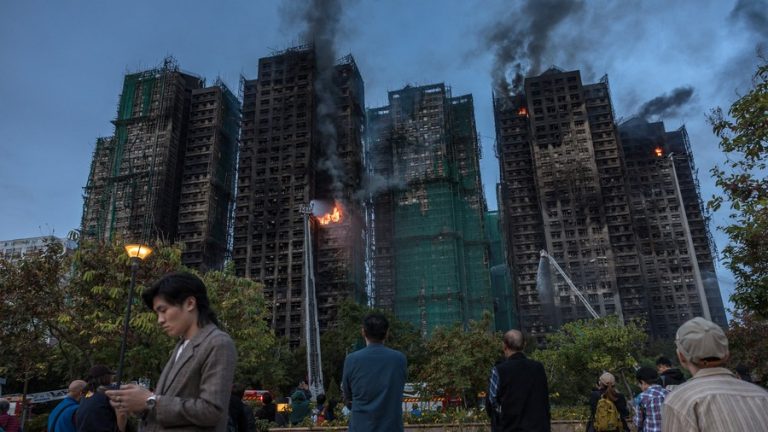
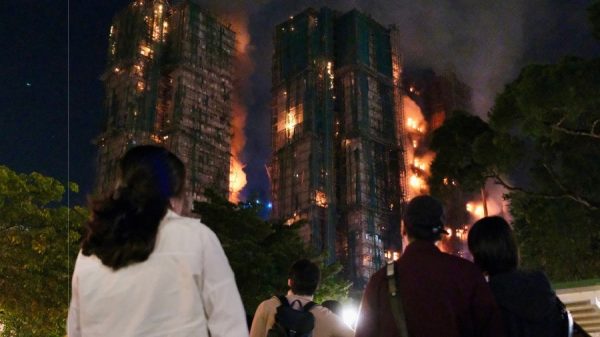
On Feb. 5, the independent commission established to investigate the deadly fires at Wang Fuk Court, which occurred on Nov. 26 last year, held its first procedural directions hearing. The commission announced that its first full public hearing is slated for March 19, marking a formal start to the investigations.
However, residents attending the session raised concerns about whether the commission can adequately address key issues within its nine-month reporting timeline. Others criticized the online registration system, saying elderly residents were effectively shut out and calling for live-streamed access to ensure full transparency.
RELATED: A City in Mourning: Wang Fuk Court Fires Spark Political Crisis Ahead of Election
Long overdue hearing
According to reports from “Initium Media” and the “United Daily News,” more than two months after the fire, the Hong Kong government’s independent commission convened its first directions hearing at 10 a.m. at the City Gallery in Edinburgh Place, Central.
Success
You are now signed up for our newsletter
Success
Check your email to complete sign up
A separate public viewing area was also arranged at the Central Library in Causeway Bay. Approximately 400 seats were available for public observation, but members of the public, including Wang Fuk Court residents, were required to register in advance through an online lottery system on a first-come, first-served basis. Some residents began arriving around 9 a.m., and the hearing concluded about 90 minutes later.
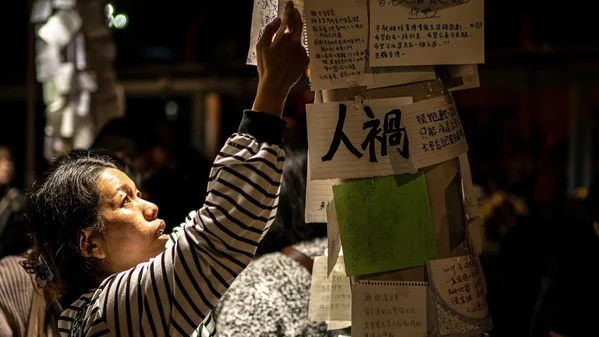
Commission chairman Luk Kai-hong announced during the session that the first substantive hearing would take place at the same venue on March 19 at 10 a.m. Before proceedings began, Luk led attendees in a one-minute silence for the victims of the fire.
Luk later told reporters that preparations began immediately after the commission’s formation, including setting up an office, assembling a legal team, and inspecting the fire site. He said the commission has already received documents and information from relevant groups and individuals and is conducting detailed analysis.
Residents say key issues remain unaddressed
Ms. Chu, a resident of Hong Cheong House, told reporters after the hearing that she understood the meeting was focused on legal procedures but still wanted to attend. “I knew it was a hearing, to listen to how the legal process works,” she said. “But as for our future resettlement, it was not mentioned at all, not a single word. That’s how it was.”

She said the short duration of the meeting left little impression, but she questioned how the commission could manage two major tasks within nine months: investigating the fire itself and addressing future regulatory and legislative reforms.
“There are only nine months. There are two major issues. I have some doubts about how they will allocate the time,” she said. Ms. Chu added that residents are facing more urgent concerns, including completing the investigation quickly so families can return home or be reassigned housing. She also raised questions about how donated funds would ultimately be distributed.
Confusing online registration
A significant number of older residents traveled long distances to attend, only to find they were unable to enter because they had failed to register successfully online. While discussing the location and booking system, Ms. Chu, who traveled from Hung Shui Kiu in Yuen Long, said: “I live in Hung Shui Kiu. It took almost two hours to get here today. But there’s no choice. I had to come. If government officials choose to hold it here, would they ever choose Hung Shui Kiu?”
She said the online process did not prioritize residents and was difficult to navigate. “I used all my energy just to complete today’s registration. It was like buying concert tickets.”
Ms. Chu also urged the government to provide weekly updates, noting that many elderly residents do not know how to access information online. “They really don’t know. I tell my neighbors when there’s news and ask if they want to listen. The people up there are like gods; they don’t know how people below operate, or how much residents are suffering.” She said the incident has significantly damaged her confidence in the government.
Another resident, an elderly woman identified as Mrs. Tang, came from a hotel providing temporary accommodation. She said she hoped the authorities would handle the matter fairly. “If punishment is needed, then punish,” she said. She added that she hoped for a housing swap arrangement but said rebuilding and returning to the original site would leave her traumatized.

Mrs. Tang said she could not complete online registration herself and had to rely on others. After being denied entry at the City Gallery, she tried again at the Central Library but was still unable to attend.
Mr. Leung, a resident living in transitional housing in Aberdeen, said a friend attempted to register on his behalf, but he was unsure if it was successful. “I don’t understand these things,” he said. “Now I have to rush to Causeway Bay.” After being denied entry again, Mr. Leung said he hoped authorities would provide a livestream option.
No legal representation for residents
Multiple government departments and statutory bodies, including the Department of Justice, the Independent Commission Against Corruption, the Competition Commission, and the Urban Renewal Authority, sent representatives. The government-appointed estate manager, and lawyers representing the property management and consulting firms, were also present.
However, no legal representative attended on behalf of Wang Fuk Court residents. Ms. Chu said residents were unable to speak during the session. “We are waiting for the next meeting. We hope they will set up a session where we can express our views,” she said. “We have 1,984 households who need to sit down and present our demands. So far, the government has not done that.”
Journalists at the hearing faced restrictions, with reporters confined to designated interview zones. Several online media outlets were reportedly denied entry. As the inquiry moves toward its first hearing in March, residents continue to press for transparency, accessibility, and a meaningful voice in the process.