By Yang Tianzi
Tensions in the Middle East continue as the United States and Iran held a highly anticipated nuclear negotiation on Feb. 6 in Muscat, the capital of Oman. This represents a significant diplomatic breakthrough after a long period of confrontation, with both sides describing it as a “good start.” On the same day, U.S. President Donald Trump signed economic sanctions, imposing a 25 percent tariff on any country conducting business with Iran, demonstrating a strategy of “maximum pressure combined with diplomacy.”
Eight-hour Muscat talks: cautious engagement mediated by Oman
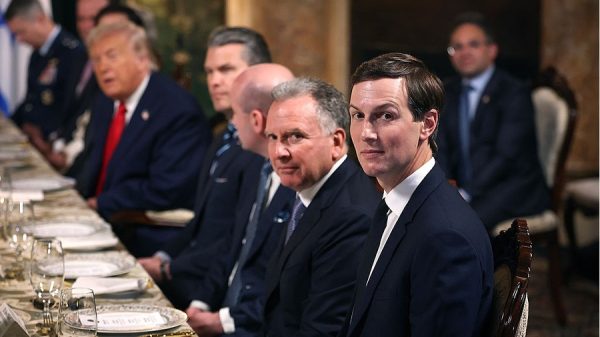
According to a detailed report by Axios, the talks in Oman lasted approximately eight hours and followed a carefully structured negotiation framework. Omani Foreign Minister Buthari, acting as host, played a crucial bridging role by meeting separately with U.S. and Iranian representatives to understand each side’s positions and concerns. Only afterward did the U.S. delegation—including Middle East envoy Witkoff and Trump’s son-in-law and senior White House advisor Jared Kushner—engage in direct face-to-face discussions with Iranian Foreign Minister Araqi.
Kushner’s involvement drew particular attention. As a close confidant and family member of Trump, he was actively involved in Middle East affairs during Trump’s first term, helping achieve major diplomatic successes such as the Abraham Accords. His presence signals Trump’s high regard for the talks and indicates the White House’s desire to break the U.S.-Iran stalemate through unconventional diplomatic channels. Witkoff, a professional diplomat, provided technical and expert support to ensure substantive progress on key issues.
Oman has long been seen as one of the few Gulf countries capable of maintaining good communication with both the U.S. and Iran, frequently facilitating secret or informal negotiations on sensitive topics. This meeting continued Oman’s tradition of “quiet mediation,” providing a neutral and secure platform for U.S.-Iran dialogue.
Success
You are now signed up for our newsletter
Success
Check your email to complete sign up
Trump signals further talks
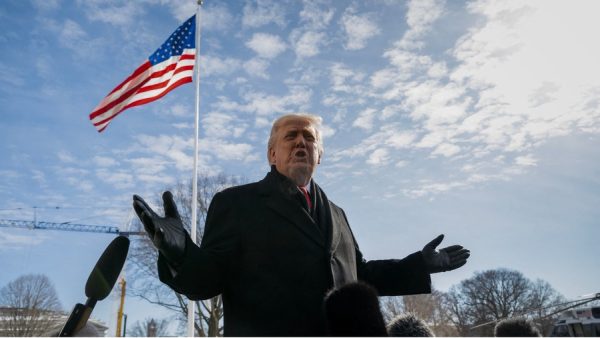
On his way to Mar-a-Lago in Florida for the weekend, Trump expressed optimism about the Muscat talks to accompanying reporters. He described the discussions as “very good” and noted that Iran showed a strong willingness to reach an agreement. Trump emphasized: “Iran seems very eager to make a deal, but we’ll have to see what kind of deal it will be.” He also indicated that both sides would meet again early next week, before Feb. 11, suggesting that negotiations are accelerating.
However, Trump quickly issued a stern warning: if Iran does not agree on its nuclear program, the consequences will be “very serious,” adding that “they know very well” what this entails. Notably, Trump indicated that the U.S. is not currently in a hurry to take military action against Iran—partly because U.S. military assets are not fully in position, and partly because he personally prefers a diplomatic solution.
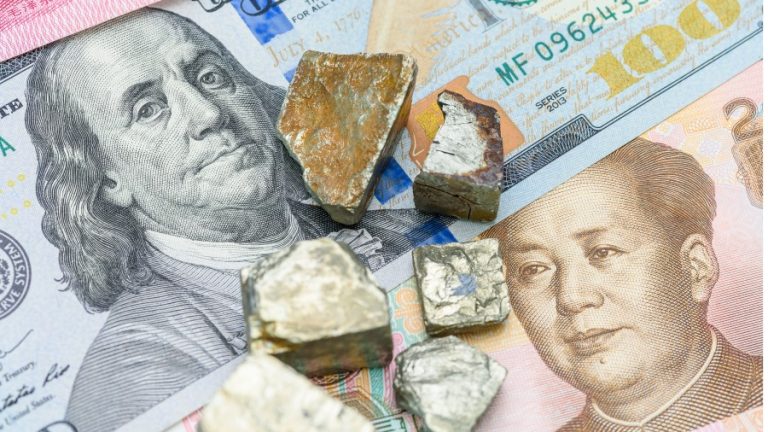
On the same day as the talks, Trump enacted a January warning by signing an executive order imposing a 25 percent tariff on any country that “directly or indirectly” purchases Iranian goods. The White House clarified that this is intended to deter third countries from maintaining business with Iran, targeting key industries such as energy, metals, and petrochemicals, which are vital sources of revenue for the Iranian government.
This tariff policy has wide-ranging effects, directly limiting Iran’s export capacity while economically pressuring countries trading with Iran. Major buyers of Iranian oil, including China, India, and Turkey, now face difficult choices between maintaining trade with Iran and avoiding U.S. tariffs. This “secondary sanctions escalation” further isolates Iran from the international economic system, exacerbating Tehran’s economic difficulties.
Core issue: uranium enrichment rights and the technical-political balance
A regional diplomat, speaking to Reuters on condition of anonymity, revealed the core content of the negotiations. Iran insisted on its “right to enrich uranium,” a fundamental position, firmly rejecting the U.S.’s previous demand for “zero enrichment.” Iran argues that as a signatory of the Non-Proliferation Treaty (NPT), it has the right to enrich uranium for peaceful purposes.
Yet, there were positive signs in the talks. The diplomat noted that while Iran ruled out “zero enrichment,” it was open to discussing the “levels and purity” of enrichment or alternative arrangements, including establishing a “potential regional joint mechanism.” This innovative proposal could involve creating a multilateral nuclear fuel cycle facility in the Middle East under international supervision, meeting peaceful nuclear energy needs while preventing proliferation.
Importantly, the diplomat revealed that Tehran believes U.S. negotiators “seem to understand Iran’s position on enrichment,” suggesting that the U.S. has realized that demanding Iran abandon enrichment entirely is unrealistic. Both sides may need to reach a technical compromise, a necessary condition for meaningful progress and deeper discussions.

Iran’s conditions for concessions
As potential trade-offs on nuclear issues, Iran presented clear demands during the talks. Foremost is “effective and immediate sanctions relief,” especially covering banking and oil exports, which are critical to Iran’s economy. Years of economic sanctions have severely weakened Iran’s economy, causing currency depreciation, inflation, and public hardship. Tehran hopes the nuclear negotiations will remove these economic shackles and restore its normal standing in the international financial system.
Beyond economic concerns, Iran requested security assurances. Tehran demanded the U.S. “remove military assets from the vicinity of Iran,” reflecting deep concern over American military threats. The U.S. has significant deployments in the Middle East, including aircraft carrier groups in the Persian Gulf, air bases, and ground forces in neighboring countries—seen by Iran as direct threats to its national security.
Iranian Foreign Minister Araqi, in post-meeting remarks, expressed a cautious but firm stance. He emphasized that “any dialogue must avoid threats and coercion,” clearly referencing Trump’s tariff order that same day. Araqi stated that Tehran would only discuss nuclear issues and “will not discuss any other topics with the U.S.,” effectively limiting the negotiation scope and excluding U.S. hopes to address Iran’s ballistic missile program or regional influence.
In an interview with Al Jazeera, Araqi reiterated that the talks were “indirect” and issued a clear security warning: if the U.S. attacks Iran, Tehran would target U.S. bases in the region for retaliation, as “we cannot strike the U.S. homeland.” These remarks serve both as deterrence and strategic assessment, showing that Iran understands its operational limits but is determined to defend its sovereignty and security.
Regarding future arrangements, Araqi said both sides agreed that a second round of talks should be held as soon as possible, though “no specific date has been set.” This slightly contrasts with Trump’s statement about meeting early next week, reflecting that both sides still need to coordinate on timing and format.
Key variables in Middle East security balance
Progress in U.S.-Iran nuclear negotiations affects not only bilateral relations but also the broader Middle East and global stability. Israel has long viewed Iran’s nuclear program as an existential threat and closely monitors developments. A U.S.-Iran agreement could alleviate Israeli security concerns but might also trigger Israeli worries over insufficiently strict terms. Gulf Arab states like Saudi Arabia are similarly attentive, seeking assurances that any deal effectively limits Iran’s nuclear ambitions and regional influence.
For the international community, successful U.S.-Iran talks would help maintain the global nuclear nonproliferation regime and prevent a regional nuclear arms race.
Next week’s second-round talks will be a critical indicator of negotiation direction. If both sides make progress on technical details such as uranium enrichment levels, quantities, and oversight mechanisms, and reach preliminary agreement on the sanctions relief timeline and scope, the prospects for a comprehensive deal will increase substantially. Conversely, if core differences persist and no compromise is reached, negotiations could enter a prolonged stalemate or even risk collapse.