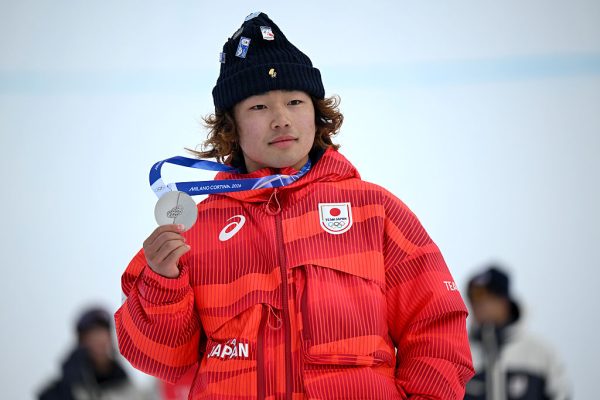
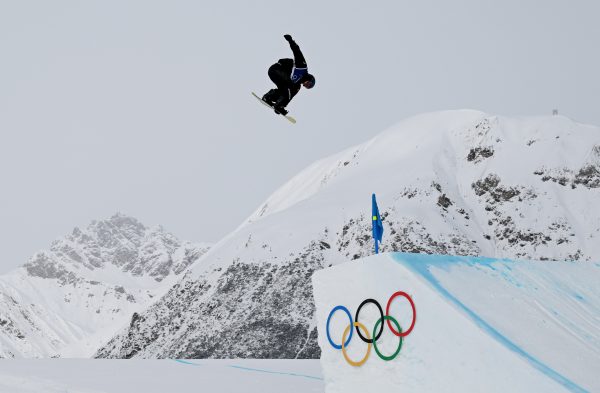
In February 2026, as the Milan Winter Olympics gathered momentum, Su Yiming landed a decisive run in the men’s snowboard slopestyle final. The 21-year-old from Jilin executed a high-difficulty jump to defeat a strong international field, securing the Chinese delegation’s first gold medal of the Games.
Under ordinary circumstances, such a victory would unleash the full force of China’s state media apparatus. Wall-to-wall coverage on CCTV, coordinated social media campaigns, and a surge of celebratory commentary would be expected to elevate the champion into a national symbol.
This time, however, the tone was noticeably restrained. Reports acknowledged the medal but steered clear of one central element of the story: the man who had coached Su for nearly a decade, Yasuhiro Sato.
From Gu Ailing to Su Yiming
Before the Games opened, official attention had centered on freestyle skier Gu Ailing, often described in state narratives as “being Chinese once every four years.” Significant promotional resources were committed to her title defense, with publicity materials prepared in advance.
But competition proved unforgiving. Gu did not meet expectations in Milan, and the anticipated media crescendo failed to materialize.
Success
You are now signed up for our newsletter
Success
Check your email to complete sign up
Into that vacuum stepped Su Yiming. His gold medal stabilized China’s early Olympic campaign. Yet the circumstances of his rise presented a complication. The coach who guided him to the top of the podium was not a product of China’s state sports system, but a Japanese trainer from Hiroshima.

The Sato effect
Born in 1975, Yasuhiro Sato is widely regarded as a leading figure in Japanese snowboarding. For Su Yiming, he has been more than a technical instructor, frequently described as both mentor and father figure.
The symbolism in Milan was striking. On the same day Su captured the men’s gold, another of Sato’s athletes, Japanese snowboarder Fukada Mari, won the women’s event. Afterward, Sato stood between them, placing one arm around each athlete as they embraced. He smiled broadly, tears visible in his eyes.
When Su’s score confirmed the gold medal, Sato dropped to his knees and covered his face, overwhelmed. The reaction reflected what he has described as eight years of shared effort and hardship.
Eight years in the making
Their partnership began in 2017, when Su was still an emerging talent. Sato identified his potential early and began shaping his competitive path.
According to the author, Sato’s philosophy stood apart from what is described as the Chinese system’s “gold medal only” approach. He often told Su: “First become a good person, then become an excellent athlete.”
On the slopes, Sato demanded precision and discipline. Off the snow, he played a paternal role. During pandemic lockdowns, the two stayed in close contact through video calls, discussing technique, ambitions, and life beyond competition.
They once spoke of working together for life. In an emotional interview, Sato said plainly: “I love him (Su Yiming) very much.”
Politics in the background
The victory unfolded amid strained China-Japan relations. In 2026, Japan’s cabinet under Prime Minister Sanae Takaichi adopted a firm posture toward Beijing. Tensions across the Taiwan Strait remained high, and nationalist rhetoric circulated widely online in China, with attacks directed at Japanese figures and symbols.
Against that backdrop, Sato continued coaching Su under pressure that extended beyond sport. He faced online criticism tied to his nationality but remained focused on training and competition.
The subdued tone of Chinese media coverage, the author argues, reflects a dilemma. How should a state narrative that casts Japan as a historical adversary account for the fact that a Japanese coach played a decisive role in delivering China’s first gold medal of the Games?
Images of Sato kneeling in the snow and of Chinese and Japanese athletes embracing offered a counterpoint to nationalist messaging. Politics may divide territory, but cannot divide hearts. Propaganda may amplify hostility, but cannot erase personal bonds formed through years of shared struggle.
Su Yiming’s first gold medal in Milan belongs to the athlete and to Yasuhiro Sato, not to the political system that sought to downplay the story.
The views expressed are solely those of the author.
By Chen Jing