On Feb. 22, the Mexican military launched a raid that killed one of the country’s most infamous cartel bosses. The strike set off a wave of mass violence across several Mexican states.
Mexico’s defence ministry confirmed on Sunday that the drug lord Nemesio Ruben Oseguera Cervantes, better known as “El Mencho”, was killed in the western state of Jalisco, along with around six other suspected accomplices.
Oseguera was mortally wounded in the assault in the town of Tapalpa in the Jalisco state, the ministry reported. He died later of his wounds while in custody. Three other cartel members were killed during the raid, with another three dying while being flown to Mexico City.
The assault saw two alleged cartel members arrested while harboring weapons such as rocket launchers capable of destroying armored and aerial vehicles. Three troops were wounded and, according to an anonymous Jalisco state official, one member of the National Guard was killed.
Oseguera, 59, was the leader of one of the most powerful criminal organizations in Mexico — the Jalisco New Generation Cartel (CJNG), according to the Guardian.
Success
You are now signed up for our newsletter
Success
Check your email to complete sign up
The cartel was responsible for smuggling migrants and drugs like cocaine, methamphetamine and fentanyl to the U.S., using military-style tactics including armed drones and improvised explosive devices (IED) to attack security forces.
According to the Conversation, around 73 people were killed in the operation to seize El Mencho.
The raid’s aftermath
The raid in Tapalpa dealt another serious blow to Mexico’s drug gangs. Previously, fellow cartel leaders Joaquin “El Chapo” Guzman and Ismael “El Mayo” Zambada — both leaders of the larger Sinaloa cartel — were captured and imprisoned in the U.S.
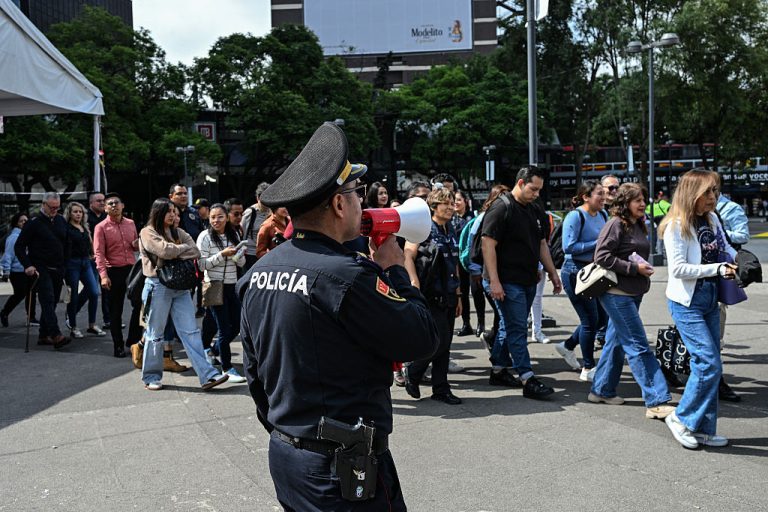
However, El Mencho’s death sparked mass violence in some cities, where cartel members attacked both infrastructure and armed forces. Highways were blockaded with burning cars and businesses were torched in “more than half a dozen states,” Reuters reported. So far, no civilian casualties have been reported.
All across Jalisco’s capital of Guadalajara, citizens were frightened by the possibility of being gunned down by El Mencho’s men.
Tourists in Jalisco’s beach resort of Puerto Vallarta have shared on social media videos depicting a “war zone” with smoke rising around the bay. Several flights have also been suspended in the area. State-level education departments also reported that schools in some states have also cancelled classes for Monday.
Angelica Duran-Martinez, associate professor of political science at the University of Massachusetts Lowell, wrote on the Conversation that “violence flares in two ways.”
The short term would be retaliation; cartel members would continue attacking security forces while also asserting their dominance over the region.
The long term would be internal fighting within the cartel and conflict with rival factions who would take advantage of the power vacuum left by El Mencho’s death.
“The level and duration of violence depend on a few factors, such as whether there was a succession plan and what kind of alliances are in place with other cartels,” Duran-Martinez said.
“But generally, operations in which a cartel boss is removed lead to more violence and fragmentation of criminal groups.”
READ MORE:
- Cyber Operations, Commendations, and Control: Inside the Zhang–Liu Controversy
- Mayor Mamdani Provides Weather Updates at NYC Emergency Management HQ
- Russia Failing to Achieve War Goals, Zelenskiy Says as Conflict Enters Fifth Year
‘El Mencho’
El Mencho was allegedly a former police officer from Michoacan in western Mexico. For over 30 years, he grew a massive criminal business which landed him in trouble with both Mexican and U.S. authorities.
The U.S. convicted El Mencho of heroin trafficking in the mid-1990’s, earning him imprisonment in the States before being sent back to Mexico in 1997 to expand the criminal underworld. It is believed that El Mencho formed the CJNG in 2010 after the killing of rival cartel leader Ignacio “Nacho” Coronel Villarreal, who led the Sinaloa cartel.
Since 2015, the CJNG had launched open attacks on security forces in Mexico, even shooting down a helicopter the same year.
Oseguera posed such a threat that his cartel even utilized drones in attacks against civilians across remote regions in western Mexico.
Besides drug and migrant smuggling, the CJNG has also committed oil theft and extortion of people.
Praise from the US
Mexico’s President Claudia Sheinbaum had been facing pressure from the U.S. over resistance against drug cartels. The death of El Mencho earned her government praise by Washington.
The Trump administration celebrated El Mencho’s killing after Trump’s continued pressure over the drug trade and cartels running amok in Mexico.
U.S. Deputy Secretary of State Christopher Landau, former ambassador to Mexico, called the death a “great development” for both the U.S. and Mexico, along with all of Latin America.
Reuters even reported that a U.S.-led task force contributed to the raid on El Mencho, with White House press secretary Karoline Leavitt posting on social media that the U.S. gave intelligence support.
Sheinbaum has assured that security forces would continue to update on the operation against CJNG. Though anticipating more cooperation with the U.S. against the cartels, she has warned against “any unilateral military action by the U.S.” to maintain Mexican sovereignty on the matter, Reuters wrote.