The U.S. Trump administration on Wednesday, Feb. 25 announced it would ease certain restrictions on fuel shipments to Cuba, allowing Venezuelan oil to be resold to Cuba’s private businesses. The move comes as Cuba’s humanitarian crisis continues to worsen.
According to The Wall Street Journal, the U.S. Treasury Department said Wednesday that the new policy applies to transactions involving Cuba’s small private sector that “support the Cuban people,” but selling fuel to the government in Havana remains illegal.
For many years, Cuba’s oil trade was monopolized by the state. However, policy changes this month have allowed a growing number of small private businesses to import fuel.
At the same time, the U.S. Treasury clarified that some American companies holding commercial licenses issued during the Biden administration may still export diesel and gasoline to Cuba. This means that, under certain conditions, some U.S. fuel shipments are also permitted.
The policy adjustment follows dramatic changes in U.S.–Venezuela relations. Previously, the United States captured Venezuelan leader Nicolás Maduro in a military operation and transferred him to a prison in Brooklyn, New York, to stand trial on drug trafficking charges. Maduro has denied the allegations. After the incident, the United States halted Venezuelan oil shipments to Cuba.
Success
You are now signed up for our newsletter
Success
Check your email to complete sign up
According to Reuters, shipping data show that after a fuel shipment arrived in Havana in January, Mexico—previously serving as an alternative supplier—also suspended fuel deliveries to Cuba, further tightening the country’s energy situation.
For decades, Cuba’s energy supply has heavily depended on imported oil. During the Cold War, it relied on the Soviet Union; in recent years, it has mainly depended on Venezuela, with Mexico providing some supplemental supplies. Since Trump cut off Cuba’s oil imports, the island has relied solely on about 40,000 barrels per day of domestic production—far below its minimum daily energy requirement of approximately 100,000 barrels.
Fuel shipments currently en route to Cuba remain limited, consisting of less than 100,000 gallons transported in small tank containers. However, they are seen as an important first step in preventing further economic deterioration.
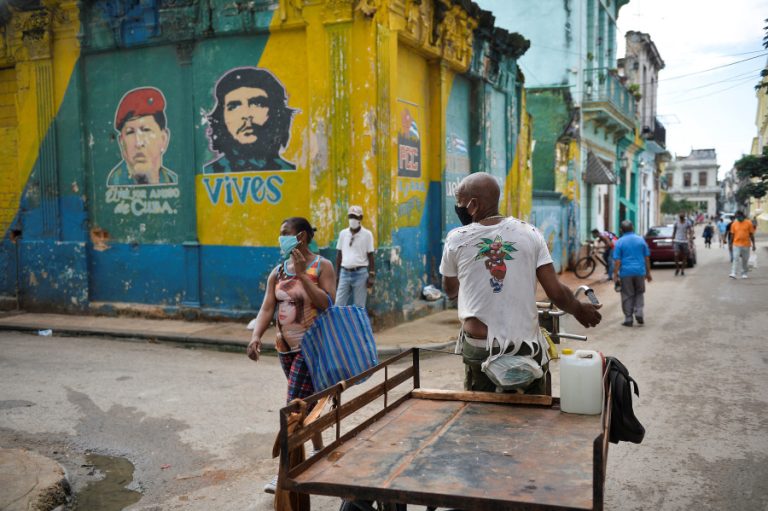
Fuel shortages have already significantly disrupted Cuban society. Although large quantities of humanitarian aid have arrived at ports, much of it remains stranded due to a lack of transportation fuel and cannot reach those in urgent need. Food distribution, drinking water supply, and basic public health services have all been affected. Some Trump administration officials have privately acknowledged that the deterioration of Cuba’s humanitarian situation has exceeded expectations.

A very few companies service Cuba
Currently, major trading companies including Vitol and Trafigura handle most of Venezuela’s oil exports. Millions of barrels are exported to the United States, Europe, and India, while additional millions are stored at Caribbean terminals for resale.
Trump previously stated that allies such as China and Cuba that obtain Venezuelan oil through swaps, debt repayment, or other arrangements must in the future pay fair market prices.
Analysts say U.S. restrictions have, to some extent, exacerbated structural problems caused by years of economic mismanagement in Cuba, raising international concerns about potential humanitarian risks. Cuba does not operate under a market economy, and the ruling regime has long restricted entrepreneurial activity to maintain tight social control.
Cuban-American businessman Hugo Cancio said the exemptions are not intended to promote structural reform of the communist system, “but rather represent a tactical opening for survival during a crisis.” Cancio owns Katapulk, an online marketplace operating in Cuba that makes about 1,500 deliveries per day.
He noted that the island is currently “completely paralyzed,” with “containers full of food unable to leave the ports, and rural farmers and cooperatives unable to transport rice and cassava from the fields to city markets.”
Cancio warned that if the fuel crisis is not quickly alleviated, it will severely damage Cuba’s private sector, which consists of about 10,000 small businesses. Cuban officials say these enterprises have become an increasingly important force in the economy, importing more than $1 billion worth of food and various goods last year.
By Gao Yun