According to the Associated Press, Iranian President Masoud Pezeshkian apologized on Saturday, March 7 for Iran’s recent attacks on neighboring countries. At the same time, however, Iranian missiles and drones continued striking Gulf Arab states. Meanwhile, Pezeshkian rejected repeated demands from U.S. President Donald Trump for Iran’s unconditional surrender.
Pezeshkian issued the statement one week after the Feb. 28 airstrike that triggered the regional conflict and killed Iran’s supreme leader Ali Khamenei. Hundreds of Israeli and U.S. airstrikes have weakened Iran’s leadership, while the conflict is rapidly spreading across the region, disrupting global markets and aviation traffic.
Internal command confusion and diplomatic messaging
Pezeshkian’s statement appeared to have been recorded hastily, lacking professional broadcast equipment, highlighting the limitations of Iran’s theocratic leadership in controlling the missile forces of the Islamic Revolutionary Guard Corps. The Guard controls ballistic missiles targeting countries such as Israel and answers only to Khamenei, and is seemingly choosing targets independently as the war expands.
Pezeshkian said that a three-person leadership committee is maintaining contact with the armed forces, and he personally apologized for attacks on neighboring countries.
He stated: “From now on, unless we are attacked by these countries, we should not launch attacks or fire missiles at our neighbors. I believe the issue should be resolved through diplomatic means.”
Success
You are now signed up for our newsletter
Success
Check your email to complete sign up
However, Iranian armed forces spokesman Abolfazl Shekarchi later stated that Iran had “not attacked countries that did not provide space for a U.S. invasion,” further deepening outside confusion.
Meanwhile, prominent senior cleric Nasser Makarem Shirazi urged Iran’s Assembly of Experts to quickly determine a new supreme leader. However, because the buildings housing the council’s 88 clerical members were previously struck by airstrikes, convening the body may be difficult.
Shirazi said: “Implementing this decision as soon as possible will help maintain national authority and better organize the affairs of the state.”
Gulf states and Israel under attack
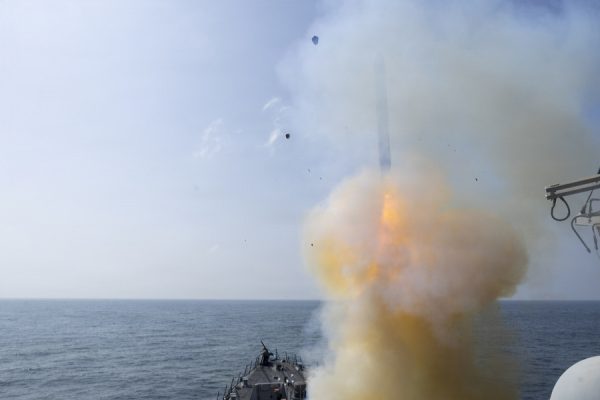
Despite Pezeshkian’s attempt to calm the anger of Gulf Arab states, drones and missiles had already disrupted flights at Dubai International Airport, struck major Saudi oil fields, and forced residents in Bahrain to repeatedly seek shelter just hours earlier.
According to Reuters, the Islamic Revolutionary Guard Corps claimed its drones struck a U.S. air operations center near Abu Dhabi, although the claim could not be independently verified.
Inside Israel, air raid sirens sounded frequently, with loud explosions heard in Jerusalem and northern towns, forcing residents into bomb shelters. The Iran-backed Lebanese militant group Hezbollah exchanged fire with Israeli forces in the mountains of eastern Lebanon, leaving at least 41 people dead and 40 wounded.
Lebanon’s Health Ministry reported that Israeli airstrikes have killed more than 200 people and injured over 800 since Monday.
Saudi Arabia, the United Arab Emirates, Bahrain, Kuwait, Qatar, and Iraq all reported drone or missile attacks. The UAE Ministry of Defense said it shot down 15 ballistic missiles and intercepted 119 drones. Flights at Dubai were temporarily suspended before operations later resumed.
Hardline strikes and strategic pressure under Trump
As the conflict intensified, Trump reiterated Washington’s hardline position, demanding Iran’s unconditional surrender and stating that the United States would have a say in selecting Iran’s new supreme leader.
On social media, he warned: “Iran will suffer a heavy blow today!”
He also made clear that more senior Iranian officials would become targets in response to threats to regional security.
The Trump administration approved a $151 million weapons sale to Israel, ensuring the ally has sufficient firepower for both air and ground operations. U.S. officials said that if Iran does not surrender unconditionally, Washington will take the harshest possible measures.
Senior U.S. officials added that the latest round of airstrikes and military action is the most intense since the conflict began, aimed at rapidly degrading Iran’s military capabilities, command structure, and nuclear program.