In 996 AD, the sultan who ruled the city of Bukhara fell terribly ill, with an ailment that defied his court physicians. With the ruler close to death, a young man, only sixteen at the time, was summoned to heal him. What he performed was nothing short of a medicinal marvel.
This young man’s name was Ibn Sina, or as he is called in the West, Avicenna. Through his studies and work — including the coveted Canon of Medicine — he would go on to conceptualize many fields of research that would influence modern medicine to this very day.
Born in 980 AD near present-day Uzbekistan, Avicenna was a child prodigy. By a young age, he had already memorized The Qur’an and mastered Arabic poetry under his father’s guidance.
At thirteen, he discovered his passion for medicine. By sixteen, he was so skilled that he was called to treat the Sultan of Bukhara after all other royal doctors had failed.
The successful treatment earned him the Sultan’s favor and exclusive access to the Royal Library. This gave him the perfect opportunity to dive into a vast collection of scientific and philosophical knowledge, setting the stage for his lifelong influence.
Success
You are now signed up for our newsletter
Success
Check your email to complete sign up
What is more amazing about Avicenna is that he was not just a medical genius; he was talented in many different areas.
By the age of 21, had authored many books, covering fields of research like mathematics, geometry, astronomy, physics, metaphysics, philology, music and poetry. Some say that he completed over 450 works; but only 240 survived the test of time — 150 of which are philosophical and 40 are medicinal.
When his father passed away, the young man took a post in the financial administration of the Samanid. After Bukhara fell to the Turkish Qarakhanids in 999 AD, however, Avicenna fled the city. Providing medical, political and scientific services for local rulers, he slowly made his way across the Middle East. At night, he would retreat to his studies and expand his knowledge.
He stayed in several towns and cities, including Gurganj, Jurjan and Hamadan (then the heart of Iran). In 1023, he settled in the city of Isfahan. Free and at peace to find like-minded scholars and discuss many topics, he expanded his understanding of the world around him and continued to write major works that would drive our understanding of the world today.
Avicenna’s Canon
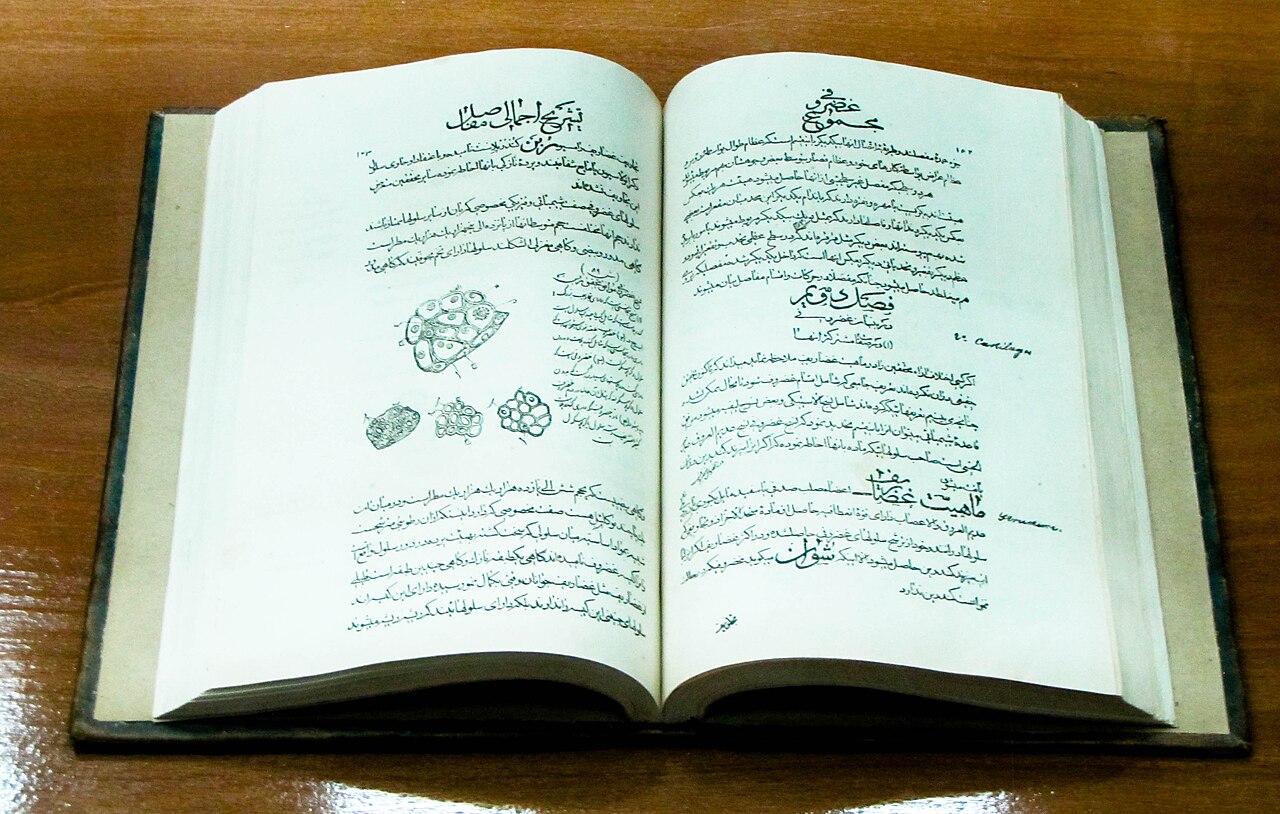
Among his many works, Avicenna’s most important are the Book of Healing (Kitab al-shifa) and the Canon of Medicine (al-Qānūn fī l-ṭibb).
The Book of Healing is divided into four main sections covering logic, natural sciences, mathematics, and metaphysics. It was first written during his travels before he arrived at Isfahan; a testament to his persistent studies even on the road.
Through this book, Avicenna sought to integrate philosophy into the field of medicine, bringing a more unified classification of knowledge. Challenging Aristotelian logic with his own, Avicenna encouraged verification of observations through heavy testing and variable analysis, paving the way for the modern scientific method, especially in the Islamic world.
He also classified many sciences into several fields, prioritizing them based on importance with medicine as the topmost.
The Canon of Medicine is a grander encyclopedia of five whole books detailing all the medical sciences of his time.
The first book explores the underlying philosophy of health, including the four elements and humors, basic anatomy, and the general rules for maintaining wellness and treating illness.
The second book serves as a massive pharmaceutical dictionary, listing hundreds of individual substances — sourced from plants, animals, and minerals — organized alphabetically. It details what they do and where they might go wrong.
The third book is a practical guide to pathology, where illnesses are classified by the specific organ they affect. The texts move systematically through the body to explain how to diagnose and manage localized conditions.
Unlike the previous book, the fourth book focuses on issues that impact the entire system rather than just one spot. It tackles topics like infectious fevers, the effects of toxins or bites, and general physical conditions like obesity.
Finally, the fifth book is a “cookbook” for pharmacists, with complex recipes for compound medicines — basically instructions on how to mix the simple ingredients from the second book into effective ointments, syrups, and pills.
READ MORE:
- Origins of Tea in China: From Shennong’s Legend to Lu Yu’s Classic of Tea
- 24 Solar Terms without Borders: Make America Healthy Again
- Traditional Tips for Better Liver Health
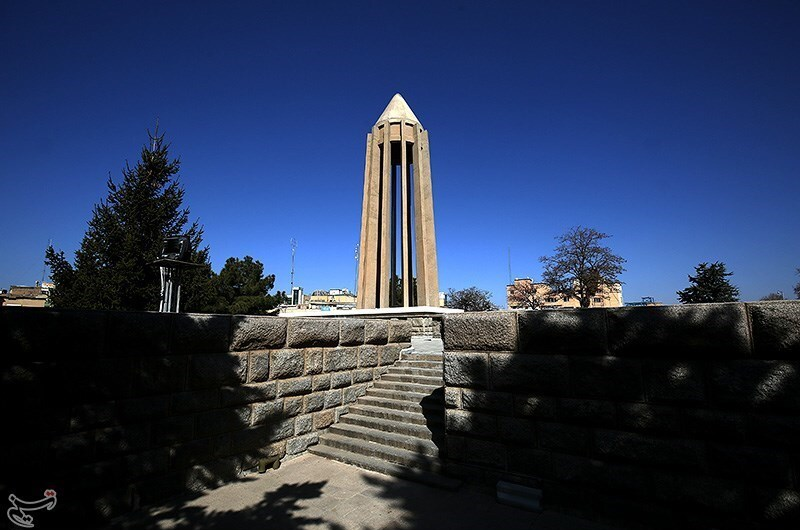
Avicenna’s legacy
While serving Alā al-Dawlah in Isfahan, Avicenna fell seriously ill, and attempted to treat his own colic with an aggressive regimen of celery-seed enemas. However, a dosage error by an attendant — increasing the active ingredient from two measures to five — resulted in a painful intestinal ulceration. His condition was further compromised when a slave tried to poison his opium-based recovery medicine, leaving the legendary physician fatally weakened. Despite his failing health, he insisted on traveling toward Hamadan, where his condition deteriorated. Avicenna died at the age of 57 during the holy month of Ramadan.
Though other scholars may be remembered for their contributions, Avicenna is best renowned for how organised he was. Not only did Avicenna encourage theory, but also practical evidence in medicine, as well as experience for formulating new remedies.
It was Avicenna’s approach that placed medicine as a science that is carried out through observation and evidence — a standard upheld by modern medicine.
His work would influence much of medieval Europe by blending both Platonian and Aristotelian ideas into written texts. While inspiring debates in both medicine and philosophy, Avicenna’s works laid the foundation for medical research in both European and Islamic education.
We may not know the entirety of Avicenna’s works, but those that survived had a lasting impact in the fields of medicine, philosophy, and science.