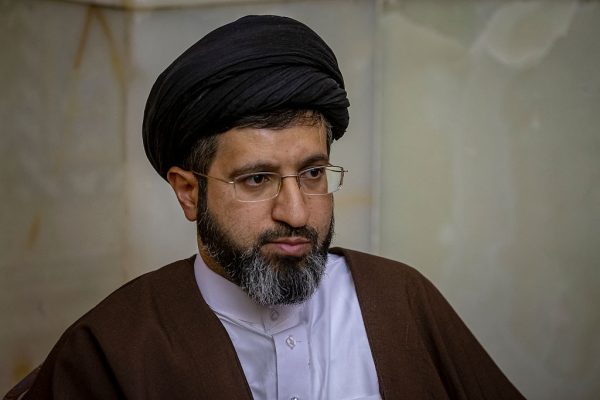
On Thursday, March 12 Iranian state media released a written statement purportedly from the new Supreme Leader, Mojtaba Khamenei. However, the message was not issued directly by him; instead, it was read aloud by a state television anchor while only a photograph of him was shown on screen.
Since Mojtaba was announced as the successor to the Supreme Leader, the outside world has not seen any public video or audio evidence confirming that he is still alive.
In the statement, Mojtaba wrote that the Strait of Hormuz must remain closed. He also said Iran has studied opening new fronts in other regions and will continue attacking U.S. military bases located in Gulf countries, adding that the relevant nations had already received “clear warnings” that such actions would occur.
The statement also thanked the Houthi movement in Yemen and Hezbollah in Lebanon for their assistance.
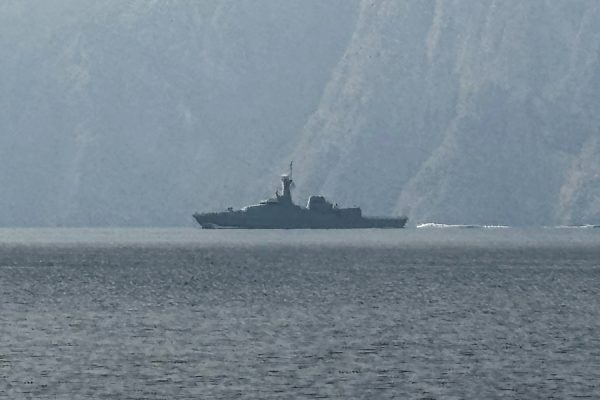
At the same time, Alireza Tangsiri, commander of the navy of the Islamic Revolutionary Guard Corps (IRGC), declared on X that the Revolutionary Guard would continue blocking the Strait of Hormuz.
Success
You are now signed up for our newsletter
Success
Check your email to complete sign up
Strait of Hormuz tensions escalate, oil nears $100
As tensions escalate in the Strait of Hormuz and surrounding Iranian waters, the global energy market has also been significantly affected. On Thursday, international oil prices rose to nearly $100 per barrel.
According to a report by The Wall Street Journal, a container ship owned by the German company Hapag-Lloyd and chartered by the Danish shipping giant A.P. Moller-Maersk was attacked in the area that day. It was the seventh vessel attacked in the region within the past 24 hours. Since the war began, at least 19 ships in the Persian Gulf have been attacked or damaged.
In its latest monthly oil market report, the International Energy Agency (IEA) said that due to the closure of the Strait of Hormuz, global oil supply is expected to decline by about 8 million barrels per day in March—roughly 8 percent of global oil demand.
The IEA noted that Gulf countries including Iraq, Qatar, Kuwait, the United Arab Emirates, and Saudi Arabia have already reduced total oil production by at least 10 million barrels per day because of the conflict. If shipping cannot quickly resume, the supply gap could widen further.
The agency added that once oil fields are forced to shut down, it often takes weeks—and in some cases even months—to restore production to pre-crisis levels, depending on the complexity of the fields and when workers, equipment, and resources can return to the area.
Analysis: statement appears more like a political gesture
CNN reported that analysts believe the statement may help reassure his supporters but does not explain who is currently directing Iran’s military and political decisions.
Dina Esfandiary, head of Middle East affairs at Bloomberg Economics in Geneva, told CNN journalist Becky Anderson that the statement appears more like a political gesture meant to demonstrate a hard-line stance.
She said: “Iran is clearly sending a signal that it is not seeking a ceasefire or an end to the war, and believes that the United States and its allies—even the global economy—have not yet paid a sufficient price for this conflict.”
Iran analyst Arash Azizi also told CNN that the statement shows no signs of reform and does not indicate that Mojtaba intends to change his father’s core policies.
“It offers almost no hope of a better future for the Iranian people,” he said.
Azizi added that the statement was filled with threatening rhetoric, including repeated threats about destroying Israel and forcing U.S. military bases out of the Middle East.
“In short,” he said, “the message it sends to Iranians and to neighboring countries in the region is that the conflict could continue for a long time.”

Absence raises questions; reports claim severe injuries
Because Mojtaba has still not appeared publicly or released any audio recordings, the statement raises a key question: what is the new Supreme Leader’s real condition?
The British tabloid The Sun cited sources claiming that Mojtaba was seriously wounded in an airstrike and is reportedly in a coma, yet was still appointed Supreme Leader by Iran’s senior religious leadership.
According to the report, sources said Mojtaba lost at least one leg in the strike and also suffered severe stomach or liver injuries. It remains unclear whether he was injured on the same day that his father died.
Sources say Mojtaba is currently being treated at Sina University Hospital in Tehran’s historic district. Parts of the hospital have reportedly been sealed off and heavily guarded.
The source, who requested anonymity for safety reasons, allegedly bypassed Iran’s strict internet censorship to relay the information to a dissident living in exile in London. Although the dissident is not a doctor, he said he knows members of the hospital’s trauma team, who described Mojtaba’s condition as “extremely serious.”
The report says Iran’s Minister of Health, Mohammad Reza Zafarghandi, is personally overseeing Mojtaba’s treatment. The 70-year-old Zafarghandi is considered one of Iran’s leading trauma surgeons and performed numerous battlefield surgeries during the Iran–Iraq War in the 1980s.
The source said: “One or two of his legs have already been amputated, and his liver or stomach has ruptured. He is reportedly still in a coma.”
There are also reports that Iranian President Masoud Pezeshkian visited Sina Hospital two days ago accompanied by Zafarghandi. Observers speculate that the visit may have been to check on Mojtaba and receive an update on his condition.