News analysis
China’s trade figures for the first two months of 2026 paint a picture of impressive economic momentum. But a closer look shows a more complicated reality: while the country’s export machine is booming, domestic demand and manufacturing confidence remain precariously weak.
Data released by China’s customs authorities on March 10 showed that total trade in January and February reached US$1.099 trillion, up 21 percent year-on-year. Exports climbed 21.8 percent to US$656.6 billion, while imports rose 19.8 percent to US$443 billion. The result was a record trade surplus of US$213.6 billion.
The surge exceeded market expectations and marked a sharp acceleration from late 2025.
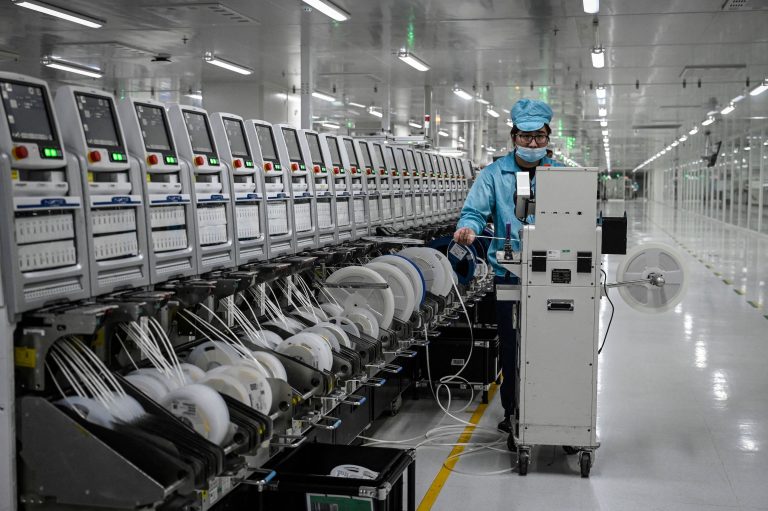
Much of the growth came from high-tech manufacturing sectors that Beijing has prioritized in recent years, notes SinoInsider, a New York-based risk consultancy focusing on analysis of Chinese politics. Exports of semiconductors jumped about 73 percent, driven in part by global demand tied to artificial intelligence infrastructure. Automobile exports rose roughly 67 percent, reflecting China’s expanding presence in overseas vehicle markets, particularly in electric vehicles.
Success
You are now signed up for our newsletter
Success
Check your email to complete sign up
Meanwhile electromechanical products, a broad category that includes machinery and electronics, grew about 27 percent and accounted for nearly 60 percent of China’s total exports.
Trade patterns also showed a notable geopolitical shift. The Association of Southeast Asian Nations (ASEAN) remained China’s largest trading partner, with bilateral trade increasing 20.3 percent. Trade with the European Union rose 19.9 percent, despite ongoing subsidy investigations into Chinese industries.
By contrast, trade with the United States declined sharply, falling 16.9 percent overall. China’s exports to the U.S. dropped 11 percent, while imports fell 27 percent, reflecting tariffs and supply-chain diversification that accelerated during Donald Trump’s presidency.
Exports to Africa surged nearly 50 percent, highlighting the growing importance of emerging markets and Belt and Road Initiative partners in absorbing Chinese goods.
China increasingly reliant on overseas demand
At first glance, the numbers appear to signal a strong start to the year for the world’s second-largest economy. Yet economists say the data reflects a deeper structural shift: China is becoming increasingly reliant on overseas demand even as conditions at home deteriorate.
According to analysts with SinoInsider, part of the strong trade performance stems from statistical factors. The early months of 2025 saw unusually weak import growth as global supply chains shifted and demand softened, creating a low comparison base for 2026.
But the larger trend is more significant.
- Shanghai Home Prices Drop Up to 70% as Sales Freeze and Mortgage Defaults Rise
- 370,000 People Leave China’s Wealthy Jiangsu–Zhejiang–Shanghai Region in 30 Days
- Japan Shields Consumers While China Raises Prices Amid Hormuz Oil Crisis
While exports surged, China’s manufacturing purchasing managers’ index (PMI) — a key gauge of factory activity — told a far more pessimistic story. In February 2026, the PMI fell to 49.0, remaining below the 50-point threshold that separates expansion from contraction.
The sub-indices reveal widespread softness in domestic demand. The new orders index dropped to 48.6, signaling shrinking orders from within China, while the production index slipped to 49.6, indicating slowing output. The new export orders index fell to 45.0, suggesting that even export momentum could face headwinds later in the year.
Another worrying trend is the widening gap between large corporations and smaller businesses.
Large enterprises posted a PMI reading of 51.5, benefiting from easier access to credit and government support. In contrast, medium-sized firms registered 47.5, while small enterprises fell to 44.8, reflecting severe financial pressure and weak demand.
SinoInsider notes that this divergence exposes a core problem within China’s economic structure. While state-backed “national champion” firms continue to expand, the small and medium-sized companies that provide most jobs are struggling with liquidity shortages and shrinking orders.
Major manufacturers lean on unsustainable survival strategies
With domestic demand weak, factories are increasingly shipping goods overseas simply to keep production lines running. This dynamic helps explain the unusually strong export numbers.
Some industries illustrate the trend particularly clearly: China’s automotive sector, once one of the engines of domestic growth, has entered a difficult period. In February 2026, BYD, China’s leading electric vehicle manufacturer, recorded sales of about 190,000 units, a 41 percent year-on-year decline and its sharpest drop since the novel coronavirus pandemic began in late 2019.
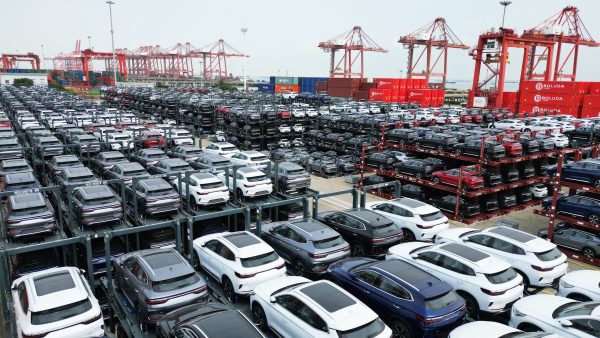
Domestic sales at BYD fell even more dramatically, plunging 65 percent, allowing rival Geely to overtake it in the domestic market.
The slowdown extends across the industry. Automakers including SAIC, Chery, Great Wall, and newer entrants such as Xiaomi, NIO, and Leapmotor all reported significant declines in sales.
Several factors contributed to the slump. In January 2026, Beijing raised the purchase tax on electric vehicles from zero to 5 percent, reducing incentives for buyers. Meanwhile, intense price wars among manufacturers have encouraged consumers to delay purchases in anticipation of deeper discounts.
China’s smartphone market tells a similar story: data from the China Academy of Information and Communications Technology showed that smartphone shipments in January fell 16 percent year-on-year to 22.9 million units. Shipments of 5G phones also dropped nearly 16 percent.
Because smartphones are a major consumer electronics purchase, the decline is widely viewed as a sign of weakening consumer confidence and tighter household budgets.
The result is what SinoInsider describes as a “structural paradox” in China’s economy. On the surface, export growth and record trade surpluses suggest resilience. Yet the domestic economy — particularly consumer demand and smaller businesses — appears far less healthy.
As SinoInsider notes, Chinese manufacturers are increasingly forced into what could be called “exportization”: if goods cannot be sold at home, they are pushed into overseas markets, often at lower prices.
This approach may help factories survive in the short term, as demonstrated by Chinese exports early this years. But it also risks fueling global trade tensions as other countries grow wary of China’s expanding industrial output and aggressive pricing. Meanwhile, if Beijing is unable to resolve deeper issues such as weak domestic demand and local government debt, its post-pandemic economic recovery may prove ephemeral.