As the U.S.–Iran conflict enters its third week, tensions continue to escalate sharply. On Sunday, March 22 Iran threatened that if U.S. President Donald Trump follows through on his warning to strike Iran’s power grid within 48 hours, Iran will retaliate by attacking energy and water supply systems in neighboring Gulf countries. Analysts believe that if the conflict expands to target civilian infrastructure, it could further intensify the regional crisis and trigger severe volatility when global markets open on Monday.
Early Sunday morning, air raid sirens sounded across multiple locations in Israel, warning of incoming Iranian missile attacks. Overnight, Israel’s southern cities of Arad and Dimona were each hit by two waves of attacks, leaving dozens injured. Hours later, the Israeli military announced it had carried out strikes on Iran’s capital, Tehran, in response.
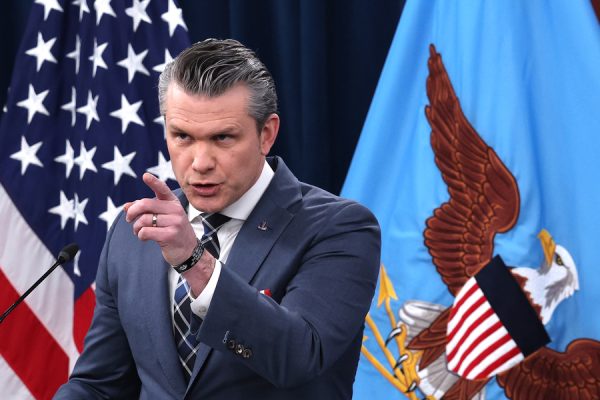
On Saturday night, Trump issued a strong warning on social media, stating that if Iran does not “fully open the Strait of Hormuz unconditionally and without threats” within 48 hours, the United States will strike and completely destroy multiple Iranian power plants, beginning with the largest facilities.
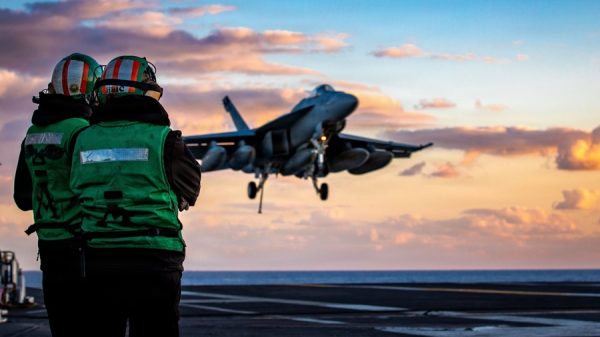
Meanwhile, U.S. Marines and heavy amphibious equipment are being deployed to the Middle East.
According to Reuters, Iranian Parliament Speaker Mohammad Baqer Qalibaf stated that if Iran’s power facilities are attacked, key infrastructure across the Middle East could suffer “irreversible destruction.” Iran’s Islamic Revolutionary Guard Corps further warned that the Strait of Hormuz would be “completely closed” and would not reopen until Iran’s damaged power systems are restored.
Success
You are now signed up for our newsletter
Success
Check your email to complete sign up
Iran’s military also threatened that if the U.S. targets its energy infrastructure, it will strike all U.S.-related energy, information technology, and desalination facilities in the region.
Significant impacts
On the market front, tensions have already had a significant impact. International oil prices surged on Friday, reaching their highest levels in nearly four years. Earlier, Israel struck a major Iranian gas field, and Iran retaliated against Saudi Arabia, Qatar, and Kuwait, raising concerns about damage to energy infrastructure.
At the same time, the Strait of Hormuz is nearly closed, becoming the most serious trigger for an oil supply crisis since the 1970s. European natural gas prices at one point jumped by 35 percent.
In shipping, Iran’s representative to the International Maritime Organization said that, except for vessels linked to “Iran’s ‘enemies,’” the strait remains open to shipping, but passage requires coordination with Tehran for security arrangements. Data shows that only a small number of ships—such as Indian vessels and a Pakistani oil tanker—have successfully passed through, while most remain stranded in nearby waters.
Although the U.S. and Israel claim to have weakened Iran’s long-range strike capabilities, Iran on Friday launched a long-range ballistic missile with a range of about 4,000 kilometers for the first time, targeting a U.S.-UK military base in the Indian Ocean. Another missile reportedly landed near Israel’s Dimona nuclear reactor.
Escalating conflict with Hezbollah
Meanwhile, conflict is also escalating between Israel and the Iran-backed Hezbollah in Lebanon.
According to the Associated Press, the Israeli military said it had struck multiple Hezbollah positions in southern Lebanon. Hezbollah, in turn, launched attacks on northern Israel, killing a civilian in the town of Misgav Am. Israeli authorities identified the victim as 61-year-old farmer Ofer “Poshko” Moskovitz—the first Israeli fatality from the Lebanon front in this round of conflict.
Hezbollah began attacking Israel shortly after the outbreak of war, claiming it was in retaliation for the killing of Iran’s Supreme Leader Ayatollah Ali Khamenei in an attack. Israel subsequently carried out deadly airstrikes against Hezbollah and expanded its ground deployment in southern Lebanon.
Since entering the conflict on March 2, Hezbollah has fired hundreds of rockets into Israel, while Israeli retaliatory strikes have killed over a thousand people in Lebanon.
Israel also stated it will accelerate the demolition of homes in “frontline villages” in southern Lebanon and plans to destroy all bridges over the Litani River, claiming they are being used for “terrorist activities.”
By Gao Yun