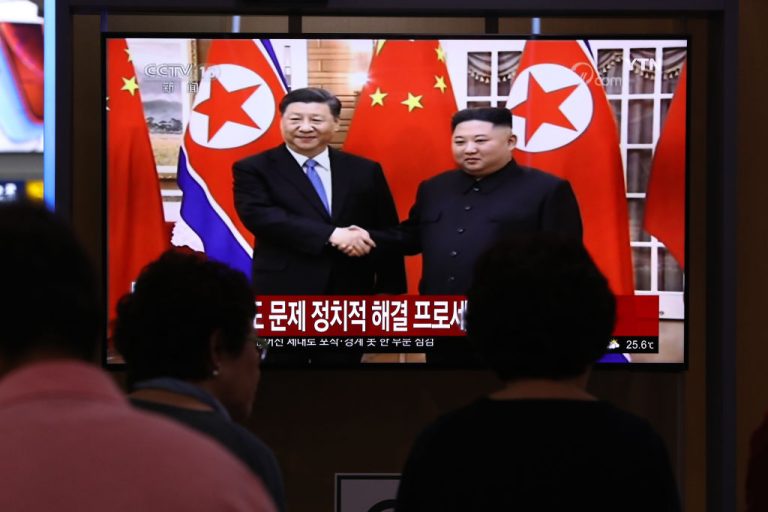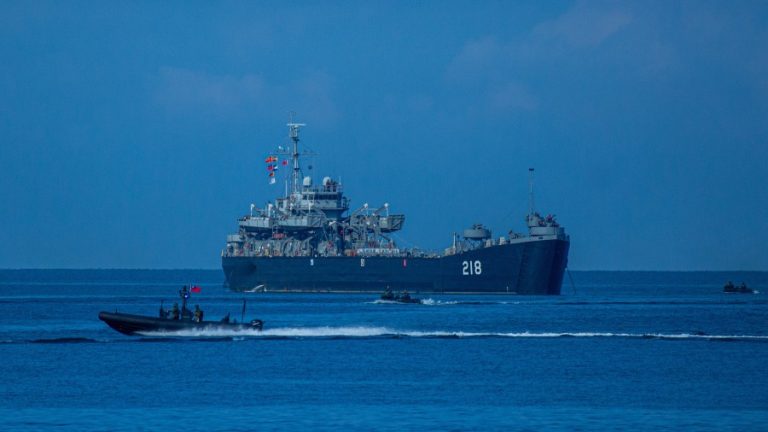

Israel and its intelligence agency, Mossad, are appearing more frequently in Chinese political commentary alongside the Chinese Communist Party. Within that discussion, a notable theme has begun to surface: calls from some Israeli voices to provide high-tech support to forces resisting CCP rule, and to expand technological assistance to Taiwan.
At the same time, developments inside China’s political system are feeding into that narrative.
After reports that Central Military Commission vice chairmen Zhang Youxia and Liu Zhenli were under investigation, observers noted an unusual lack of response from the Chinese military. Some online voices argued that silence was expected while the cases remained under review.
Events in Chongqing pointed in a different direction. On March 20, Mayor Hu Henghua was removed from office. According to the Party mouthpiece Chongqing Daily, local leadership convened immediately, announcing that Hu was under investigation for serious disciplinary and legal violations.
Officials in attendance quickly issued formal declarations of loyalty, stating their “resolute support” for decisions made by both the Party Central Committee and the Central Commission for Discipline Inspection.
Success
You are now signed up for our newsletter
Success
Check your email to complete sign up
No comparable public expressions followed the earlier announcements involving Zhang and Liu. The contrast has been read as more than procedural, suggesting a gap between formal authority and actual alignment within the system.
Whether the military chooses to speak or remain silent carries weight far beyond symbolism. The relationship between Xi Jinping and the armed forces remains a central uncertainty.

Mossad targets individuals, not just systems
Mossad’s methods have drawn attention in this context, particularly its ability to reach directly into the ranks of an opposing system.
Reporting cited from U.S. outlets, including The Wall Street Journal, describes a series of contacts between Mossad operatives and Iranian police and security officials. In one reported exchange, an Iranian commander insisted, “I swear, I am not your enemy,” and asked Israel for help in overturning the Islamic Republic.
The same report describes a warning delivered in Persian: the officer was told he was on a blacklist, that his activities were fully known, and that he should stand with the public rather than the regime. The message was explicit about consequences if he did not.
This approach extends beyond intelligence gathering. It places psychological pressure on individuals tasked with enforcing state authority, narrowing the distance between personal risk and political decision.
If such methods were applied elsewhere, including in China, the effect would likely depend on whether security personnel begin to reassess their position at critical moments.
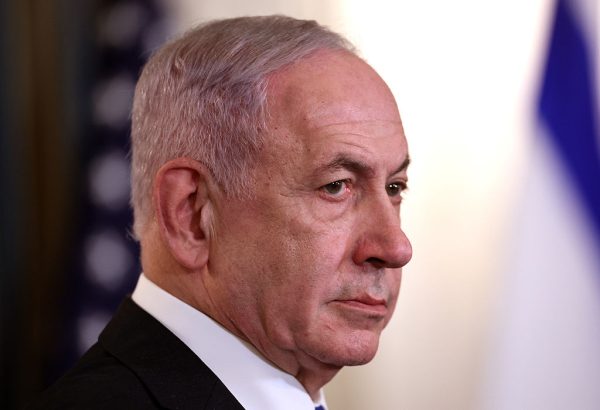
Israel’s strategy shifts from infrastructure to people
Since late February, Israel and the United States have pursued parallel but distinct approaches toward Iran. Washington has focused on degrading military and industrial capacity. Israel has moved more directly against individuals within the system.
Israeli operations have reportedly involved roughly 10,000 munitions across more than 2,200 targets, including facilities linked to the Islamic Revolutionary Guard Corps and the Basij paramilitary force.
The difference lies in emphasis. U.S. actions concentrate on systems. Israeli operations extend to the people who operate them, from senior leadership down to local enforcement.
That approach relies heavily on intelligence precision. Reports describe Iranian officials being located even in concealed settings, including a case in which several hundred personnel were reportedly identified while gathered inside a sports facility and subsequently targeted.
The result is an atmosphere described as deeply unstable. Some officials reportedly avoid fixed residences, moving between temporary locations or sleeping in vehicles.
Civilian cooperation appears to be a factor. Reports indicate that ordinary Iranians have provided location data on officials, roadblocks, and installations, enabling rapid targeting, including through drone strikes.

Beijing enters Israel’s calculations
A report published by The Jerusalem Post brought China more directly into the picture. The article stated that Israeli military actions had set Iran’s capabilities back by years, while raising concerns about Beijing’s potential role in helping Tehran rebuild.
Israeli and intelligence officials have warned against such involvement, particularly in areas related to ballistic missile systems.
Mossad Director David Barnea was quoted as saying that China and Russia should “think twice” before providing assistance. He pointed to Israel’s demonstrated ability to strike Iran’s missile infrastructure with precision.
The warning carries clear operational implications. Systems linked to external support could themselves become targets if used by Iran, placing suppliers within the scope of Israeli planning.
At the same time, assessments cited in the report suggest Iran has been able to restore missile-launch capacity at notable speed, potentially rebuilding or exceeding previously destroyed systems within months. External assistance is widely suspected, with China frequently mentioned in that context.

Israeli commentary turns toward China and Taiwan
Public reaction among Israeli readers reflects growing frustration with Beijing’s perceived role.
Some comments call for a reassessment of ties with China, particularly in sectors such as avionics and advanced technology, which are seen as feeding into China’s military-industrial system.
Others argue that if Iran’s leadership remains in place, China and Russia will likely help restore its capabilities and should be warned against doing so.
More forceful views suggest intercepting shipments of missile-related components bound for Iran, including systems linked to air defense and drones.
Beyond Iran, the discussion extends further. Some comments raise the possibility of providing high-tech support to opposition activity inside China, alongside expanded technological assistance to Taiwan.
Taiwan’s needs are framed in terms of advanced defensive systems, including the construction of a dense air-defense network sometimes described as a “T-Dome.”
A smaller number of comments go further still, suggesting the possibility of strategic-level support to Taiwan involving highly sensitive capabilities.
Editor’s Note:
This article is based on media reports, publicly available commentary, and statements attributed to Israeli news coverage and online discussions. Claims regarding intelligence operations, warnings issued by Mossad, and allegations of China’s involvement in Iran’s military rebuilding have not been independently verified and are presented as reported or interpreted by the cited sources.