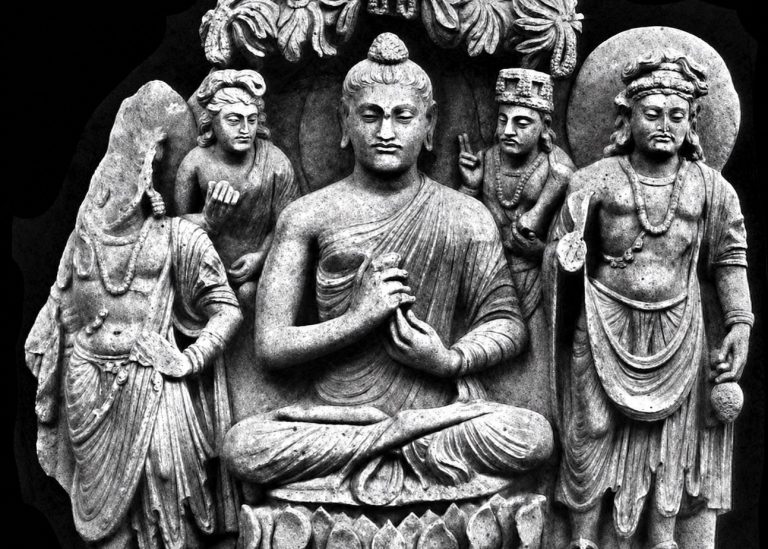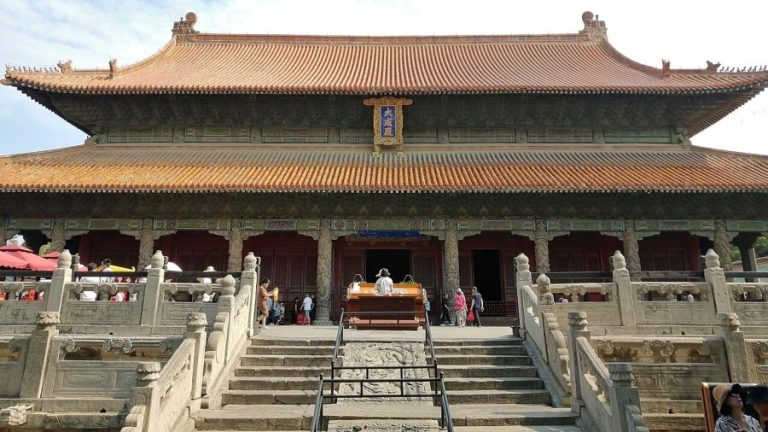
The statue of Confucius stood for centuries in the main hall of his temple in Qufu. It was pulled down, defaced, and broken apart in a matter of hours.
In November 1966, more than 200 Red Guards arrived in this small city in Shandong province, long known as the birthplace of Confucius. The temple complex was still intact when they entered. Ancient cypress trees lined the courtyards. Stone steles filled the grounds. Within weeks, much of it was gone.
For more than two thousand years, the Confucius Mansion, Temple, and Cemetery, known together as the “Three Confucian Sites,” had survived dynastic upheavals and war. Even during the Japanese invasion of China, the complex was largely left untouched.
That changed after the launch of the Cultural Revolution in 1966. Under the campaign to “Smash the Four Olds,” Red Guard groups across the country began targeting traditional culture, religious sites, and historical symbols.
Qufu became a primary target.
Success
You are now signed up for our newsletter
Success
Check your email to complete sign up
Tan Houlan, a student at Beijing Normal University, led the operation. Born in 1937 in rural Hunan, she rose quickly during the early months of the Cultural Revolution. She helped organize one of the university’s main Red Guard factions and became one of the movement’s prominent figures in Beijing.
In early November, Tan led a group of Red Guards south from Beijing to Qufu. On Nov. 10, they set up a coordination office with local institutions. Days later, a mass rally was held outside the Confucius Mansion.
The campaign began immediately afterward.
Red Guards entered the Confucius Temple and smashed stone inscriptions marking its status as a protected cultural site. Inside Dacheng Hall, they pulled down the statue of Confucius, dragged it from its pedestal, covered it, and marked it with political slogans. The statue was broken apart. Fragments were kicked across the courtyard.
Teams moved into the Confucius Mansion. Large collections of ancient books, calligraphy, and artifacts were removed. Some were paraded through the streets. Many were later destroyed or disappeared.
By late November, mass rallies drew tens of thousands of participants. A damaged statue of Confucius was placed on a truck, topped with a paper hat bearing denunciatory slogans. Loudspeakers broadcast political chants as it was driven through the streets.
The statue and confiscated relics were later burned near the Confucius Cemetery.
READ MORE:
- Why Ye Jianying Survived Mao’s Cultural Revolution While Other Marshals Were Purged in the February Countercurrent
- How Zhou Enlai Survived Mao’s Cultural Revolution While Every Other CCP Leader Fell
- Soapbox and Button Bugging Allegations and the Cultural Revolution Power Struggle
The campaign soon moved to the cemetery itself.
Gravestones were pulled down. Excavation teams targeted burial sites associated with Confucius and his descendants. Attempts were made to dig up Confucius’ tomb. After days of digging, explosives were used, but no remains were found.
Other tombs were opened.
The burial site of Kong Lingyi, a 76th-generation descendant of Confucius, was excavated. His remains and those of family members were brought to the surface. Witnesses described rapid decomposition after exposure to air. Participants searched the site for valuables.
Villagers joined the digging. Reports circulated that gold, silver, and other items had been found. Precious metals and artifacts were removed. Bank personnel reportedly arrived to collect recovered gold and silver.
Local records later indicated that more than 2,000 graves in the Confucius Cemetery were excavated. Hundreds of stone steles were damaged or toppled. Large numbers of trees within the burial grounds were cut down.
Similar actions spread beyond Qufu. Graves of historical figures across China were opened or destroyed during the same period. Sites associated with scholars, officials, and cultural figures were targeted.
Tan Houlan’s role in Qufu brought her national attention. In July 1968, she appeared in Beijing and was received by Mao Zedong on Tiananmen Gate, a moment widely publicized at the time.
Her position did not last.
Within days, Mao criticized Red Guard factions for their excessive violence. Tan lost influence soon afterward. By 1970, she was placed under investigation and detained.
After the Cultural Revolution, she was arrested and charged with counterrevolutionary crimes. In 1981, she was diagnosed with cervical cancer and released for medical treatment. She died in 1982 at the age of 45.
By Yuan Shan
Editor’s Note:
This article is based on historical accounts, archival materials, and widely circulated narratives regarding the Cultural Revolution. Specific details, including conversations and individual roles, may vary across sources and are presented as reported.