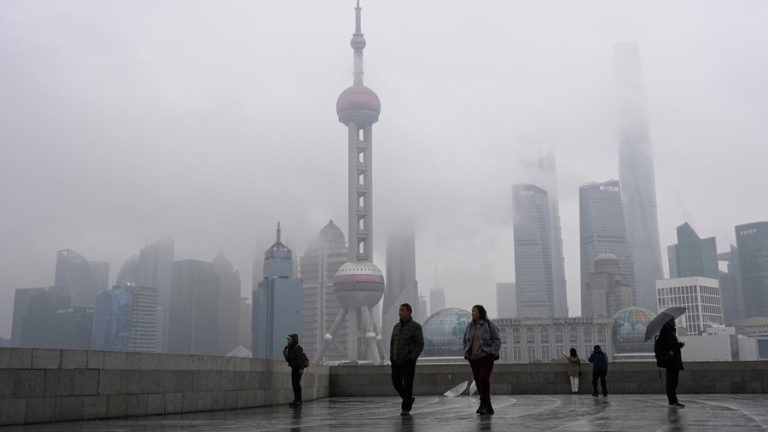
Shanghai in early March still looks like a functioning global city. The lights are on. Traffic moves. Office towers remain full. But beneath that surface, the sense of contraction is becoming harder to ignore.
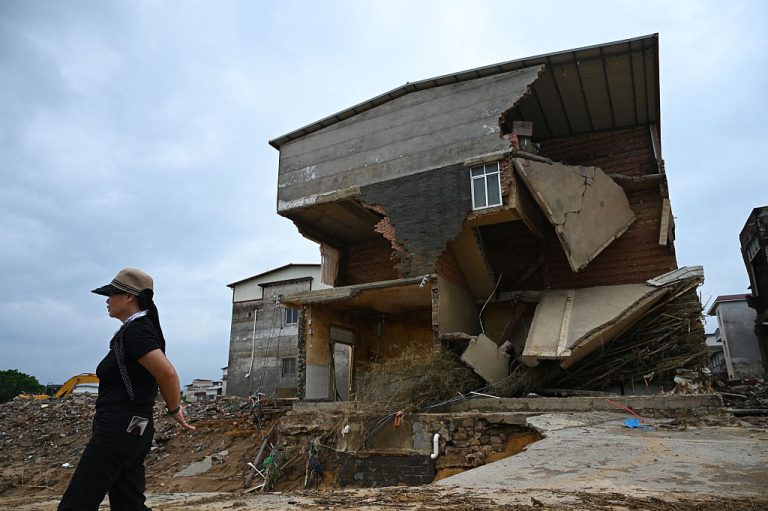
Across sectors, companies are scaling back quietly. Hiring freezes are widespread. Salaries are being adjusted downward or delayed. In some places, bonuses have disappeared entirely. What once appeared to be a cyclical fluctuation is increasingly experienced as something more structural, a tightening that does not reverse.
Local governments are under similar strain. For years, land sales provided a reliable source of revenue. That model is weakening. Reports of fiscal gaps are no longer confined to smaller provinces. Even cities once regarded as financially resilient are showing signs of pressure. Transfers from the central government, long used to smooth these imbalances, appear more limited than before.
For businesses, the operating environment has shifted as well. Costs have risen. Regulatory uncertainty has increased. Foreign firms, alongside companies from Taiwan, have been redirecting investment toward Southeast Asia, South America, and parts of Africa. The trend is gradual, but persistent.
None of this is new in isolation. What is changing is the accumulation.
Success
You are now signed up for our newsletter
Success
Check your email to complete sign up
Inside the political system, a different form of pressure has been building. The anti-corruption campaigns that have defined Xi Jinping’s tenure have reached deeply into both the Party and the military. Senior figures have been removed. Others have been sidelined. The message has been consistent.
But the effect is less straightforward.
In the military, repeated investigations and removals have reshaped the command environment. Officers who remain are operating with caution. Initiative carries risk. Visibility carries risk. In such conditions, compliance becomes the safest strategy. Over time, that alters how an institution functions, especially one that depends on coordination, trust, and rapid decision-making.
The removal or detention of high-ranking figures, including those once seen as central to the system, has reinforced that uncertainty. It is not only about who is gone, but about who might be next.
READ MORE:
- Shanghai Home Prices Drop Up to 70% as Sales Freeze and Mortgage Defaults Rise
- 370,000 People Leave China’s Wealthy Jiangsu–Zhejiang–Shanghai Region in 30 Days
- Forced Organ Harvesting in China: A Former Shanghai Executive Describes What He Witnessed
At the same time, expectations surrounding China’s military capabilities have been tested beyond its borders.
In Venezuela, Chinese-supplied radar and air-defense systems, marketed as capable of detecting advanced U.S. aircraft, were reportedly ineffective during a U.S. special operations mission that resulted in the capture of former leader Nicolás Maduro. Similar questions emerged after U.S. and Israeli strikes on Iran beginning in late February, where air-defense systems sourced from China and Russia did not appear to significantly impede incoming strikes.
Such incidents carry technical implications, but also political ones. For years, Chinese state narratives have emphasized rapid advances in military technology and a narrowing gap with the United States. Real-world performance introduces a different kind of evidence, one that is harder to manage.
Beijing’s response to these events has been restrained. Official statements following the strikes on Iran emphasized concern and called for de-escalation, without adopting the more confrontational language that had characterized earlier phases of Chinese diplomacy. The shift is subtle, but noticeable.
Changes in leadership behavior have also drawn attention. Reports describing increased security precautions, frequent movement, and limited public interaction suggest a more cautious posture. During a recent visit to Xiong’an, a flagship development project, Xi Jinping was observed remaining inside his vehicle for the duration of the appearance, without the usual staged engagement with residents.
Individually, each of these developments can be explained. Economies slow. Institutions discipline themselves. Military systems perform unevenly. Diplomatic language evolves.
What stands out is the convergence.
Economic pressure reduces flexibility. Internal purges alter institutional behavior. External setbacks complicate strategic assumptions. When these dynamics unfold at the same time, they begin to reinforce one another.
For China’s leadership, the challenge is no longer confined to any single domain. It is the interaction between them that is becoming harder to control.
By Yi Zhen Jian Xue