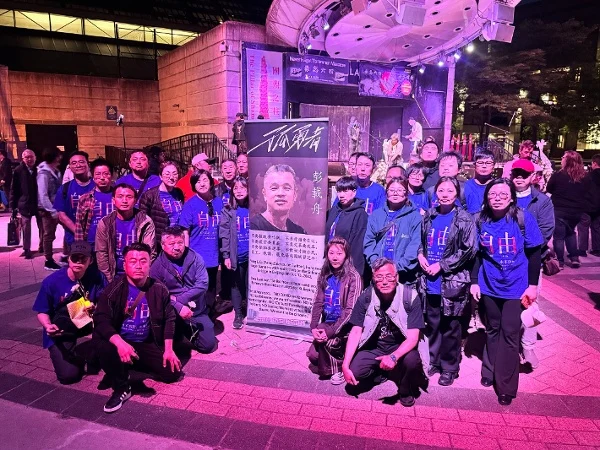
Roughly 30 community members took their seats inside the Lyric Theatre in Blacksburg, Virginia, on the night of April 23, 2026, to watch State Organs, an award-winning documentary on what the panel that followed described as one of the world’s least understood forms of human trafficking: the forced removal of organs from prisoners of conscience held by the Chinese Communist Party.
The screening was organized by the Rotary Club of Blacksburg and Montgomery County, in partnership with the End Forced Organ Harvesting Rotary Satellite Club and District 7610’s Action Group Against Slavery. The pairing of film, expert testimony, and survivor account was meant to put concrete faces and names on allegations that have drawn growing international scrutiny and that Western audiences still rarely encounter in their own media.
A 2024 report from the U.S. Department of State noted that trafficking for the purpose of organ removal is among the least reported and least understood forms of trafficking in persons. Organizers of the Blacksburg event argued that the global picture is incomplete in a specific direction. While organ trafficking is often discussed as a problem confined to vulnerable regions in North Africa or the Middle East, a growing body of evidence points to the Chinese Communist Party as a state-level operator that targets prisoners of conscience inside its own borders.
‘State Organs’ documents two Chinese families’ search for disappeared relatives
State Organs, directed by Peabody Award-winning filmmaker Raymond Zhang, traces a roughly two-decade search by two Chinese families for relatives who vanished in police custody. The film was an official Oscar-qualified contender for Best Documentary Feature at the 97th Academy Awards and has won more than 50 international prizes. As the families dig, they uncover what investigators describe as a state-run pipeline that takes organs from living detainees, many of them practitioners of Falun Gong.
Success
You are now signed up for our newsletter
Success
Check your email to complete sign up
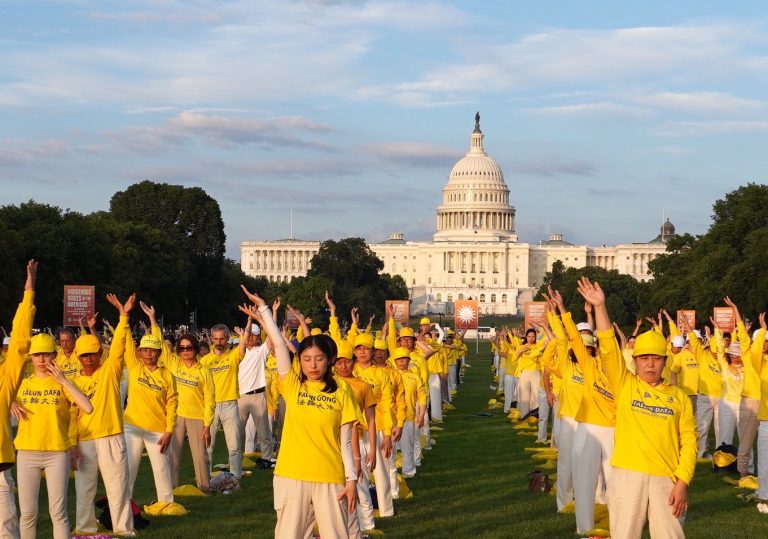
Falun Gong is a Buddhist spiritual practice based on the principles of Truthfulness, Compassion, and Tolerance. It grew rapidly across China in the 1990s. By 1999, official Chinese government estimates put the number of practitioners at 70 to 100 million, more than the membership of the Communist Party itself. That summer, the Party’s top leadership, alarmed by the discipline’s reach, launched a nationwide campaign to eradicate it. In the years that followed, survivors and outside investigators documented mass arbitrary detention of practitioners, forced labor, torture, and a pattern of medical screenings — including blood typing and tissue matching — that have no medical justification for healthy detainees and that match exactly what a transplant pipeline would require.
A Falun Gong survivor described four imprisonments at the hands of the CCP
The post-screening panel pulled the documentary’s claims out of the screen and into the room. The first panelist was Winston Liu, a former PhD student at Tsinghua University, one of China’s most elite institutions. Between 1999 and 2003, Liu was imprisoned four times in China because he practiced Falun Gong. He described the years of separation from his family, the psychological weight of repeated detention, and the destruction the persecution inflicted on the family lives of practitioners as a category of victims, not as isolated individuals.
Dr. Jessica Russo, mental health adviser at Doctors Against Forced Organ Harvesting, an international medical advocacy group known by the acronym DAFOH, addressed the ethical implications for doctors and hospitals outside China. Russo argued that the opacity of the Chinese transplant system makes it effectively impossible to verify that any organ described as “donated” by a Chinese hospital was given voluntarily. That uncertainty puts every Western medical institution that accepts a Chinese-trained transplant surgeon, joins a Chinese training partnership, or treats a patient returning from transplant tourism inside a chain of complicity it cannot audit.
Zongyi Hu, a retired scientist at the U.S. National Institutes of Health and the founder of the China research outlet China scope, addressed why the Western medical establishment has largely declined to confront the Chinese transplant system directly. The pattern Hu described was less a knowledge gap than a willingness gap; the evidence has been available for years and the institutional response has not kept pace with it.
Jan Jekielek, the journalist and author of the new book Killed to Order, focused on the role investigative reporting has played in dragging the harvesting trade into Western public awareness, and on how much further that work has to go before policy catches up to documentation.
Audience members said the film forced a reckoning on forced organ harvesting
Reactions in the lobby afterward were uniform in their seriousness. One attendee, Catherine, said she had been struck by the scale and brutality the film described and called what she had seen “shockingly horrifying.” Another viewer, identified as Mr. Kim, called the documentary “shocking, thought-provoking, and devastating,” and said he would need time to process the material.
For Christy Brown, the Rotary member whose work brought State Organs to the Lyric, the night produced a sense of obligation that went beyond awareness. Brown said she had expected the film to be hard to watch and that, having watched it, she felt she had to do something. “I have a responsibility to know,” she said, framing knowledge itself as a moral duty.
Cindy Liu, president of End Forced Organ Harvesting, told the room that awareness alone is not enough. She framed the issue as a moral test that demands action from informed citizens and pointed audience members toward the most concrete vehicle currently available in U.S. politics.
The Falun Gong Protection Act has cleared the House and awaits the Senate
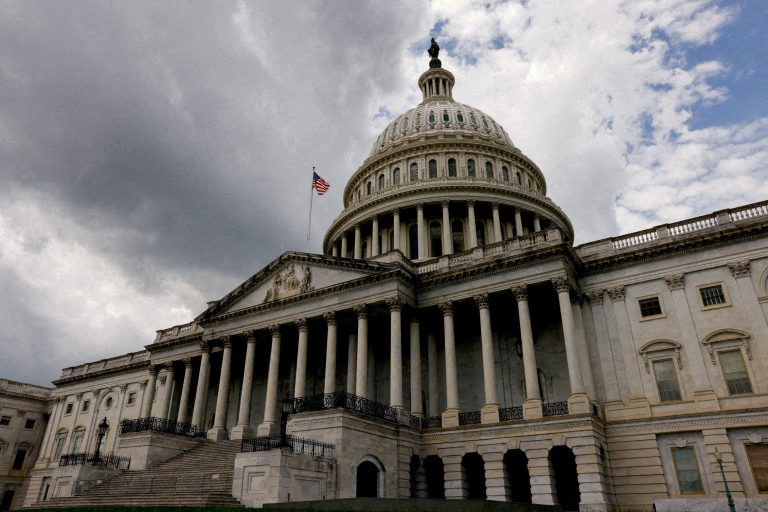
The U.S. House of Representatives passed the Falun Gong Protection Act, designated H.R. 1540, by unanimous voice vote on May 5, 2025. The bill authorizes sanctions, including visa revocations, asset blocks, and criminal penalties of up to $1 million and 20 years in prison, against foreign nationals identified as having knowingly engaged in or facilitated forced organ harvesting in China. It also requires the U.S. government to determine whether the persecution of Falun Gong meets the legal definition of an atrocity under the Elie Wiesel Genocide and Atrocities Prevention Act of 2018.
The Senate companion bill, also titled the Falun Gong Protection Act and designated S. 817, was introduced on March 3, 2025, by Senator Ted Cruz of Texas, and is currently with the Senate Foreign Relations Committee. Organizers told attendees that calls and emails to senators urging support for S. 817 are the most direct way American voters can move the legislation forward and warned that the bipartisan momentum in the House will not survive indefinitely if the Senate continues to sit on the bill.
The Blacksburg screening was, in effect, a working argument: that the documentation of Chinese state organ harvesting is no longer in dispute among investigators, that the moral question has shifted from what is happening to what those who now know about it intend to do, and that legislation already moving through the U.S. Congress is the place where civic action can land.