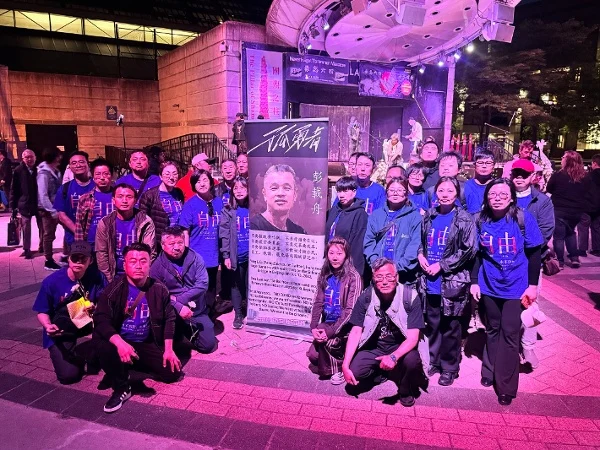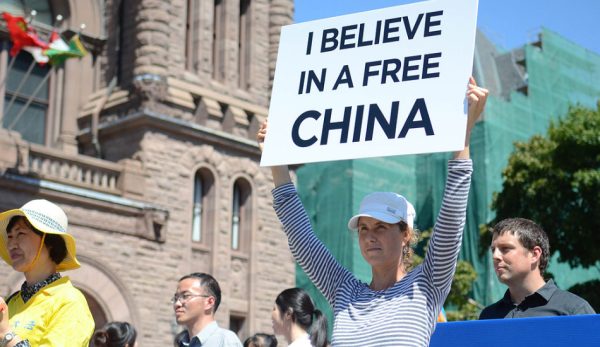
The U.S. Supreme Court on Tuesday, June 23 ended a long-running lawsuit accusing technology company Cisco Systems of helping the communist authorities in China persecute adherents of Falun Gong, a traditional faith group that has been heavily repressed since 1999.
In its 6-3 decision, the court ruled that a centuries-old federal law does not allow plaintiffs to pursue aiding-and-abetting claims against corporations for alleged human rights abuses committed overseas.
The plaintiffs, a group of Falun Gong practitioners, alleged that Cisco knowingly helped Chinese authorities develop and implement the “Golden Shield” surveillance system, which they said was used to identify, monitor, detain, and torture members of the spiritual movement.
- April 2026: Supreme Court Hears Arguments Against Cisco in Longstanding China Human Rights Case
- Why Communist China Fears Shen Yun and Falun Gong
- Thomas Pauken II’s Guilty Plea Shows How the CCP Recruits and Runs Western Assets
The lawsuit was originally filed in 2011 under the Alien Tort Statute (ATS), a law enacted in 1789 that has been used in recent decades to bring international human rights cases in U.S. courts. Despite having been earlier dismissed by a federal judge in 2014, the case was revived in a 2023 ruling by the Ninth U.S. Circuit Court of Appeals, sending it to the Supreme Court.
Writing for the conservative majority that decided the outcome, Justice Amy Coney Barrett said that federal courts do not have the authority to create new causes of action under the Alien Tort Statute.
Success
You are now signed up for our newsletter
Success
Check your email to complete sign up
“Courts cannot create new rights of action to remedy violations of international law, so there is necessarily no liability for aiding and abetting such violations,” Barrett wrote. “Plaintiffs’ ATS claims against Cisco must be dismissed.”
The Trump administration had previously backed Cisco on the case. All six conservative justices ruled in favor of Cisco, while the liberal justices dissented.
Two decades of human rights allegations
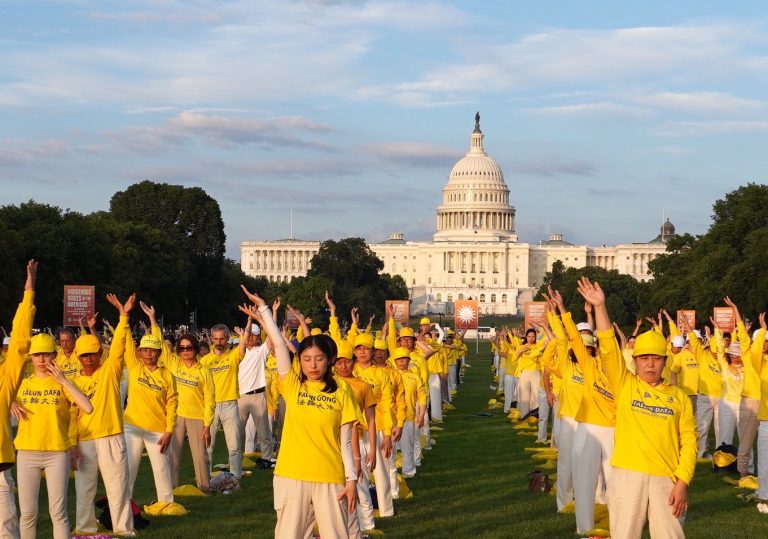
The case centered on allegations that San Jose, California-based Cisco customized surveillance technology for Chinese security agencies during Beijing’s campaign against Falun Gong, a faith founded in China in 1992 based on the country’s ancient traditions of spiritual and moral cultivation.
Falun Gong, also known as Falun Dafa, came under violent persecution in July 1999 after the Chinese Communist Party (CCP) determined that the popular faith posed a threat to its political power. Government authorities estimated that 70 million to 100 million Chinese were practicing Falun Gong by that point.
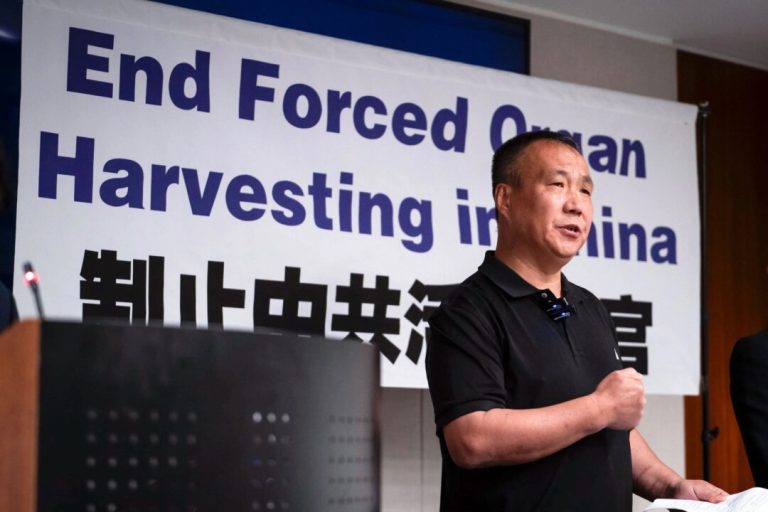
Human rights groups have accused the CCP of carrying out widespread persecution against Falun Gong adherents, ranging from harassment and detention to execution by organ harvesting.
Falun Gong practitioners were among the first groups of Chinese targeted by the Communist Party for online censorship and surveillance under the “Golden Shield,” which evolved into the broader system of internet controls often called “the Great Firewall of China.”
Cisco denied the claims that it had knowingly aided the throughout the litigation, calling the allegations unfounded and offensive.
When the Ninth Circuit revived the case in 2023, it concluded that the plaintiffs had plausibly alleged Cisco provided technical assistance with knowledge that human rights violations were likely to occur.
The appeals court wrote that Cisco had allegedly provided “essential technical assistance” to China’s campaign against Falun Gong while being aware that “torture, arbitrary detention, disappearance and extrajudicial killing were substantially likely to take place.”
Limiting the reach of a 1789 law
The decision marks another step in the Supreme Court’s efforts to limit the reach of the Alien Tort Statute in cases involving conduct outside the United States.
Since 2013, the court has issued several rulings narrowing the circumstances under which foreign human rights claims can be heard in U.S. courts. In decisions issued in 2013, 2018, and 2021, the justices emphasized that claims under the statute generally require a strong connection to conduct occurring within the United States.
Paul Hoffman, an attorney representing the plaintiffs, expressed disappointment with the ruling and argued that Congress should act to provide a legal pathway for victims seeking accountability from U.S. corporations. “So that victims of serious human rights violations at the hands of U.S. corporations may hold those corporations accountable in U.S. courts under the Alien Tort Statute.”
During the Supreme Court hearing on the case at the end of April, Hoffman had argued that limiting Cisco’s liability could have a far-reaching negative impact, as U.S. companies would have protection regardless of “how substantial and direct their contributions were” in enabling or aiding human rights abuses overseas.
“Under Cisco’s theory, even the corporate actors who provided the poison gas for Nazi crematoria would not be liable,” Hoffman told the Supreme Court. “There’s no basis in international law [for] such an absurd result.”