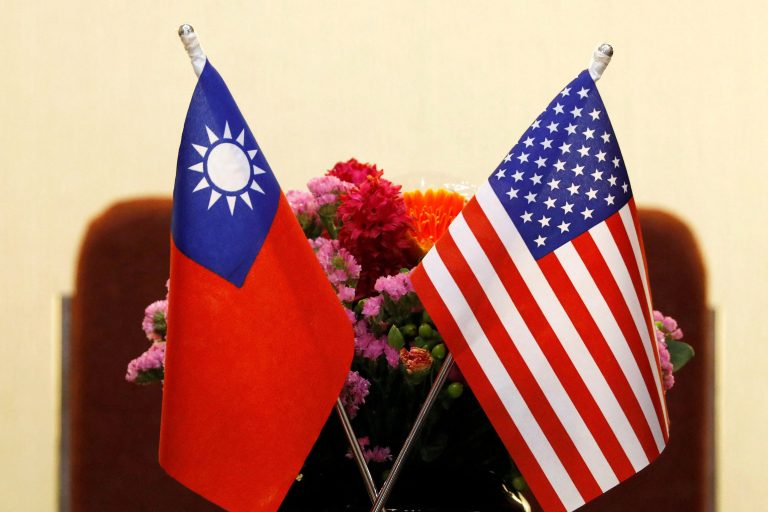
Just a week after the Trump-Xi summit in Beijing, the United States paused a $14 billion arms sale to Taiwan to secure sufficiency of its weapons stockpiles for the Iran war, acting Navy Secretary Hung Cao told the U.S. Senate on May 21.
“Right now we’re doing a pause in order to make sure we have the munitions we need for Epic Fury – which we have plenty [of],” Cao told a Senate hearing on Thursday, May 21. Epic Fury is the operational name for the joint U.S.-Israel military campaign in Iran.
The pause raised a lot of questions and debate about the US’ Taiwan policy. While answering some of these questions, US Secretary of State, Marco Rubio said at a hearing in the U.S. Senate on Wednesday that the arms sale is under “review” and is not paused.
He said “paused” is not the right response to the question on the issue and the package “continues to be under review as it’s being processed.”
Vision Times’ senior journalist Venus Upadhayaya did an exclusive interview on the US pause of $14 billion arms deal to Taiwan with Taipei-based Sasha Bonafede Chhabra (陳博樂) an analyst, writer, consultant, and speaker specializing in Chinese foreign policy, Taiwanese politics, cross-Strait relations, and human rights.
Success
You are now signed up for our newsletter
Success
Check your email to complete sign up
Chhabra is the founder of Taiwan International Center and was earlier affiliated with the Institute for National Defense and Security Research (INDSR). The expert also publishes a newsletter Formosa Review, which focuses on Taiwanese politics and geopolitics.
Vision Times: What’s the reality behind US pausing $14 billion arms deal with Taiwan? Is it because of shortage of stockpiles due to the Iran war or is it geopolitics triggered by China pressure?
Sasha Bonafede Chhabra: I would say that there is a big sense of denial among the, let’s say, the pro-American contingent in Taiwan. You have a lot of people who really strongly believe in Donald Trump and really strongly believe in the United States, and they think that, you know, they will be backed 100 percent. This is false. I have to say, there’s definitely a lot of strong backing from the United States for Taiwan, and Taiwan should count on the United States to a large degree. But it is very clear that U.S. support is not unconditional, and there are limits to it.
I read a lot in the local media here that’s aligned with the green side or the part that supports the Democratic Progressive Party, willful mistranslation, or maybe sometimes it’s just an error in mistranslation or misinterpretation of remarks by Trump and other officials that seems to imply that there’s unconditional support or overwhelming support, and that simply is not the case. You can just read what is written in the local media, and then look at Trump’s original marks in their context, and you can see there’s a very strong disconnect. This is a problem.
On the other side, you have the blue media that supports the Kuomintang, and they are also not interpreting things correctly. You know, they’re pushing their own narratives that the U.S. is completely unreliable, the U.S. will never back Taiwan, and it’s time for Taiwan to move away from its partnership with the U.S., and think about — they don’t get so explicit about striking a deal with China right now, but certainly many of the blue media strongly suggest that Taiwan should be moving towards some kind of negotiation with China, rather than protecting its sovereignty and independence, and of course, different outlets have different stances on this, but that’s certainly the overarching narrative on the blue side, that the U.S. is untrustworthy and cannot be trusted 100 percent. I would say the truth lies in the middle.
RECENT COVERAGE
- US Delay of $14 Billion Taiwan Arms Package Raises Questions Over America’s Defense Capacity and China Strategy
- Trump’s Warning Against ‘Taiwan Independence’ Seen as Tactical Play in Talks With Beijing: Analysts
- Xi Meeting With KMT Chair Cheng Li-wun Signals Narrative Shift Toward ‘Peaceful Reunification,’ Taipei-based Experts Say
The U.S. is somewhat trustworthy and somewhat reliable, and there are areas where Taiwan can do more to make itself a better partner to the U.S., to make Americans want to be more supportive of Taiwan, and to appeal to different people within the United States government, focusing more on the executive branch and less on legislative branch — these are the kinds of strategic communication changes that need to happen, but also, as I’ve mentioned in the discussion of armaments, this is also a big area that Taiwan needs to take more responsibility for its own defense and really investing in its own production of asymmetric weapons and really improving its own military strategy and posture, and reforming its army, its reserves, to make sure that it is ready to become a porcupine.
Vision Times: In our background talk to this interview, you mentioned that Taiwanese have been in denial about the US pause in arms sales. What did you mean by that?
Sasha Bonafede Chhabra: I guess to the question of Taiwanese [being] in denial, there are many aspects of denial — there’s what I alluded to earlier on the mistranslations of policy statements or public statements by U.S. officials, but yes, there’s also, I think, a long-term been in a denial of the severity of the Chinese threat, and the fact that Taiwan really needs to rely on itself a lot more in order to ensure that American support.
American support will not come if Taiwan is not able to sufficiently deter China, and to hold its own in the opening stages of an attack, or in a number of gray zone contingencies that may happen, and there have been shifts on this. It’s certainly improved in the last several years, but it’s not been enough, and it’s not been fast enough for the scale of what we see in the increase of the Chinese threat.
Vision Times: Has the critical mineral crisis contributed to this pause? The US imports 10 non-substitutable materials, mostly from China and ironically these go into what it sells to Taiwan as well. A Jan. report by Heritage and a few other reports have said these critical materials can impact what the US sells to allies.
Sasha Bonafede Chhabra: The critical minerals crisis has absolutely contributed to this pause. I don’t know if it’s happened immediately, but it certainly is going to be a major, major problem, probably the biggest bottleneck in the medium to long term. So, you know, of many of these minerals, they only come from China. Think about Gallium. Gallium is a key ingredient in radar systems used by, for example, THAAD interceptors.
This entirely comes from China, so there’s a bottleneck here which gives the Chinese the ability to unilaterally set the limit on your own production capacity for these platforms, and for some of the other materials, there’s some ability to get them from other sources, but still quite minute, and there’s limited quantities of this, so that’s going to be bottlenecks on how much you can increase production.
As the U.S. continues this war, as we see it has restarted, this will just compound the problem exponentially by making the need to recoup new stockpiles, so this is really quite a serious problem, and it’s not a problem that any one country can solve on its own, and allied countries need to come together and figure out where they’re going to get access to the raw materials in terms of mines, but also where they’re going to get space where they’re going to have significant regulatory incentives in place to be able to do this very polluting process of refinement and also generate enough electricity and energy capacity to power this process, which for most of these minerals is very, very energy intensive.
These are very serious problems that everyone is facing, and there are not a lot of good solutions. And again, I think energy production is being scaled up all over the world, but the biggest customer for this is data centers and the semiconductor industry, AI. So, there’ll be a lot of huge costs involved here, and everyone is going to have to pay quite a lot for this, so there are no easy answers. It’s going to be very difficult, and we need a combination of political will across many different countries, so it’s going to be very difficult. But it first starts with this need for recognition that there are problems that need to be solved, and the national security interests in all these countries that are interlinked.
Vision Times: Do you think these critical mineral imports indispensable for the sophisticated arms production is behind the US pause of arms deal to Taiwan?
Sasha Bonafede Chhabra: There are two issues here one is the specific $14 billion sale of arms to Taiwan, which has been on pause for half a year and which Trump has made clear he wants to use as a bargaining chip with China, and secondarily there is a separate but overlapping issue of the issue of stockpiles and production capacity.
It’s both — stockpiles and production capacity — which is triggered by the Iran war, as well as the war in Ukraine, and continued U.S. engagements elsewhere. Looking at the first one, it’s very clear that Trump wants to use this as a bargaining chip, because he understands that this is China’s biggest red line and what they really want is America to cut off the supply of arms to Taiwan.
So instead of backing Taiwan and following the Six Assurances, which have been US policy for decades, which also include the US not consulting China on arms sales to Taiwan, or on ending arms sales to Taiwan — Trump is trying to use this to get some leverage out of China. It’s not a strategy that’s going to work, because China simply doesn’t want to make any compromise. They want to take over Taiwan, and they want to make sure Taiwan is weak enough to not be able to defend itself, and that the U.S. will not back it as well.
So, this will continue, I think, because Trump wants to have that nice summit, and then he wants to have another summit again in the U.S. in September, and none of these are going to happen if the arm sale goes through, so this is what’s driving that, and we don’t see any signs that this arm sale will actually happen under Trump’s administration. I’m sure the Chinese will keep giving more and more perceived carrots, like a summit, or promising to buy some amount of air jets or soybeans, a lot of which they’re planning to purchase anyways, to keep pushing that down.
Now, secondarily to this, there’s the issue of U.S. stockpiles and production capacity, a lot of that is focused on, for example, Tomahawk missiles, which is something that Taiwan doesn’t buy from the United States, and they don’t have, and that’s affecting the United States’ own readiness in the region, its ability to deter China, and also allies.
So, Japan operates the Tomahawk as well, and they’ve just been informed that they’re going to be now years behind on receiving Tomahawks that they’ve already purchased, or planning to purchase. We see the U.S. needs to resupply itself, and it seems it will probably move Middle Eastern countries up ahead of the pipeline, because they’ve been the ones, expanding these munitions, or that the U.S. has been expending to protect them. So, for example, with the Patriots, those are interceptors used to protect countries from incoming missiles or aircraft, and Taiwan does use Patriots as well, so I think we will absolutely seeTaiwan moving to the back of the queue on Patriot missiles. There are production bottlenecks, and even if production does expand in the next few years, there’s going to be this kind of shifting of other countries to the front of the queue.
When it comes to the question of Taiwan’s own purchase — Taiwan has budgeted now, just passed a special budget to acquire a lot of these U.S. arms sales. It does raise now a lot of questions about how Taiwan is going to be able to be ready to deter China in the medium term, when we know this is a very much a medium term problem, and what needs to happen is Taiwan needs to really ramp up domestic production as well as co-production with regional allies, as I mentioned, Japan is also very, very much affected by this.
The Philippines will be affected by this indirectly, and Korea is affected by this as well, as Korea has lost the THAAD interceptors. They are used in the Middle East now, so this is a great opportunity for Taiwan to really present itself as a key manufacturer of all sorts of platforms, whether it’s missiles, drones, any platform that can be used asymmetrically.
This is the kind of thing Taiwan can really show its prowess in manufacturing, and we can work together with allies in the region for this to happen. Taiwan’s government needs to invest in the industry domestically, needs to make sure the order floors are there to give industry the incentive to produce, and needs to invest in the R&D and the assembly lines to make this happen. They need to make sure that there are workers there, and this is something that’s being blocked right now by the KMT. We’ll see if they do approve these investments in the regular national defense budget, but it remains to be seen.