Taiwan’s opposition Kuomintang (KMT) party sent a delegation to China for a six-day visit from April 7 to April 12, led by its chairwoman, Cheng Li-wun. Cheng met Chinese leader Xi Jinping on Friday, April 10 at the Great Hall of the People in Beijing — marking the first meeting in a decade between senior leaders of the KMT and the Chinese Communist Party (CCP).
Taipei-based experts who spoke with Vision Times said that the messaging from the Xi-Cheng meeting creates a narrative that Beijing is adjusting its Taiwan policy to prioritize “peaceful reunification” amid changing political conditions, though the CCP continues to make preparations for “armed reunification” of the democratically governed island should the need arise.
“This meeting was initiated by China, which voluntarily agreed to Cheng Li-wen’s visit. This was primarily due to China’s adjusted policy towards Taiwan, prioritizing peaceful reunification,” Shen Ming-Shih, director of national security research at Taipei’s Institute for National Defense and Security Research, told Vision Times in an email.
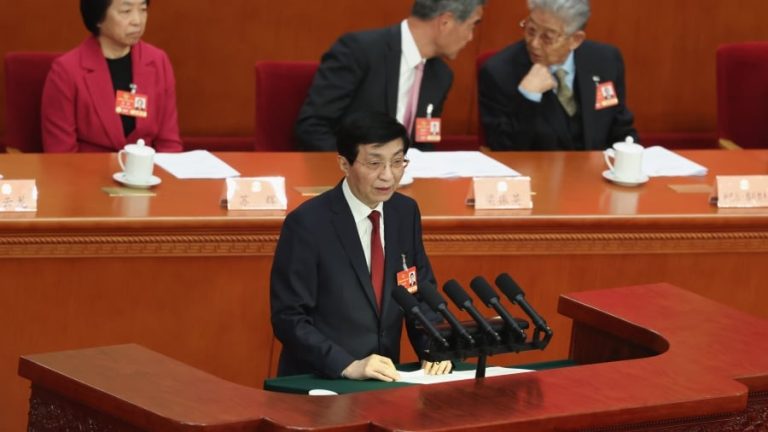
During the meeting, Xi outlined a four-point proposal centered on three goals — “seeking peace for both sides, welfare for compatriots, and national rejuvenation.”
The proposal reiterated key themes, including upholding a “correct national identity,” protecting a “shared homeland through peaceful development,” enhancing well-being through cross-strait exchanges and integration, and advancing national rejuvenation through unity and struggle.
Beijing’s messaging aimed at global perception
Success
You are now signed up for our newsletter
Success
Check your email to complete sign up
Xi’s remarks were grounded in the “1992 consensus,” which reflects the “one China” principle while allowing differing interpretations between the Republic of China and the People’s Republic of China. The framework rejects Taiwan independence and maintains a political baseline of “never tolerating, never condoning” secession.
Analysts say Xi’s messaging reflects an effort to reshape international perceptions of China’s Taiwan policy.
In a news analysis for Commonwealth Magazine, an English-language Taiwanese publication, commentator Hans Liu wrote that Beijing is seeking to build a more acceptable global image on Taiwan, countering portrayals of China as aggressive or war-seeking.
Hans cited Kou Chien-wen (寇健文), a professor at National Chengchi University, who said Beijing is attempting to counter expectations that China may use force against Taiwan by 2027. Instead, it is emphasizing “peaceful unification” while promoting a narrative of “China seeking peace and the United States provoking conflict.”
U.S. intelligence organizations had previously claimed that Xi ordered the Chinese People’s Liberation Army (PLA) to be ready to invade Taiwan by 2027, but earlier this year gave a reassessment saying there was no indication that Beijing had such plans.
Prelude to the Trump-Xi Summit
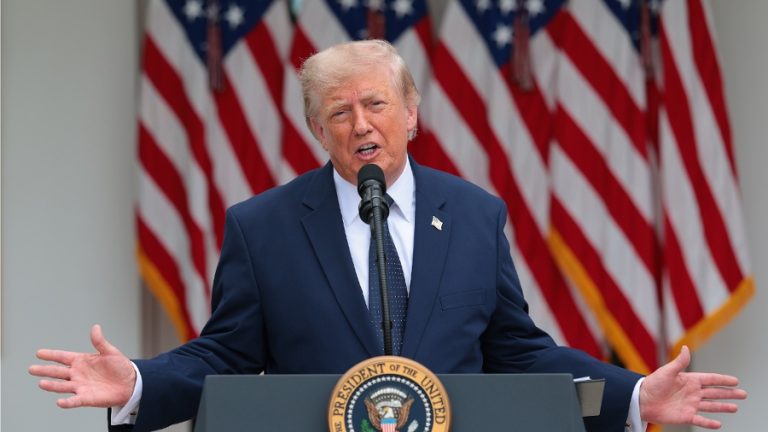
Observers also see the meeting as part of Beijing’s positioning ahead of a planned summit between Xi and U.S. President Donald Trump next month.
Courtenay Donovan Smith, a columnist for the Taipei Times, told Vision Times that China is likely to use the visit to reinforce its claim that Taiwan is an internal matter.
“The PRC will attempt to spin the trip to create the impression that Taiwan is a ‘domestic issue’ that can be dealt with internally, without ‘outside interference’ (read: U.S.),” Smith said in a written message.
He added that this framing could be used to argue against U.S. arms sales to Taiwan. Smith noted that Xi raised the issue of U.S. arms sales during a recent phone call with Trump.
However, Shen believes the Xi-Cheng meeting is unlikely to influence the upcoming summit.
“On the contrary, it will make Trump feel disgusted by the Taiwanese opposition party’s behavior of blocking the defense budget on the one hand and interacting closely with China on the other,” he said.
The KMT, which holds an opposition majority in Taiwan’s legislature, has repeatedly blocked a $40 billion (NT$1.25 trillion) defense budget, doing so 10 times this year. Meanwhile, the United States approved a record US$11 billion arms sale to Taiwan in late December.
Shen added that Trump is unlikely to align with Beijing’s position on Taiwan, saying that the Trump administration sees China as its greatest adversary and “is gradually weakening and dismantling the Chinese Communist Party regime,” he said.
Cultivating new proxies in Taiwan
Experts say the political context in both China and Taiwan has changed significantly since the last visit by a KMT chairperson to Beijing, and Cheng’s visit may signal Beijing’s effort to cultivate new political partners in Taiwan.
The KMT, whose name means Chinese Nationalist Party, was once the regime leading mainland China prior to and during World War II. After the war, it was toppled by the Communist Party led by Mao Zedong, and forced into retreat on Taiwan, which is still formally governed as the Republic of China (ROC).
While once bitter enemies, the KMT and CCP have slowly grown closer in recent decades, especially with the rise of pro-Taiwan independence sentiments among the island’s people and a diminishing of the Chinese identity that underpins the KMT’s ideology.
“Former President Ma Ying-jeou’s declining influence and the potential imprisonment of another opposition leader, Ko Wen-je, due to corruption allegations led China to accept Cheng Li-wun with the intention of cultivating new proxies in Taiwan,” Shen said.
Ma Ying-jeou, who served as Taiwan’s president from 2008 to 2016 and previously chaired the KMT, is known for his policy of rapprochement with mainland China and for multiple visits there during and after his presidency. His most recent trip took place in 2024. Reports have circulated this year about his health.
Ko Wen-je, former chair of the Taiwan People’s Party, which together with the kMT forms a majority coalition in the Taiwan parliament, was recently sentenced to 17 years in prison on corruption charges.
At the same time, some analysts downplayed the substance of the Xi-Cheng meeting, noting that many of the proposals reiterated long-standing positions.
“China doesn’t have many resources due to its economic downturn, and Cheng Li-wun is only the chairperson of an opposition party, with limited ability to offer China additional benefits,” Chen said.
Chen believes that Cheng Li-wun is using Xi Jinping to bolster her standing within the Kuomintang and ahead of elections.
Narrative battle and military pressure
Smith cautioned that international media coverage may overstate the significance of the visit.
“Most international press outlets used terms like ‘historic’ to describe Cheng’s first visit in a decade, but the KMT has been sending a steady stream of vice chair-level delegations and affiliated groups to China during the interim,” he said. “Communications have been ongoing and fairly consistent.”
He also warned that Beijing’s rhetoric about “peaceful reunification” contrasts with ongoing military pressure by the CCP in the Taiwan Strait.
“For all the talk of peace and revival of CCP-KMT ties, Beijing increased its military intimidation tactics against Taiwan during the trip,” Smith said. “This sent a dual message of co-opting Taiwan’s largest opposition party while simultaneously displaying hostility toward Taiwan’s democratically elected ruling party.”
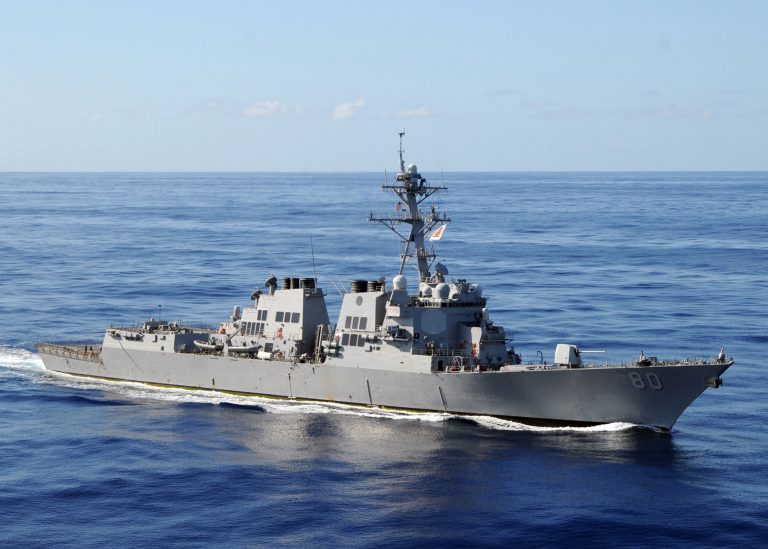
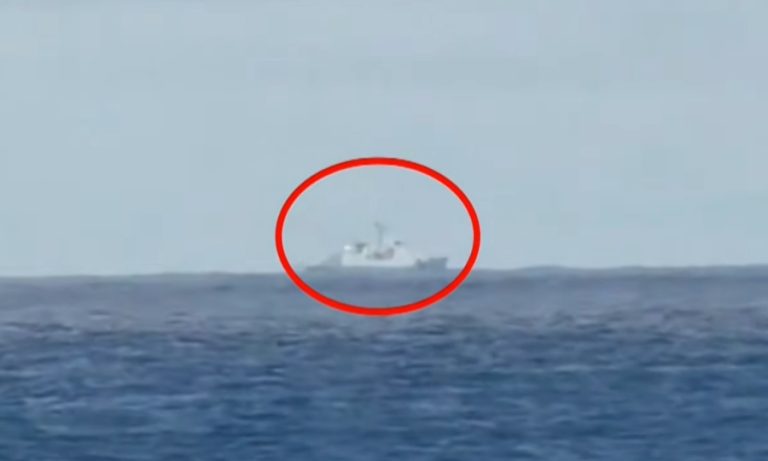
During Cheng’s visit, Taiwan’s defense ministry reported 16 PLA combat aircraft and 32 naval vessels operating around the island.