News analysis
The second Trump administration has indicated its return to a confrontational stance on Beijing, as the president levies new tariffs on the People’s Republic of China (PRC) and his subordinates call out the communist regime for its malfeasance.
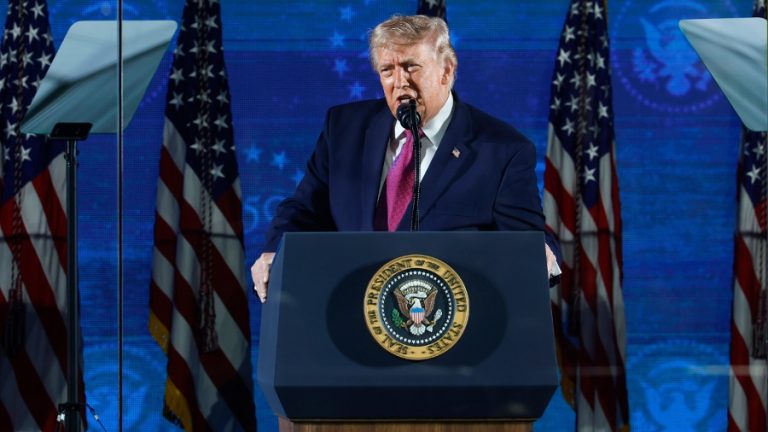
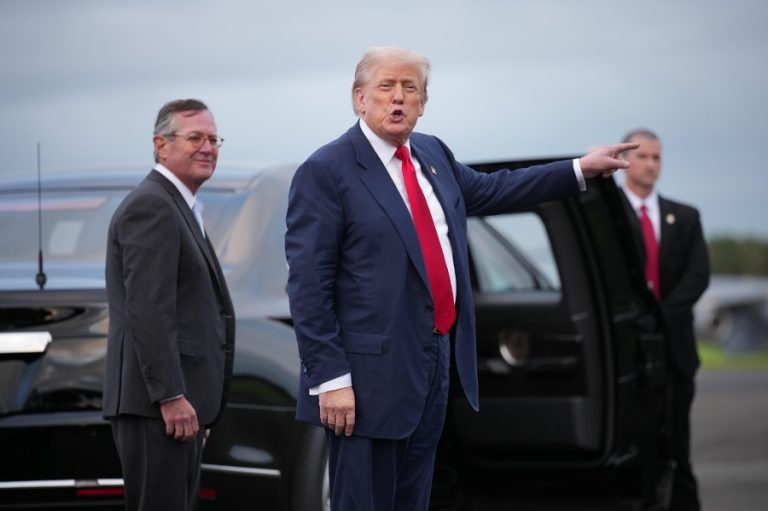
On Feb. 1, U.S. President Donald Trump fired the opening salvo of a new trade war, announcing tariffs on Canada, Mexico, and China, citing those countries’ role in tolerating illegal immigration and smuggling of fentanyl into the United States.
While Trump on Monday, Feb. 3 put a 30-day pause on the tariffs targeting America’s neighbors, the 10-percent blanket tariff imposed on China came into effect on Feb. 4, sparking denunciations from the PRC Foreign Ministry and promises of “countermeasures.” Those soon came in the form of 15-percent tariffs on U.S. coal and liquid natural gas (LNG), as well as 10-percent tariffs on crude oil, agricultural equipment, and some cars. As of press time, the Chinese tariffs are to go into effect on Feb. 10.
- Trump Delays Tariffs on Canada and Mexico, Agrees to Joint Border Security Efforts
- Multiple Chinese Vessels Linked to Undersea Cable and Pipeline Damage in Europe and Asia
The PRC also announced export controls on Chinese rare earth minerals, began an investigation into Google, and added other U.S. firms to an “unreliable entity” list.
Success
You are now signed up for our newsletter
Success
Check your email to complete sign up
Beijing’s foreign ministry warned that there would be “no winners” in the new trade war and claimed that the fentanyl crisis is America’s own problem, despite much of the deadly drug originating in Chinese factories that often operate with the Communist Party’s blessings.
Confrontation and negotiation
According to SinoInsider, a political risk consultancy based in New York that specializes in elite Chinese politics, Trump’s early moves in his China policy indicate “that he will maintain and even expand on his first term’s” confrontational approach towards the Chinese Communist Party (CCP).
The president wrote in a Feb. 2 Truth Social post that opponents of tariffs, including hedge funds and “fake news” media, oppose them only “because these people or entities are controlled by China, or other foreign or domestic companies.”
On Feb. 5, Trump brushed off the retaliatory tariffs issued by Beijing, telling reporters that “we’re going to do very well against China and against everybody else,” noting that the PRC, which continues to enjoy a large trade surplus with the U.S., is “using our money to build their military.”
He added that regarding a potential call with Chinese leader Xi Jinping, “we’ll speak to him at the appropriate time. I’m in no rush.”
Trump previously spoke with Xi on Jan. 17, ahead of his inauguration on Jan. 20.
Citing individuals in both Washington and Beijing who are familiar with the CCP’s thinking, the Wall Street Journal reported on Feb. 3 that Beijing is preparing an “opening bid” to negotiate with Trump.
The Party leadership views the 10 percent tariffs as Trump’s form of bargaining, rather than the sort of “maximum pressure” that Xi would find unacceptable, the sources said.
Beijing’s initial proposal revolves around restoring the unfulfilled 2020 Sino-U.S. trade agreement, according to the Wall Street Journal. Some ways of meeting Trump could include purchasing more American goods and investing in U.S. industries, including electric car batteries. China also plans to pledge against using a devalued yuan to gain a trade advantage, and commit to clamping down on fentanyl precursor exports.
Additionally, the CCP intends to treat TikTok as a “commercial matter,” allowing ByteDance investors to negotiate with U.S. bidders, though it is unclear if Beijing would concede control over TikTok’s algorithm.
Pushing back against the CCP
In addition to tariffs, the new Trump administration has also taken opening steps to push back against Communist China’s global presence.
According to SinoInsider, writing in a Feb. 6 newsletter, the likely objectives of Washington’s renewed pressure are to “negotiate a new economic deal with the PRC, have Beijing fulfil the previous deal, strongarm neighbors to get on the same page as the U.S. (which would allow Washington greater leverage against Beijing), and safeguard American national security in the face of the CCP threat.”
During the first Trump administration, the U.S. levied tariffs on hundreds of billions of dollars’ worth of Chinese goods. Most of these tariffs were continued under the Biden administration.
Government officials under Trump also issued direct criticisms of China’s human rights abuses and the tyrannical Marxist ideology of the CCP, triggering invective-laden denunciations from Beijing.
In late January, U.S. Secretary of State Marco Rubio embarked on a tour of Panama, El Salvador, Costa Rica, Guatemala, and the Dominican Republic, which officials described as being to counter Beijing’s influence in the region — particularly over the Panama Canal.
Before his trip, Rubio wrote in a Wall Street Journal commentary, “As our regional partners build themselves up, they can more easily resist countries such as China that promise much but deliver little.”
In Panama, Rubio warned President Jose Raul Mulino that Washington would “take measures necessary” if Panama did not reduce PRC control over the Panama Canal. Mulino subsequently announced a review of a 25-year port concession to Hong Kong-based CK Hutchinson Holdings and Panama’s withdrawal from China’s Belt and Road Initiative.
During his meeting with Salvadoran President Nayib Bukele, Rubio “raised strategies to counter the influence of the CCP in the hemisphere to safeguard the sovereignty and interests of both nations and the region.”
Meanwhile, the CIA on Jan. 25 adjusted its assessment of COVID-19’s origins, now stating, “CIA assesses with low confidence that a research-related origin of the COVID-19 pandemic is more likely than a natural origin based on the available body of reporting.”
On Jan. 30, Trump wrote on Truth Social warning the nations of the BRICS organization — a loose bloc including China and Russia — that they should be prepared to see 100-percent tariffs and “expect to say goodbye to selling into the wonderful U.S. economy” if they create a new currency to counter the U.S. dollar.
Rapprochement unlikely
The SinoInsider analysts believe that despite the Xi leadership’s reported willingness to negotiate, Trump is unlikely to accept Beijing’s “opening bid” without significant alterations, including stricter oversight and enforcement. These would, in turn, be pledges that the CCP is unwilling or unable to make.
“The idea of China pledging to buy more from the U.S. rings hollow given that Beijing failed to meet the purchase requirements from the first Sino-U.S. deal,” SinoInsider wrote in its newsletter.
For Beijing’s part, any negotiations with the U.S. are likely part of the Communist Party’s strategy to “delay and wait for change” by offering vague “benefits” and “concessions” to buy time, rather than any genuine desire to improve relations with Washington in the long term.
Trump’s statements and his administration’s moves, such as countering the CCP revisiting the COVID-19 lab leak theory, indicate that such tactics by the CCP are likely to be of limited effect, according to SinoInsider.
Meanwhile, the president’s warning of 100-percent tariffs on BRICS should they form a currency aimed at upending U.S. financial dominance, also points to a possible intention by Trump to take more aggressive steps against the Sino-Russian partnership, “and even potentially drive a wedge between Moscow and Beijing.”