On May 17, parents gathered en masse to protest over a decision to close a private school in Hebei province, China. In a rare move, the authorities gave in and reversed the decision, parents said.
Hundreds of parents demonstrated outside the Nangong municipal government building in Hebei province on Sunday to preserve the Fengyi Elementary School, as depicted in an online video shared on X by the project Yesterday, which records large-scale protests in China.
Cries of “Disagree!” and “Leaders come out!” filled the air long into the night, while police patrolled to control the crowd, witnesses told Radio Free Asia (RFA).
The planned closure of Fengyi Elementary School is part of the Chinese Communist Party’s (CCP) efforts to discourage private education in favor of education by public state-run schools. However, the elementary school had a strong reputation, with parents vying for spots for their children through a public lottery system.
Should the school be closed, children would have to be transferred to public schools, which are plagued by management problems and high teacher turnover rates. Parents were also notified by authorities to choose a public school.
Success
You are now signed up for our newsletter
Success
Check your email to complete sign up
“They [the government] saw that the school had high educational quality and that parents with financial means sent their children to Fengyi Elementary School, so they wanted to close it down,” one parent told RFA.
An official from the Nangong City government office acknowledged the protest and said that “the problem was resolved.” As a result, Fengyi Elementary School was saved, though no more details were shared and the Education Bureau has made no public comment.
This represents an unusual instance of the government reversing a decision, especially with the CCP’s tight control.
READ MORE:
- Flags of China and Philippines Planted in Disputed Territory in South China Sea
- Over 1 Million Taiwanese Participate in Movement to Recall ‘Pro-Communist’ Legislators
- Cracks in the ‘Iron Rice Bowl’: Chinese Workers, Government Employees See Their Wages Delayed, Benefits Cut
Private education at risk
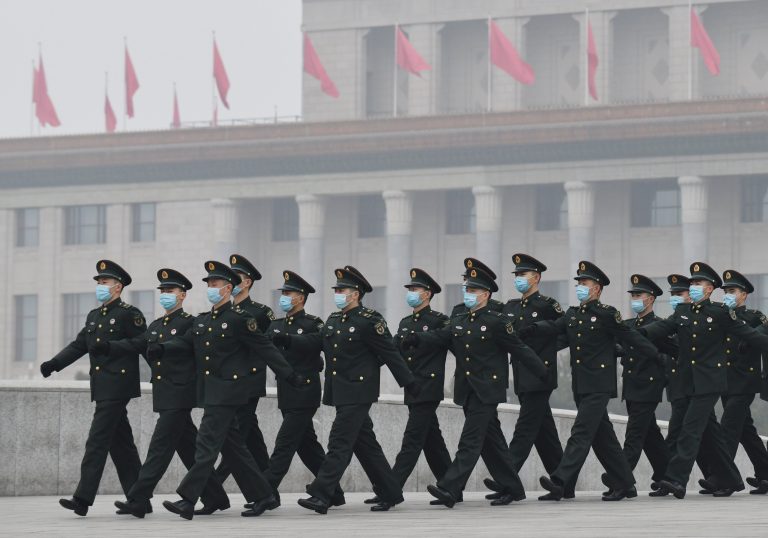
Despite Fengyi Elementary School being allowed to remain open, private education in China remains targeted by the CCP. The communist government aims to bring greater control over private schools under the guise of fairness in education and reduced costs for parents.
Data from the Ministry of Education from last October showed that the number of private schools in the country has dropped by more than 20,000 in the last four years, including a decline of more than 11,000 in 2023 alone. Moreover, fewer than 50 million students are currently enrolled in private schools — over three million fewer than in 2023 — accounting for nearly 17 percent of the country’s total student population.
“If they are taking back [the private sector] in this way, then it means education will be completely in the hands of the government,“ former teacher Jia Lingmin said. “Private schools make efforts to compete for enrollments, and the teachers are very responsible and serious about improving the children’s grades.”
Yet, even with new policies by local governments to reduce private education, private schools are still the primary option for many parents in China. Jia told RFA that fewer children are being enrolled into schools as the country’s birth rates fall, leading to poorer enrollment and closures.
Another parent agreed that private schools are more preferred, even as free tuition is provided at public schools for children ages six to 15.
“Private schools have high education quality and a good teaching environment, and many parents are willing to send their children to private schools,” Jia said.
Meanwhile, a report by Center for Uyghur Studies (CUS) states that the boarding school system is said to be used as “a tool of cultural genocide” for Uyghurs. This traces the roots of China’s assimilation policies targeting Uyghurs and highlights how “counter-terrorism” narratives, particularly after the events of 9/11, have been used to justify increasingly repressive measures.