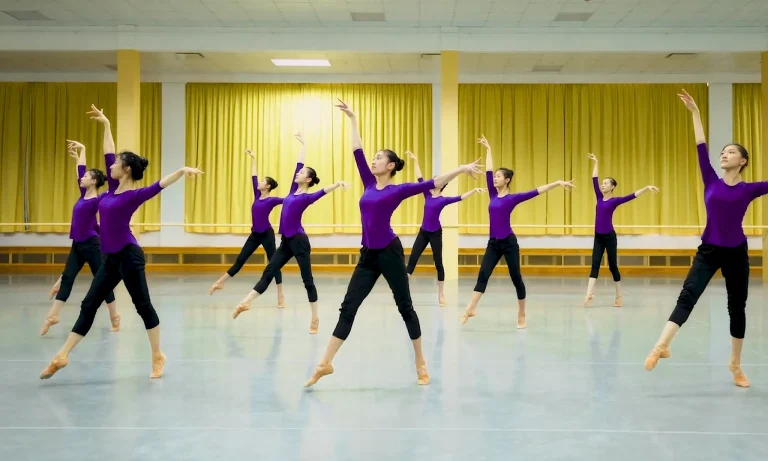
On a quiet afternoon, Ms. Zhang shared her story of persecution, faith, and survival. Her life, and that of her daughter — an accomplished Shen Yun dancer — traces two very different paths across two nations: One marked by repression and persecution in China, the other by rebirth and freedom in America.
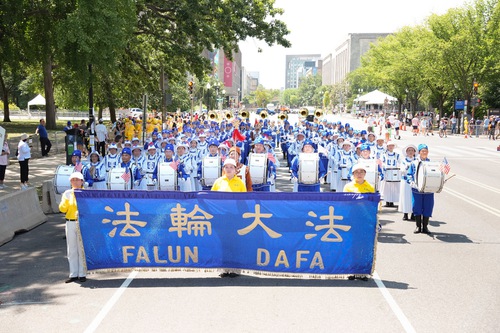
Zhang, who lives in the U.S. and gave her account under a pseudonym to protect her acquaintances in China, practices Falun Gong, a traditional Chinese spiritual discipline that has been persecuted by the communist regime since 1999.
When Zhang took up Falun Gong prior to the regime crackdown, she was plagued by illness and exhaustion. “I had tried both Western and traditional Chinese medicine,” she recalled, “but nothing worked.”
A meditation and spiritual discipline rooted in the principles of truthfulness, compassion, and forbearance, Falun Gong was miraculously popular in China during the 1990s, with millions of people crediting the practice with improving both their physical health and moral character.
RELATED: ‘No More Ignoring It’: House Unanimously Passes Falun Gong Protection Act, Urges Senate to Act
Success
You are now signed up for our newsletter
Success
Check your email to complete sign up
The practice includes five slow, gentle exercises and a focus on self-cultivation based on moral improvement in daily life. “Very soon, my health returned, and I felt a joy I had never experienced before,” Zhang said.
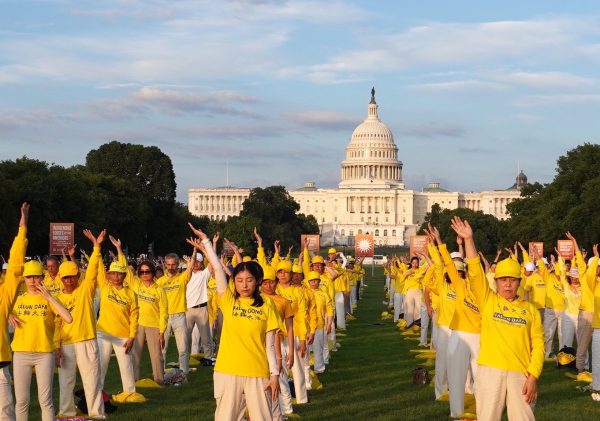
Those were the early days of Falun Gong’s spread in mainland China, when group practices were held openly in parks and streets. “It was a beautiful time,” she said, quoting Falun Gong’s founder, Master Li Hongzhi: “Dafa is spreading widely; those who hear seek it, those who obtain rejoice in it, and the number of people cultivating is beyond count.”
Decades of persecution
But everything changed on July 20, 1999 when the Chinese Communist Party (CCP), under then-leader Jiang Zemin, launched a brutal crackdown on Falun Gong. Seeing its rise in popularity as a threat to its authoritarian regime, “they used what they called the ‘Three Eradication Policies’ to ruin practitioners’ reputations, cut off their finances, and destroy them physically,” said Ms. Zhang.
By the start of the persecution, there were an estimated 70 to 100 million Falun Gong practitioners across China. This included workers, intellectuals, military personnel, and even high-ranking members of the Communist Party itself. The scale of the movement — combined with its independence from state control — was seen by Jiang as politically intolerable.
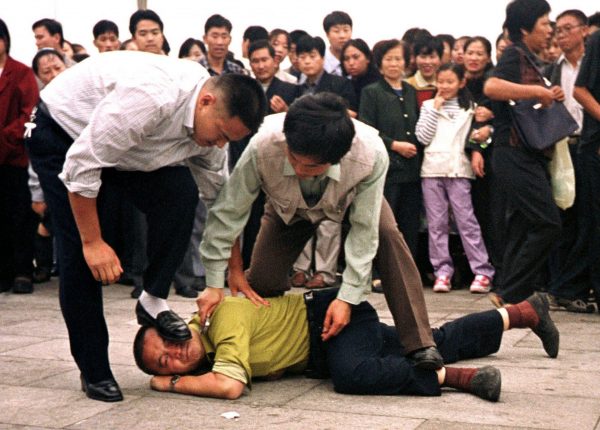
Things continued to take a turn for the worse when she was arrested and detained seven times. Her parents, both government employees, were also harassed, fined, and threatened with dismissal. The pressure and stress eventually became too much and they both died in their early 60s. “That pain never leaves me,” she said.
Since 1999, thousands of Falun Gong practitioners have perished as a result of the persecution, often from torture, abuse in custody, or denial of medical care. However, the true number is believed to be much higher due to the Chinese regime’s systematic cover-ups. The persecution has continued unabated for over two decades, with many practitioners in both China and abroad routinely subjected to surveillance, arbitrary travel bans, and arrests.
A stolen childhood
Ms. Zhang’s young daughter bore the silent cost of her mother’s persecution. “When she was just over one year old, I was sent to a brainwashing center,” she said. With no one to care for the child, her husband, overwhelmed and fearful, left the toddler with a migrant neighbor and a half-day kindergarten.
When Zhang was released, the kindergarten teacher told her that the child had often come to school in filthy clothes. “No one changed her. She probably just had enough to eat to stay alive.” Weekend visits to the detention center were wrenching. “Every time she left, she cried so loudly the sound echoed down the street. I felt like my heart was being torn apart.”
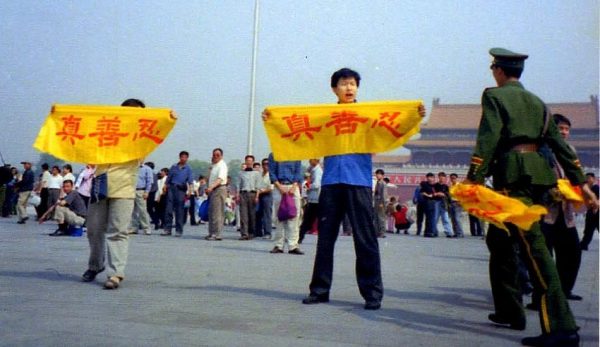
One evening, after Ms. Zhang agreed to take a walk with her husband, she mentioned that she needed to send righteous thoughts — a Falun Gong practice — outside. Her daughter, then a preschooler, panicked. “Mom, you can’t do that out here! The police will arrest you,” she pleaded.
Enduring together
Barred from her workplace due to her beliefs, Ms. Zhang was left to care for her daughter full time while continuing underground efforts to distribute Falun Gong materials. “I couldn’t leave her at home, so I brought her with me,” she said. “She was just a toddler, but she never complained, even when her legs were covered in insect bites.”
Once, while distributing flyers in a residential complex, she left her daughter hidden nearby. When she returned, the girl had vanished. “I was terrified. I found her crawling out from under a truck, crying. She had hidden there after being chased by dogs.”
As Ms. Zhang faced repeated arrests and even had to go into hiding, her daughter was left alone more often. “She missed me terribly. She became anxious and withdrawn,” she said.
The final arrest was the most traumatic, said Ms. Zhang. “Seven or eight officers burst into our home on the first day of summer vacation,” she recalled. “They handcuffed me. My daughter was so scared she was shaking.” The officers interrogated the child, asking if she practiced Falun Gong. “She cried and shouted, ‘My mom is a good person! My mom is a good person!’ I was proud of her bravery — but my heart broke.”
She was detained for a month, but thanks to mounting international pressure, authorities were forced to release her. When she returned home, her daughter told her she had knelt before a portrait of Master Li and prayed for her safe return. “She even dreamed that I would be home soon,” said Ms. Zhang.
A new life in America
Eventually, mother and daughter escaped to the United States. The daughter enrolled in Fei Tian Academy of the Arts at age 14. “She started late and had no prior dance training, but the school’s environment changed her,” Ms. Zhang said. “She became disciplined, hardworking, and spiritually grounded.”

Today, her daughter is a performer with Shen Yun Performing Arts and dreams of pursuing graduate study in classical Chinese dance. “She told me she wants to use her art to expose the CCP’s lies and tell the world the truth about Falun Gong.”
Founded in 2006 and based in New York, Shen Yun is the world’s premier classical Chinese dance and music company. Aiming to revive 5,000 years of traditional culture and values through immersive performances that showcase China’s heritage prior to the ravages of communism, the company currently has eight troupes that tour and perform across the globe simultaneously. It debuts a brand new production each tear.
‘Peace and pride’
Though now safe, Ms. Zhang still thinks often of fellow practitioners in China. “Some children were so bright and full of life,” she said. “But after watching their parents get arrested repeatedly, they fell into depression or even tried to take their own lives.”
She also remembers a friend’s husband who died in custody after speaking to foreign media. “He was only 38,” she said, her voice trembling. “His widow was left to raise their child alone.”
More than two decades later, she still holds gratitude for a journalist named Philip Pan, who, then writing for the Washington Post, helped expose the persecution of Falun Gong practitioners in the early 2000s. In particular, Pan’s reporting helped debunk the Chinese Communist Party’s staged Tiananmen self-immolation of 2001, which the CCP used to paint Falun Gong as dangerous and unhinged.
“I hope he still remembers us,” she said of Pan.
For Zhang, her daughter’s transformation is both a personal triumph and a spiritual one. “In these dark times, to see her walking a righteous path — telling the truth, dancing for justice — I feel nothing but peace and pride.”