News analysis
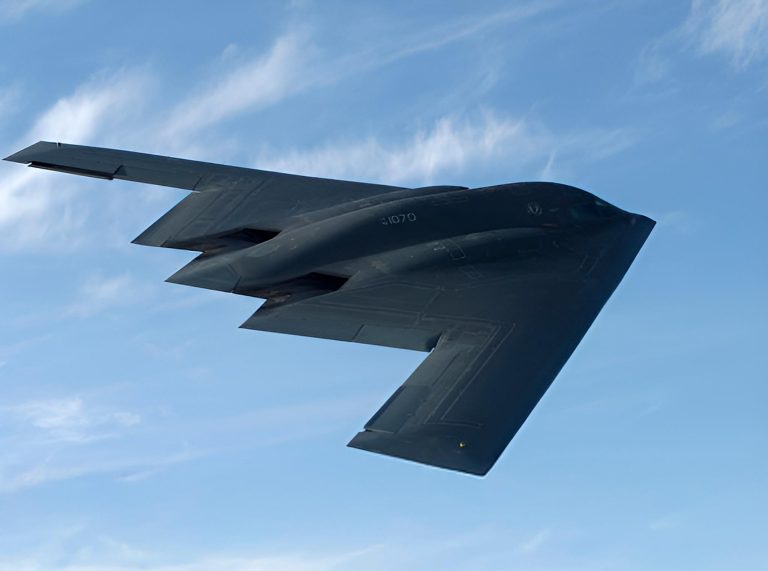
The June 21–22 U.S. stealth bomber and cruise missile attacks on Iran’s underground nuclear research sites have dealt significant damage to the Islamic Republic’s atomic program, and likely made a strong impression on Tehran’s partners, especially Communist China.
Ordered by U.S. President Donald Trump, “Operation Midnight Hammer” marked the first deployment of the 30,000-pound Massive Ordnance Penetrator (MOP) bombs, developed to destroy targets located deep underground. The nuclear research and uranium processing sites at Fordow, Natanz, and Isfahan were hit.
Hostilities between Israel and Iran started June 13 when the former launched a series of strikes on Iranian nuclear facilities and killed multiple top nuclear scientists and military commanders.
Iran, which suffered hundreds killed and thousands wounded in the war, retaliated with ballistic missile attacks against Israel, causing dozens of deaths and over 1,000 injuries.

Success
You are now signed up for our newsletter
Success
Check your email to complete sign up
On June 24, both sides came to an uneasy ceasefire partially brokered by Trump, apparently ending what some have termed the “12-Day War.”
- Top US Official in Hong Kong Criticizes CCP’s National Security Law as He Leaves the City
- China Enlists Social Media Influencers in Latest Push to Shape Global Opinion
Observers believe the Iranian nuclear program, which was close to producing several atomic bombs, has been set back by months at least. Iran has downplayed the severity of the Israeli-U.S. attacks, but Tehran’s foreign ministry acknowledged that the country’s nuclear installations “have been badly damaged.”
Meanwhile, Iran’s Supreme Leader, the 86-year-old Ayatollah Ali Khamenei, was visibly fatigued in his latest address to his country’s 90 million people, in which he claimed that the damage done to the Iranian nuclear program was insignificant. Khamenei has been in hiding since the start of the war.
Implications for the ‘anti-US coalition’
The ease with which Israeli forces neutralized the Iranian air defense systems — which are almost entirely supplied by China and Russia — as well as the shocks of the Jewish State’s decapitation strikes, have prompted observers to weigh in on the implications for Tehran’s primary backers.
Communist China, which imports almost all of Iran’s oil, has been friendly with the Islamic Republic since its establishment in 1979. Beijing supplied Iran with copious amounts of weaponry that Tehran used to fight the Iraqi invasion and subsequent eight-year-long war against the forces of Saddam Hussein.
During that time, Beijing, along with Pakistan, helped kickstart the Iranian nuclear energy program. Starting in 2009, China became Iran’s biggest trading partner.
In 2021, the two countries signed the Iran–China 25-year Cooperation Program, drawing them closer economically and diplomatically.
Cai Shenkun, an overseas Chinese commentator who offers analysis of politics and current events, said that the decision by Trump to launch a surgical strike on Iran’s nuclear facilities was not just to set back its nuclear program, but to send a message to other governments with anti-U.S. leanings.

In previous months, Trump had earned a reputation as a businessman unwilling to involve the United States in military conflict, Cai told Dajiyuan, the Chinese-language edition of The Epoch Times. “But now it’s clear that these dictators can’t predict his moves, so they’re genuinely afraid of him.”
“Because Trump acts decisively. If he says he’ll strike, he won’t hesitate.”
Wu Jialong, another Chinese commentator living in the U.S., said that even if the Iranian theocratic regime remains in power, its revealed vulnerability in the “12-Day War” presents a complicated situation for Beijing and Moscow.
“People will keep asking these two ‘big brothers’ [China and Russia] what their stance is toward their troubled ‘little brother,’ Iran,” Wu told Dajiyuan. He believes that China and Russia have few good options for significantly increasing support for Tehran, but that their lack of concrete action following the Israel-Iran war puts Iran’s partners in an embarrassing position.
If the Chinese Communist Party (CCP) merely issues tough statements but takes no concrete action, it could severely damage its image as the “boss of the anti-U.S. coalition,” something that could shake the confidence of other Beijing-aligned authoritarian countries like Russia, North Korea, and Vietnam.
On the other hand, Wu said that should the Iranian regime fall, whether it would benefit the Middle East and the United States depends on a variety of complex factors, making the prospect of regime change a risky one.
Thus, should the U.S. and Israel play their cards carefully and avoid walking into a geostrategic trap, it could trigger a “domino effect” of countries friendly with Beijing becoming disillusioned about Chinese support.
Beijing in a bad position
Jiang Fuzhen, a Chinese dissident and democracy activist, wrote in a June 23 opinion piece for Dajiyuan that the main anti-U.S. regimes of China, Russia, Iran, and North Korea “share key traits: opposition to the U.S.-led international order, engagement in territorial expansion or nuclear brinkmanship, and the use of hybrid warfare tactics to advance their agendas.”
“A U.S. strike against Iran at this moment sends the message that attempts to undermine the U.S.-led global order will meet with precise and overwhelming force,” Jiang wrote.
On June 26, the U.S. Joint Chiefs of Staff chairman, Gen. Dan Caine, said that Operation Midnight Hammer should be seen as a warning to other adversaries of the United States.

Speaking at a press conference at the Pentagon alongside Defense Secretary Pete Hegseth, Caine mentioned the role of the Defense Threat Reduction Agency (DTRA), which studied the Fordow nuclear facility prior to the U.S. bombing.
“Our adversaries around the world should know that there are other DTRA team members out there studying targets for the same amount of time, and we’ll continue to do so,” he said.
Wu Jialong, said that Israel’s decapitation strikes on the Iranian military, plus the unprecedented U.S. use of its heavy bunker-busting bombs to target the Iranian nuclear facilities, located 80 meters underground, indirectly puts the CCP leadership on notice.
The Chinese People’s Liberation Army (PLA) has an underground command bunker 60 meters under the Western Hills, a mountainous region at the edge of the Beijing municipal area. The Communist Party governs China from Zhongnanhai, a part of the Forbidden City imperial palace in the center of Beijing.
Trump’s order to strike Iran shows the CCP that “hiding in a bunker dozens of meters underground won’t protect you from the U.S. military,” Wu said.
Cai Shenkun said that Israel “shattering the web of protections the CCP had built” for Iran also casts shade on its ability to subdue Taiwan in the event that the Party leadership decides to move on the “separatist” democratically governed island state.
“The U.S. could provide Taiwan with decapitation-strike weapons” if Communist China tried to invade Taiwan, Cai told Dajiyuan. “This would be most terrifying for Party officials. If even a few senior Chinese military commanders were taken out,” it could prove devastating for the morale and loyalty of the PLA.
“No one would dare fight,” he said. “The PLA might even turn around and march on Zhongnanhai.”