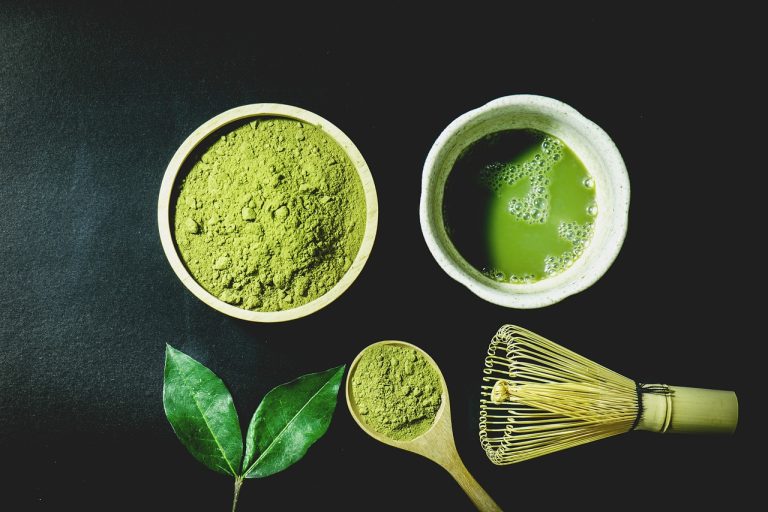
Renowned through the traditions of Japanese tea ceremony, matcha is now drawing worldwide attention for its health benefits. But how should one enjoy matcha in everyday life? A simple way is to start by incorporating it into daily meals and beverages.
Hot or Iced Matcha Latte:
Ingredients
- 3g matcha powder
- 250ml fresh milk (cold or heated)
- 100ml warm water (just hot enough to touch)
Equipment: A sealed cup or bottle, fine sieve.
Preparation (Hot Latte):
- Warm the milk to your preferred temperature.
- Sift the matcha powder into a cup. Add the warm water and shake or whisk briskly until the powder is fully dissolved.
- Pour the matcha mixture into the milk. Your hot matcha latte is ready to enjoy.
- Following Step 2, once the matcha powder has dissolved, add chilled milk. Seal the cup and shake well until fully mixed.
Matcha Brewing Tip: The vitamin C in tea leaves is destroyed at water temperatures above 70°C, making 60°C the ideal temperature for preparing matcha.

The Origins and Health Benefits of Uji Matcha
Success
You are now signed up for our newsletter
Success
Check your email to complete sign up
Green tea was first introduced to Japan at the end of the 12th century by the monk Eisai, who returned from Song Dynasty China with tea seeds and knowledge. Later, the monk Myoe explored tea-growing regions and brought tea cultivation to Uji city near Kyoto, where it flourished. Uji’s climate, particularly the persistent mist over the Uji River, provides abundant moisture for the tea fields, making it ideal for tea cultivation. Each May, the spring tea harvest marks the peak of the year’s production. (For more, see “Cha Yuan Cha”: https://www.naturenergy.us/)
By the 16th century, Uji tea farmers developed shading techniques that limited sunlight exposure, preserving the tea leaves’ vibrant green color, natural sweetness, and distinctive seaweed-like aroma. Matcha — the Chinese characters for the name, 抹茶, literally mean “powdered tea” — refers to tea leaves ground into a fine, vivid green powder using stone mills, producing the Japanese matcha we know today.

Matcha: Delicious and Nutritious
A study from the University of Colorado Colorado Springs (UCCS) found that matcha far surpasses regular green tea in health benefits. Its catechin (EGCG) content is 137 times higher than ordinary green tea and three times that of premium green teas. Matcha is also rich in chlorophyll and the amino acid L-theanine, offering health benefits without disrupting sleep.
Matcha powder comes in two main types: ceremonial-grade for tea ceremonies and culinary-grade for baking. Ceremonial-grade powders are higher in quality—the darker and richer the color, the higher the grade. For beverages that showcase the delicate aroma of matcha, ceremonial-grade powder is recommended. The choice of concentration can be adjusted based on taste and budget; finer, more concentrated powders are generally more expensive.
Follow “Cha Yuan Cha” at www.naturenergy.us – the official Cha Yuan website.
Translation by Janet Huang.