On Monday Aug. 25, protests erupted across Indonesia, triggering police crackdowns that left seven people dead, and severe damage by burning and looting.
This incident served to test President Prabowo Subianto, who has been in office for less than a year.
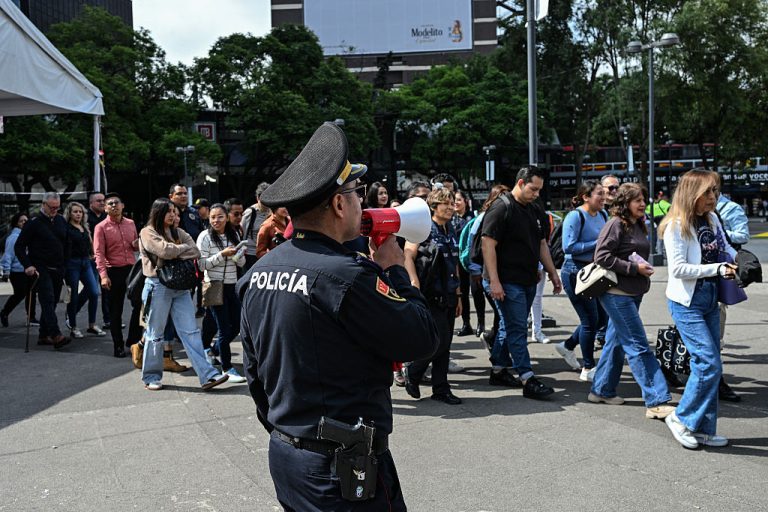
Thousands of Indonesians — many of them drivers and students — raged through the streets, taking part in mass protests against their government. The nation’s parliament was also targeted as the demonstrations gathered outside. Riot police, armed with shields, faced the growing unrest by throwing tear gas and deploying water cannons against the demonstrators, who answered back with rocks and fireworks.
Schools were closed early while banks and businesses had employees working from home.
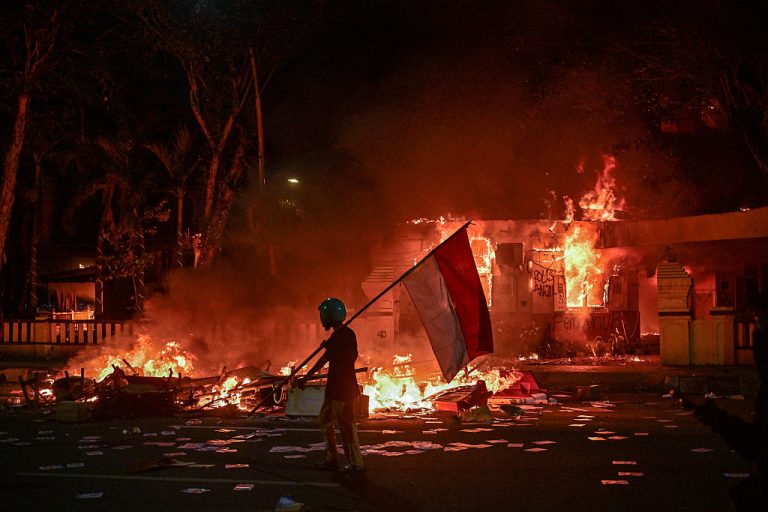
Government buildings and police headquarters across the country were being burned, along with buses, subways and other forms of infrastructure.
Success
You are now signed up for our newsletter
Success
Check your email to complete sign up
The protests were so widespread that the other big islands like Sulawesi, Sumatra and Borneo were also facing the heat.
On Aug. 30, a fire broke out at a council building in the city of Makassar on Sulawesi, killing at least three people, the Guardian reported. Two of them were local council staff, while the other was a civil servant.
“They were trapped in the burning building,” Rahmat Mappatoba, secretary of the council building, said.
“This is beyond our prediction. Usually during a demonstration, protestors only threw rocks or burn a tire in front of the office. They never stormed into the building or burned it,” he added.
Meanwhile, a fourth victim was brutally beaten to death by protestors who thought he was an intelligence officer.
That same day, a student died during a confrontation between police and protestors in the city of Yogyakarta in Java. In the city of Solo, a 60-year-old pedicab driver died in a hospital after suffering from acute asthma from the teargas thrown.
During the following weekend, looters raided the houses of several officials, including finance minister Sri Mulyani Indrawati’s. She was not at home at the time.
After five days of protest in the capital of Jakarta, police arrested more than 1,240 protestors, Pramono Anung, the city’s governor, said. Damages to infrastructure rose to up to 55 billion rupiah ($3.3 million).
In addition to the seven reported deaths, 700 more were injured, Anung said.
READ MORE:
- Asian Leaders Mark 80 Years Since Japanese Surrender in World War II
- Vietnamese Island-building Projects Rival Beijing’s in the South China Sea: Report
- ICE Raid on Hyundai Factory Strains US-South Korea Relations
The people’s anger
Demonstrators stormed across Indonesia to protest against a monthly housing allowance of 50 million rupiah ($3,075) for MPs that was around 10 times the minimum wage in Jakarta. According to al-Jazeera, the MPs’ housing benefit alone was around 20 times more than the minimum wage in the country’s poorer areas.
To the protestors, these allowances are unfair as they face economic challenges.
At the same time, Prabowo had enforced austerity measures, which included “cuts to education, health and public works.”
According to the student group Gejayan Memanggil, one of several behind the protests, they also decried what they called “corrupt elites” in the government, along with policies that only favored conglomerates and the military. This came especially after increasing military presence in civilian affairs under Prabowo’s leadership.
The protests intensified when a 21-year-old delivery driver, Affan Kurniawan, in Jakarta was killed on Aug. 29 after being run over by an armored car belonging to Indonesia’s elite paramilitary police unit. The vehicle also drove into a group of protestors.
Despite the unrest, President Prabowo proceeded to attend China’s victory parade in Beijing. He initially cancelled the trip after the riots began.
He shared his condolences for Kurnianwan’s death, and was supposedly “shocked and disappointed” by the police’s actions. He ordered an open investigation to be made for the public to view. At the same time, he also reminded everyone to honor the sacrifices made by several officers.
Prabowo also had five ministers replaced as part of a cabinet reshuffle. Indrawati, one of the country’s longest-serving finance ministers, was one of the ministers removed, leaving her place taken by Purbaya Yudhi Sadewa, chairman of the Deposit Insurance Corporation.