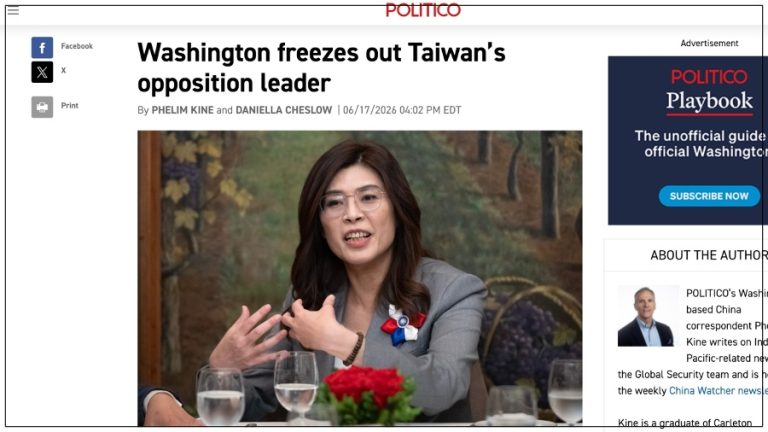
Taiwan’s political discourse reignited this week after Kuomintang (KMT) Chair-elect Cheng Li-wen called for making “Taiwanese people proud to say ‘I am Chinese.’”
Her earlier statements, such as “Taiwan is part of China” and “Chinese military aircraft encircling Taiwan are protecting Taiwan,” also resurfaced, sparking renewed public anger and legislative scrutiny.
The controversy came as the New Taipei City Council began its questioning round on Oct. 28, where Democratic Progressive Party (DPP) members questioned whether local officials shared Cheng’s self-identification as Chinese.
New Taipei Mayor Hou You-yi, the KMT’s 2024 presidential candidate, replied firmly: “I am a proud citizen of the Republic of China.”
According to the Central News Agency, DPP caucus leader Liao Yikun and several councilors, including Chung Hung-jen, Peng Chia-yun, Cheng Yu-en, and Chang Chia-ling, raised concerns about potential mainland Chinese influence in the KMT’s leadership election.
Success
You are now signed up for our newsletter
Success
Check your email to complete sign up
They also questioned whether Cheng’s previous criticism of Hou’s presidential campaign—calling his poll numbers the lowest and urging the party to “replace Hou”—might affect future KMT nominations.
Hou laughed off the speculation, saying he had “taken full responsibility for everything after the election,” which he lost to the DPP’s Lai Ching-te.
He then chided the councilors for “showing more interest in the KMT’s internal affairs than city governance,” while thanking them for their concern.
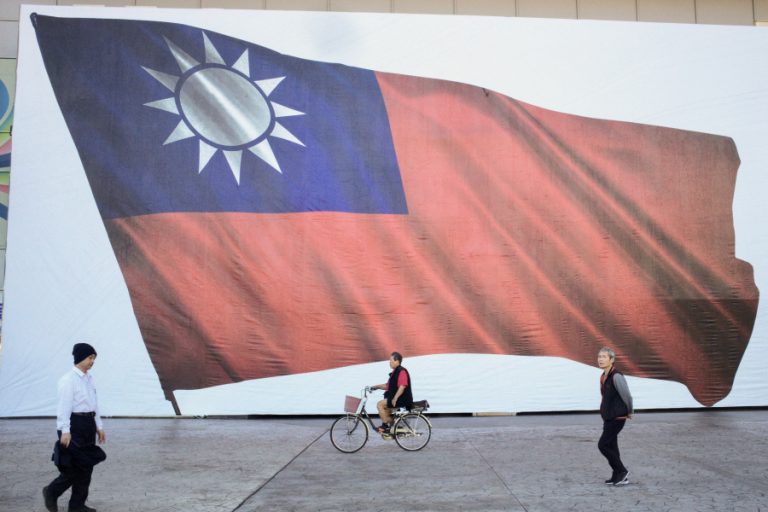
Though Taiwan is formally known as the Republic of China (ROC), the island’s government has not ruled mainland China since 1949, when it was defeated there by the Chinese communists led by Mao Zedong. In the decades since, many Taiwanese have come to identify themselves as being “Taiwanese” rather than “Chinese” — especially as the latter has come to be associated with the communist mainland.
When asked directly if he agreed with Cheng’s self-identification, Hou reiterated his stance as a “citizen of the Republic of China.”
Councilor Cheng Yu-en pressed further, asking whether Beijing had interfered in the chairmanship race.
Hou responded that Taiwan “will never tolerate foreign interference” and said the National Security Bureau would investigate any such case in accordance with the law.
He emphasized that all cross-strait exchanges “must follow the law.”
In response to Cheng’s remarks, DPP Secretary-General Hsu Kuo-yung voiced strong disapproval in an Oct. 22 interview with ETtoday News Cloud.
“Taiwan is a sovereign and independent country known as the Republic of China,” Hsu said. “It is not part of China. How can military aircraft threatening Taiwan be called an act of protection?”
Hsu condemned Cheng’s words as undermining Taiwan’s sovereignty, saying, “No Taiwanese will accept such a statement. These comments disregard the most basic principles of statehood.”
The DPP advocates a separate Taiwanese identity from China, while the KMT, which governed the ROC on the mainland and for decades after retreating to Taiwan, has maintained that the Taiwanese are Chinese, and aims for eventual reunification with mainland China.
By contrast, while the DPP recognizes that Taiwan is the ROC, it is already an independent country in its own right and does not need to be “Chinese.”
Hsu said that a country is defined by its people, sovereignty, territory, and the ability to conduct international relations—a concept, he noted, even recognized in Chinese textbooks.
“Bloodline, religion, culture, or language are not what define a nation,” he said.
Identity and the definition of nationhood
Hsu said: “Speaking Chinese doesn’t make someone Chinese—just as Indians who speak English aren’t British. Taiwan also has Muslims; that doesn’t make them foreigners. Language, religion, and culture are not what constitute a state.”
He continued, “Whether my ancestors came from the Ming or Qing dynasties, I am Taiwanese and a citizen of the Republic of China. That’s fundamental common sense in international law.”
When asked whether Cheng has adjusted her cross-strait position since winning the KMT leadership race, DPP caucus secretary-general Chung Chia-pin said it remains to be seen.
Chung recalled that when Cheng served as a legislator, she questioned then-Premier Su Tseng-chang in a tone “overly deferential to Beijing.”
Su responded publicly at the time, stressing that “Taiwanese will never accept the claim that China’s military encirclement of Taiwan is an expression of sovereignty.”
Chung said that historical record “cannot be erased” and vowed that the DPP caucus would closely monitor whether Cheng moderates her rhetoric as KMT leader.
“The public’s main concern,” he added, “is ensuring that no Taiwanese political party becomes a puppet of the Chinese Communist Party.”